


What Should Buyers Check Before Choosing an SPC Flooring Factory?
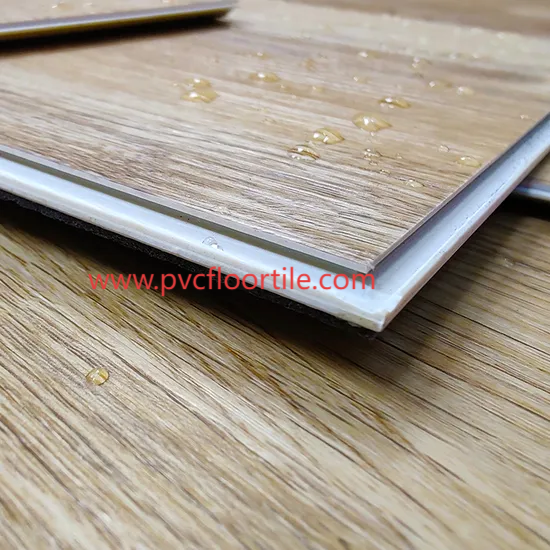
SPC Flooring Factory evaluation should involve more than reviewing product samples and comparing quotations. Importers, wholesalers, distributors, and commercial project buyers need to examine material management, production procedures, inspection records, and order coordination before making a purchasing decision. A structured assessment helps buyers understand how products are manufactured and whether a supplier can meet their specifications, documentation needs, and delivery expectations.
Understand the Production Workflow
Before placing an order, ask the supplier to explain the main stages involved in making the product, from raw material preparation to final packaging. Understanding the workflow helps buyers identify where specifications are established and how changes are managed.
Typical stages may include material mixing, core extrusion, decorative film lamination, surface treatment, cutting, click-lock profiling, inspection, and packing. The exact process depends on the product design and equipment configuration.
Ask which stages are completed internally and whether any operations are handled by external partners. Buyers should understand who is responsible for each stage and how technical requirements are communicated between the parties.
Review Raw Material Management
Material management can influence the consistency of finished products. Buyers should ask how incoming materials are identified, stored, and checked before entering production.
Useful questions include whether material batches are recorded, how decorative films are matched with approved designs, and how changes to component specifications are authorized. These procedures can help prevent unapproved substitutions and make it easier to investigate differences between shipments.
Request information about core composition, surface layers, backing materials, and relevant technical specifications. This creates a clearer understanding of the product being purchased instead of relying solely on catalogue descriptions.
For repeat orders, retain the approved sample and product specification as references. This allows both parties to compare subsequent production against the original requirements.
Examine Equipment and Process Monitoring
The machinery used during production can provide useful information about how materials are processed. Buyers can ask about equipment for extrusion, surface finishing, cutting, and edge profiling.
However, equipment alone does not explain how consistently a product is made. Ask how operating parameters are monitored, how measuring instruments are maintained, and what happens when a measurement falls outside the agreed range.
Dimensional checks may cover plank length, width, thickness, and edge profiles. Surface inspections may examine color variation, texture, gloss, scratches, and other visible defects.
A clear inspection procedure should identify who performs each check, how frequently it occurs, and where the results are recorded.
Establish a Sample Approval Process
Samples give buyers a practical way to assess appearance, dimensions, and construction before authorizing a larger order. The sample should represent the specific configuration described in the quotation.
Check the decorative pattern, color, surface texture, plank measurements, wear layer, core construction, backing, and locking profile where applicable. If installation is part of the evaluation, connect several planks and examine how the joints align.
After approving a sample, ask how it will be identified and retained as a reference. Any later changes to the design, construction, or packaging should be reviewed and confirmed before production continues.
This process helps both parties avoid disagreements caused by different interpretations of the original request.
Check Quality Records and Traceability
A supplier should be able to explain how inspection results are documented and linked to the relevant production batch. Traceability is useful when buyers need to investigate a complaint or compare deliveries received at different times.
Request examples of incoming material records, in-process inspection forms, finished product checks, and batch identification methods. Confirm whether cartons carry product codes, production dates, or other identifiers that support warehouse management.
Buyers should also ask how nonconforming products are handled. A documented procedure may include separating affected goods, recording the issue, investigating its cause, and deciding whether rework or replacement is appropriate.
For markets with specific regulatory or performance requirements, request relevant documentation and verify that it applies to the exact product configuration.
Assess Packaging and Shipment Preparation
Packaging matters because goods may pass through several handling stages before reaching their destination. Buyers should examine carton construction, internal protection, printed labels, product identification, and pallet arrangements where applicable.
Confirm the number of planks per carton, coverage per package, total quantity, and labeling requirements. If private branding is needed, approve the artwork and product information before printing begins.
Discuss how finished goods are stored before dispatch and how each shipment is checked against the packing list. Buyers should also clarify how to report damaged cartons, missing packages, or discrepancies after delivery.
These details help purchasing teams coordinate warehouse receiving, inventory records, and customer deliveries.
Confirm Communication and Order Responsibilities
A clearly defined communication process helps keep production and delivery organized. Before confirming an order, establish who will approve technical specifications, answer production questions, authorize design changes, and provide inspection updates.
Request a realistic production schedule and clarify how delays or material changes will be communicated. Written confirmation of specifications, quantities, packaging, payment conditions, and shipping terms reduces ambiguity during order execution.For distributors and project buyers comparing suppliers, pvcfloortile provides product information to support specification reviews and purchasing discussions. Visit https://www.pvcfloortile.com/product/ to review available options and discuss technical requirements, sample approval, packaging preferences, and order details for your next project.

 English
 Arabic
 French
 Spanish
 Deutsch
 Turkish
 Dutch
 Italiano
 Russian
 Romaian
 Portuguese (Brazil)
 Greek