


Can Gangnammould Storage Cabinet Mold Design Reduce Manufacturing Waste
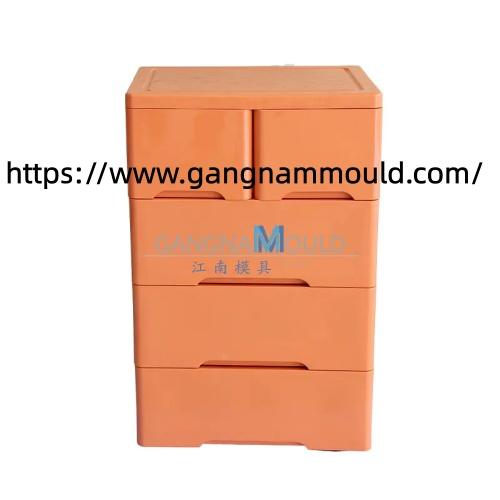
Storage Cabinet Mold design has a direct influence on production efficiency because it determines how plastic components are formed, cooled, released, and prepared for assembly. For manufacturers supplying household organizers, office furniture, and commercial storage products, thoughtful tooling development can help control cycle times, reduce avoidable defects, and maintain consistent dimensions. These considerations matter when businesses need to balance production schedules, material costs, and customer expectations. A clear engineering plan also helps manufacturers identify potential challenges before investing in full scale production.
The design process should begin with a detailed review of the intended product. Dimensions, wall thickness, reinforcing ribs, mounting holes, surface textures, and connection points all affect the tooling structure. A cabinet component with complex corners or integrated fastening features may require a different cavity arrangement from a simple flat panel. Reviewing these details early allows engineers to assess manufacturing feasibility and determine whether adjustments could simplify production without compromising the product requirements.
Material flow is another important consideration. During injection molding, molten plastic travels through the runner system and enters the cavity through designated gates. If the flow is poorly balanced, certain areas may fill unevenly, potentially causing short shots, visible weld lines, air traps, or surface inconsistencies. Gate placement, venting, and runner dimensions should therefore be considered together with the resin properties and component geometry. A coordinated design can help establish stable filling conditions and reduce the need for repeated processing adjustments.
Temperature management also affects manufacturing performance. Plastic needs sufficient time to cool and become stable enough for ejection. Uneven cooling can contribute to warping, shrinkage differences, and dimensional variation, especially in parts with changing wall thickness. Engineers can assess cooling channel locations according to the shape and thickness of the component. Simulation tools and trial molding may help identify areas that require additional attention before routine production begins.
Cooling arrangements should also consider maintenance and operating conditions. Channel accessibility, water flow, and the distribution of cooling throughout the cavity can influence how reliably the system performs over time. Rather than focusing on a single design feature, manufacturers should evaluate how cooling, filling, and ejection work together. This approach helps production teams make decisions based on the overall manufacturing process rather than isolated specifications.
Part release is equally important when evaluating tooling performance. Components with deep recesses, narrow openings, or textured surfaces may require careful consideration of draft angles and ejection mechanisms. Properly positioned ejector pins and suitable release features can help reduce sticking, surface marks, and deformation during removal. If parts require frequent manual intervention, production cycles may become less predictable and labor requirements may increase. A practical ejection design can support repeatable operation while protecting the appearance and dimensions of finished products.
The choice of tooling material should reflect the expected production volume, plastic resin, surface finish, and maintenance requirements. Different steel grades have different properties, including hardness, wear resistance, polishability, and corrosion resistance. Buyers should discuss these factors with the engineering team rather than selecting materials based on price alone. The selected specification should suit the working conditions and expected service requirements of the project.
Quality checks throughout manufacturing help confirm that the finished tool meets the agreed specifications. Machining inspections, component fitting checks, dimensional measurements, and trial production provide opportunities to identify issues before delivery. During testing, manufacturers can review sample appearance, critical dimensions, ejection behavior, and cycle stability. Documenting the results also gives both parties a reference for future adjustments and production planning.
Maintenance planning deserves attention before the tool enters regular operation. Wear on moving components, residue around vents, and deposits within cooling channels may affect performance over time. Accessible inspection points and replaceable inserts, where appropriate, can make routine servicing more manageable. Production teams can monitor cycle time, rejection rates, maintenance frequency, and dimensional consistency to identify changes that may require investigation.
Working with a tooling manufacturer involves more than providing a drawing and requesting a quotation. Buyers should prepare product dimensions, resin specifications, surface finish expectations, projected production quantities, and any assembly requirements. Clear technical communication helps the engineering team assess the project and recommend a suitable design approach. Gangnammould supports custom plastic tooling projects with attention to product specifications, manufacturing requirements, and practical production considerations.
For companies developing new storage products or adjusting existing designs, early collaboration can help clarify tooling requirements before production commitments are made. Reviewing technical drawings, discussing trial procedures, and agreeing on inspection criteria can establish a clearer path from concept to manufacturing. To review available tooling solutions and discuss the needs of your next project, visit https://www.gangnammould.com/product/ and consider how a customized approach may fit your product design and production plans.

 English
 Arabic
 French
 Spanish
 Portuguese
 Turkish
 Dutch
 Italiano
 Russian
 Romaian
 Portuguese (Brazil)
 Greek