


Why Premium Furniture Is Redefining Modern Indian Homes
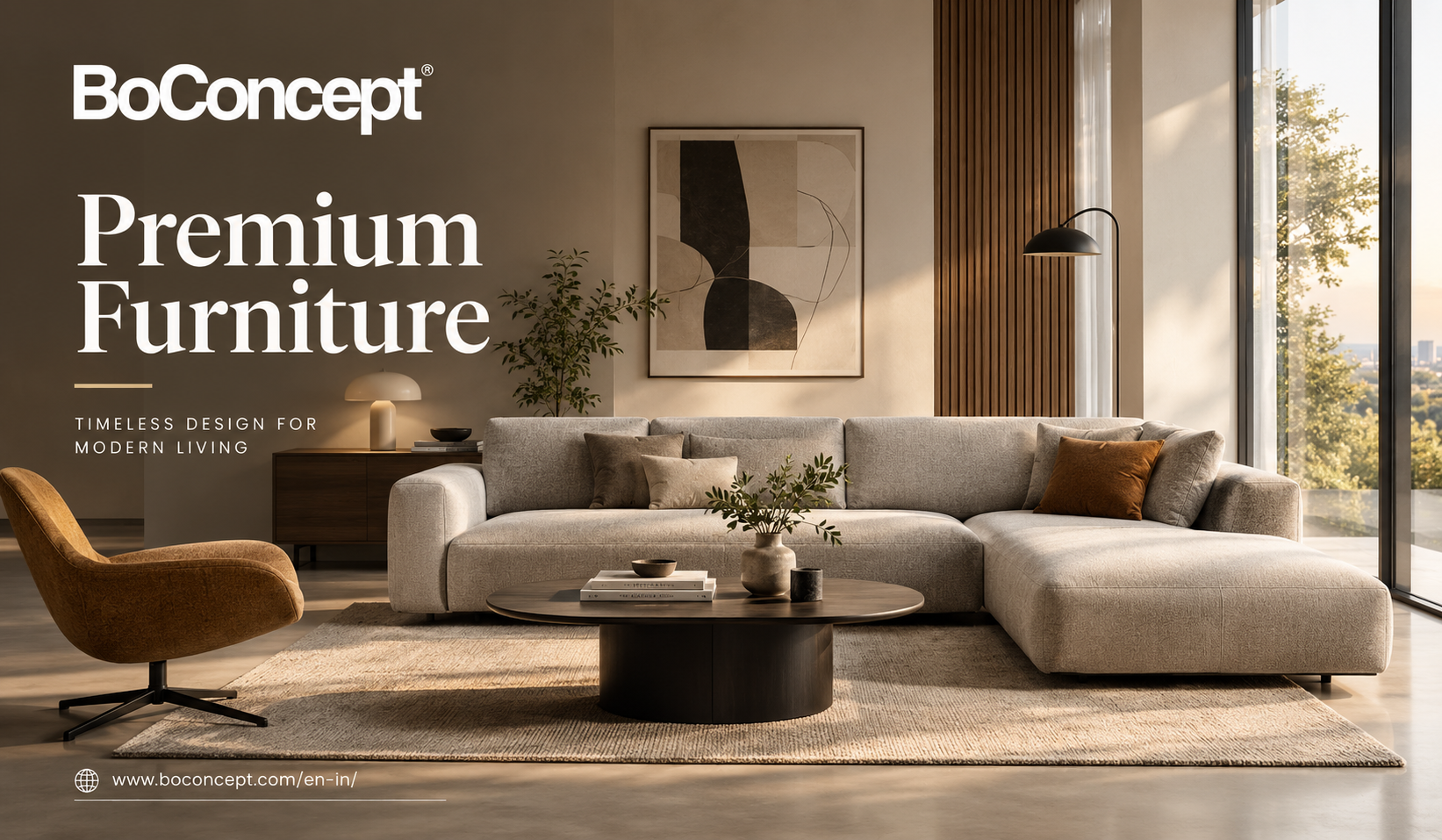
Premium furniture has quietly become one of the most talked-about shifts in how Indian homeowners think about their living spaces. A decade ago, furniture shopping largely meant choosing between mass-produced catalogue pieces or custom carpentry. Today, there’s a growing middle ground — thoughtfully designed, durable, and aesthetically refined furniture that treats a home as a long-term investment rather than a short-term fix.
This shift isn’t just about looks. It’s about how people are rethinking the way they live. Smaller apartments, hybrid work setups, and a stronger appreciation for design have pushed Indian buyers toward furniture that does more than fill a room. They want pieces that adapt, last, and genuinely reflect their personal style. That’s where Scandinavian-inspired brands have found real traction in cities like Delhi, Mumbai, Bengaluru, Hyderabad, Chennai, and Pune.
Take a brand like BoConcept, for instance. Originally founded in Denmark back in 1952, it’s built its reputation on clean lines, functional customisation, and furniture that doesn’t scream for attention but earns it through quality. Its growth story in India is worth noting — starting from a single flagship store, the brand expanded steadily year after year, eventually crossing eight stores across major metros, reportedly growing by roughly a quarter annually since its India debut. That kind of traction in a market known for being price-sensitive says something about how Indian consumers’ priorities are evolving.
What’s interesting is the customisation angle. Many Indian homes aren’t built on cookie-cutter floor plans, so furniture that can be configured — modular sofas, extendable dining tables, adaptable storage units — fits naturally into how people actually live here. It’s less about buying a product and more about building a space piece by piece, with each item chosen to work with the others rather than against them.
There’s also a cultural angle worth mentioning. Scandinavian design philosophy — minimal ornamentation, functional honesty, quality materials — resonates with a generation of Indian buyers who grew up surrounded by maximalist interiors and are now actively choosing restraint. It’s not that ornate furniture has gone out of style entirely; it’s that there’s now genuine appetite for the alternative.
For anyone exploring options in this space, a few things tend to matter more than brand names alone. Material quality should hold up to India’s climate variations — humidity in coastal cities, dry heat inland. Craftsmanship should be visible in the joinery and finishing, not just the marketing photos. And after-sales support matters enormously, since furniture is one of those purchases people expect to live with for years, not seasons.
It’s also worth noting that this category isn’t just for luxury apartments or show homes anymore. Mid-sized flats, first homes, and even rental spaces are increasingly furnished with pieces that balance function and design sensibility, simply because the long-term value proposition makes sense — fewer replacements, better everyday usability, and interiors that age gracefully rather than looking dated within a year or two.
As India’s urban housing market matures, the appetite for well-designed, lasting furniture is only going to grow. Buyers are getting more design-literate, more willing to research before purchasing, and more comfortable spending on pieces that genuinely improve daily life. That’s a meaningful shift — and it’s reshaping what Indian homes look and feel like from the inside out, one well-chosen piece of premium furniture at a time.

 English
 Arabic
 French
 Portuguese
 Deutsch
 Turkish
 Dutch
 Italiano
 Russian
 Romaian
 Portuguese (Brazil)
 Greek