


What Is Intelligent Video Analytics? How AI Is Transforming Modern Security Monitoring
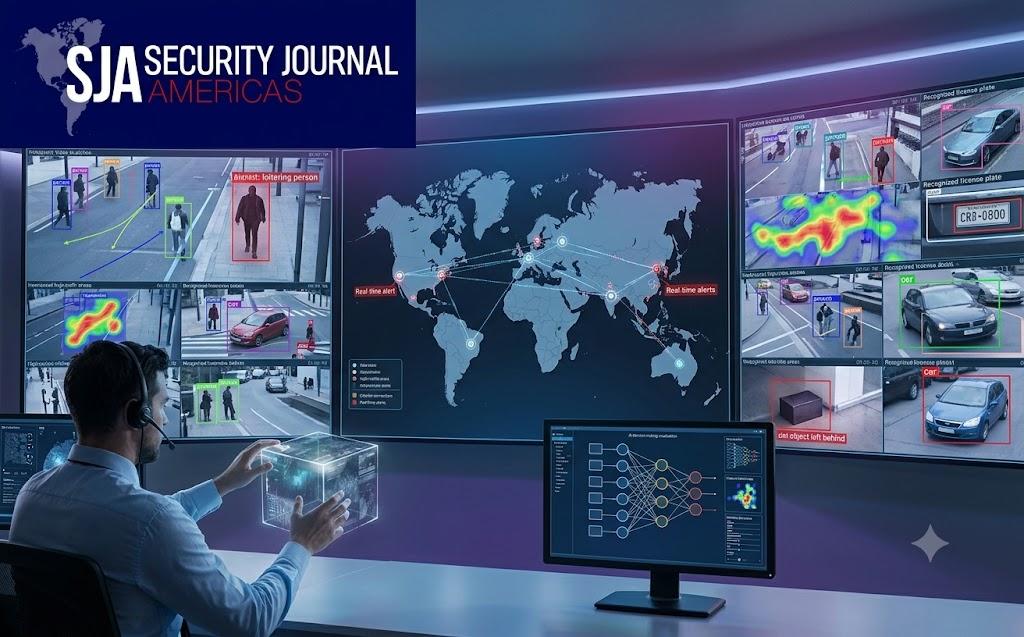
Security monitoring has changed significantly as buildings, transport networks, commercial facilities and public spaces become more connected. Traditional surveillance systems primarily depend on operators watching camera feeds and reviewing recorded footage after an incident. Although this approach remains useful, monitoring multiple cameras simultaneously can be difficult, particularly when security teams must respond quickly to developing situations.
Understanding what is intelligent video analytics helps explain how artificial intelligence is changing this process. Instead of simply recording images, intelligent video systems analyse footage, recognise objects, identify patterns and generate alerts when activity meets specific conditions. These capabilities can help security professionals prioritise important events and make more informed decisions.
As security requirements become more complex, intelligent video surveillance is increasingly relevant to organisations seeking better visibility, faster incident detection and more efficient use of existing camera infrastructure.
What Is Intelligent Video Analytics?
Intelligent video analytics refers to technology that automatically examines video footage to identify objects, activities, movements and events. It combines video processing, computer vision and, in many applications, artificial intelligence to extract useful information from camera streams.
Traditional CCTV systems generally capture and store video for later viewing. Intelligent video analytics adds a layer of automated interpretation, allowing software to identify particular conditions without requiring an operator to observe every camera continuously.
For example, a system may recognise a person entering a restricted area, detect a vehicle travelling in the wrong direction or identify an unattended object in a monitored location. Depending on its configuration, it can send an alert to a security operator for verification.
These systems are not designed to replace every human decision. Their principal purpose is to help security teams identify relevant events more efficiently and direct attention towards situations that may require intervention.
How Does Intelligent Video Analytics Work?
The process generally involves several connected stages.
1. Video capture
Cameras collect footage from entrances, corridors, car parks, loading areas, perimeters and other monitored locations. Image quality, camera positioning, lighting and environmental conditions influence how effectively the system can analyse the footage.
2. Image processing
Software processes incoming frames to identify visual information. Depending on the system, this can include separating foreground activity from the background, tracking movement and identifying objects.
3. Object detection and classification
AI-powered video analytics can classify objects into categories such as people, vehicles and other relevant objects. More advanced systems may identify specific movements or activities based on trained models and configured detection rules.
4. Event identification
The software compares detected activity with predefined rules. These might include entering a restricted zone, crossing a virtual boundary, remaining in an area beyond a permitted period or moving against an expected traffic direction.
5. Alerts and review
When an event meets the required conditions, the system can notify operators through a dashboard, notification or integrated security platform. Staff can then review the footage, assess the circumstances and decide whether action is necessary.
Processing may occur directly on a camera, on an edge computing device or within a central server. The most appropriate arrangement depends on infrastructure, response requirements, bandwidth and data management policies.
Key Features of Intelligent Video Surveillance
Modern video surveillance analytics can provide several useful capabilities.
Motion and intrusion detection: Systems can identify movement within defined areas and detect potential perimeter breaches.
Object classification: Software distinguishes between different object categories, helping reduce alerts caused by irrelevant movement.
People counting: Cameras can estimate the number of people entering or leaving a monitored location, supporting occupancy management.
Unusual activity detection: Configured systems may flag behaviours that differ from expected patterns, although results depend on training data, environmental conditions and the selected rules.
Vehicle monitoring: Analytics can detect vehicle movement, monitor traffic flow and identify selected events in car parks or access areas.
Searchable video: Metadata generated during analysis can make it easier to locate footage involving particular objects, locations or time periods.
These features can improve situational awareness, but they should be selected according to actual security needs rather than installed simply because they are available.
Practical Applications Across Different Environments
The usefulness of what is intelligent video analytics becomes clearer when considering how the technology supports different security environments.
Commercial buildings
Office buildings can use video analytics to monitor entrances, detect access into restricted areas and identify activity outside normal operating conditions. Integration with access control systems may help operators compare camera events with authorised entry records.
Warehouses and industrial facilities
Large facilities often contain loading bays, storage areas, vehicle routes and equipment zones. Analytics can flag unauthorised movement, monitor designated boundaries and support investigations involving operational incidents.
Transport infrastructure
Transport environments can benefit from vehicle detection, traffic flow analysis, congestion monitoring and identification of objects left in designated areas. These capabilities can support quicker assessment of situations that affect movement and safety.
Retail environments
Retail premises can use people counting, queue monitoring and movement analysis to understand occupancy patterns. Security teams may also use alerts to investigate incidents, subject to applicable privacy requirements.
Public spaces
Video analytics can assist with crowd density estimation, perimeter monitoring and the identification of selected events. Human review remains important because crowded environments can produce ambiguous visual information.
Benefits for Security Teams
One of the most important benefits is reduced dependence on continuous manual observation. Operators can receive alerts about selected events rather than relying exclusively on visual attention across numerous screens.
Another advantage is faster access to relevant footage. Metadata and event indexing can make investigations more efficient, particularly when teams need to review incidents across several cameras.
Intelligent video analytics may also improve operational consistency. Once appropriate detection rules are configured, the system can apply them across multiple monitored locations. This supports standardised procedures, although performance still requires monitoring and adjustment.
The technology can also help organisations make better use of existing cameras. In some environments, compatible analytics software can be added to established surveillance infrastructure without replacing every device.
However, these benefits depend on suitable camera coverage, accurate configuration, reliable networks and properly trained staff. Poor-quality footage or inappropriate detection rules can undermine performance.
Challenges, Privacy and Implementation
Before deploying AI video analytics, security managers should evaluate technical and operational limitations.
False positives can occur when shadows, reflections, weather or ordinary movement resemble a relevant event. False negatives are also possible when the system fails to identify genuine activity. Testing under realistic conditions helps establish whether detection performance is suitable.
Privacy is another important consideration. Video monitoring should have a clearly defined purpose, appropriate access controls and suitable retention periods. Where personal information is processed, organisations should assess applicable data protection obligations and communicate monitoring practices transparently.
Cybersecurity must also be considered. Cameras, servers and analytics platforms can introduce vulnerabilities if they use weak credentials, outdated software or poorly protected network connections.
Successful implementation begins with identifying specific risks, selecting relevant use cases, assessing existing infrastructure and conducting a controlled pilot. Performance should be evaluated using measurable indicators such as alert accuracy, investigation time and the number of incidents identified.
The Future of Intelligent Video Analytics
Developments in edge computing, computer vision and AI models are expanding the capabilities of surveillance systems. Edge processing can reduce dependence on continuous transmission to central servers, while improved search tools can help investigators locate relevant events using descriptive queries.
However, more sophisticated technology does not automatically guarantee better security. Responsible deployment requires transparent policies, appropriate testing, human oversight and regular performance reviews.
For security professionals, the goal should be to use automation to strengthen judgement rather than remove accountability from the decision-making process.
Conclusion
Understanding what is intelligent video analytics provides a foundation for evaluating how automated video analysis can improve monitoring, investigation and operational awareness. By identifying relevant activity and directing attention towards important events, these systems can help security teams work more efficiently.
For readers of Security Journal Americas, the central consideration is how to balance technological capability with practical security requirements, privacy safeguards and human decision-making. A carefully planned implementation can make surveillance more useful without treating automation as a substitute for professional judgement.
Frequently Asked Questions
1. What is intelligent video analytics used for?
It is used to analyse video footage automatically, identify selected events, detect movement, classify objects and support security monitoring and investigations.
2. How is intelligent video analytics different from traditional CCTV?
Traditional CCTV mainly records footage for observation or later review. Intelligent video analytics adds automated analysis that can identify specified events and generate alerts.
3. Does intelligent video analytics use artificial intelligence?
Many modern systems use artificial intelligence and computer vision, although capabilities vary. Some analytics functions rely on simpler motion detection and predefined rules.
4. Can intelligent video analytics reduce false alarms?
It can reduce certain irrelevant alerts through object classification and contextual rules. However, accuracy depends on camera conditions, configuration and the type of event being detected.
5. Is intelligent video analytics suitable for existing cameras?
It may be compatible with existing cameras if their image quality, connectivity and technical specifications meet the requirements of the analytics platform.

 English
 Arabic
 French
 Spanish
 Portuguese
 Turkish
 Dutch
 Italiano
 Russian
 Romaian
 Portuguese (Brazil)
 Greek