


Role of Sheet Metal Fabrication Parts in Automotive and Engineering Industries
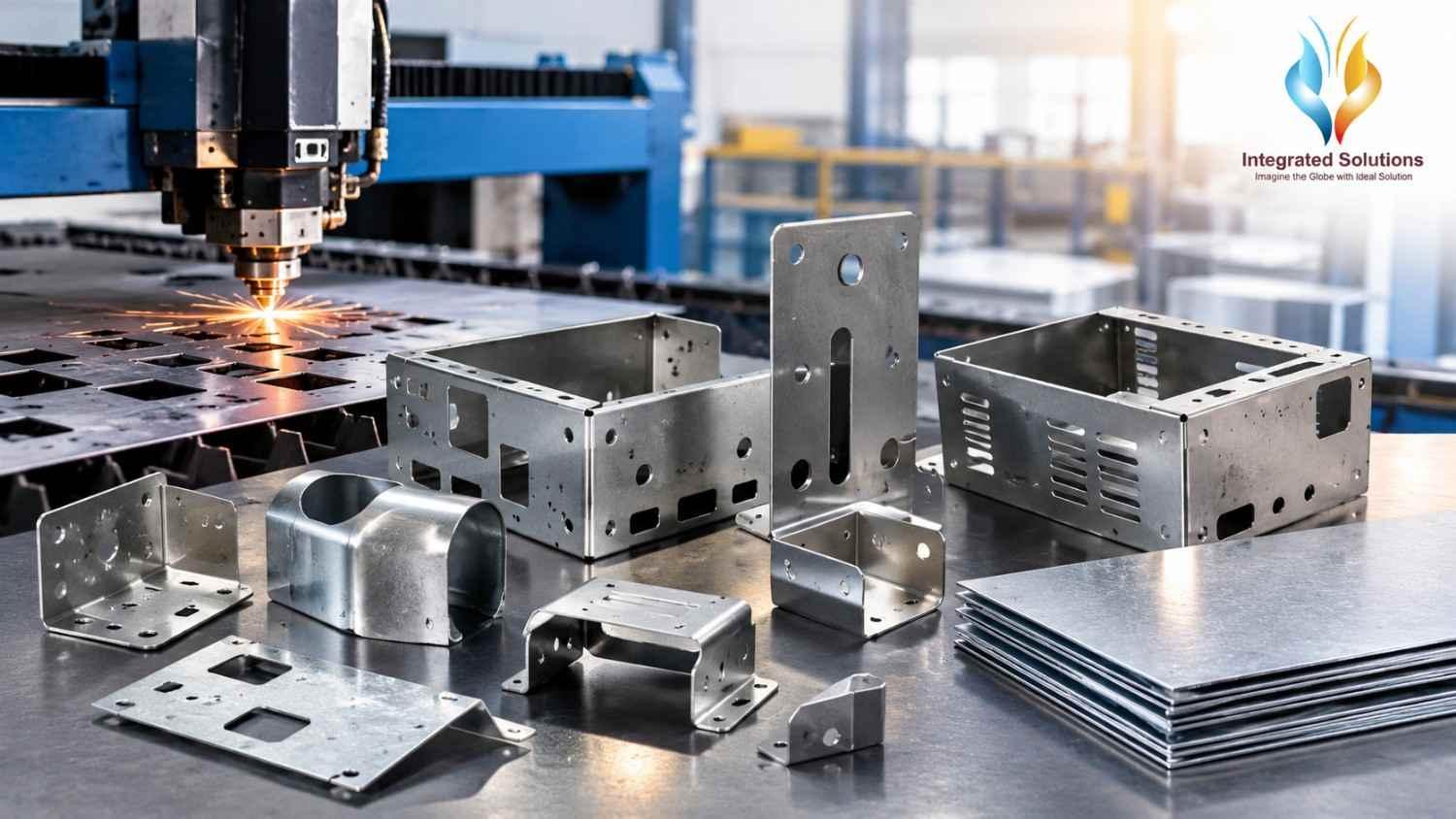
Why Fabricated Components Matter Beyond Assembly
A vehicle assembly line can lose hours because of a bracket that doesn't fit. One incorrect bend, an oversized mounting hole, or inconsistent sheet thickness can interrupt production and increase rejection costs.
That's where Sheet Metal Fabrication becomes essential. It transforms metal sheets into precisely shaped components used in vehicle bodies, equipment housings, structural supports, and industrial machinery.
India's automotive component industry recorded ₹7.59 lakh crore in turnover during FY 2025–26, according to the Automotive Component Manufacturers Association of India (ACMA). This scale places considerable pressure on component manufacturers to maintain consistency across production batches. For procurement teams, the real challenge isn't simply finding the lowest quotation. It's securing parts that assemble correctly, meet drawing requirements, and arrive when production needs them.
What Makes a Fabricated Part Production-Ready?
The specifications of Sheet Metal Fabrication Parts determine whether components will perform reliably in automotive and engineering applications. Material grade, thickness, bending accuracy, hole positioning, and surface finish all influence the final assembly.
Materials and Manufacturing Processes
Common materials include mild steel, stainless steel, aluminium, and galvanised steel. The selection depends on load conditions, corrosion exposure, weight restrictions, and cost.
Typical operations include laser cutting, CNC punching, press forming, bending, welding, and surface finishing.
ISO 9013:2017 provides classifications and geometrical tolerances for thermal cutting. Its scope includes laser-cut material thicknesses from 0.5 mm to 32 mm, although actual machine capability and achievable tolerances depend on the process and material.
The Bend Detail Buyers Frequently Miss
A component can meet its flat-pattern dimensions and still fail during assembly.
Bend radius, material springback, grain direction, and hole-to-bend distance require careful consideration. Even a small positional error may prevent a bracket from aligning with its mating component.
Checking these details before batch approval is less expensive than correcting hundreds of finished parts.
Five Criteria for Evaluating Fabrication Suppliers
Choosing among Sheet Metal Fabrication Parts Manufacturers requires more than comparing prices. Procurement managers should examine five areas before approving production.
-
Material traceability: Request mill test certificates and grade verification. A bad answer is, "We purchase whichever material is available."
-
Dimensional inspection: Review drawing tolerances, measurement methods, and inspection records. Avoid suppliers who rely only on visual checking.
-
Production capability: Confirm cutting, forming, welding, and assembly arrangements. "We can manufacture anything" without capacity details is not credible.
-
Defect management: Ask how rejected components are identified, segregated, and replaced. An informal promise to resolve problems later is inadequate.
-
Delivery reliability: Review manufacturing lead times, packing methods, and dispatch coordination. A supplier promising every order urgently without checking capacity is taking an unnecessary risk.
The objective is straightforward: reduce uncertainty before releasing a purchase order.
How Fabricated Components Protect Manufacturing Margins
In automotive and engineering production, fabricated components support cost control in six practical ways.
-
Accurate fitment: Proper dimensional control reduces assembly adjustments, rejected parts, and additional machining expenses.
-
Material efficiency: Optimised cutting layouts reduce scrap and improve material utilisation, particularly during repeat production.
-
Design flexibility: Custom brackets, panels, covers, and structural supports can be produced according to application-specific drawings.
-
Reduced assembly delays: Consistent mounting points and bending dimensions help components fit without repeated manual corrections.
-
Improved corrosion protection: Suitable finishing processes reduce premature deterioration and associated replacement expenses.
-
Scalable manufacturing: Approved tooling, documented processes, and repeatable inspection support higher production volumes with fewer unexpected changes.
The advantage isn't merely producing a cheaper component. It's preventing hidden costs after that component enters an assembly.
Sourcing Fabricated Components Across India
For automotive and engineering buyers, supplier location affects transport expenses, sample approvals, inspection visits, and replacement timelines.
Businesses evaluating Sheet Metal Fabrication Parts Suppliers in India should consider manufacturing clusters such as Delhi-NCR, Pune, Chennai, Ahmedabad, and Bengaluru.
Delhi-NCR offers access to industrial activity around Noida, Greater Noida, Gurugram, and Faridabad. Integrated Solutions also lists sheet metal fabrication capabilities for the Noida market, including cutting, bending, welding, and assembly.
Distance matters most when prototypes require repeated design changes. A nearby manufacturing partner can make physical inspections and engineering discussions easier to coordinate.
For international procurement, Sheet Metal Fabrication Parts Exporters should also be evaluated for protective packaging, documentation, inspection arrangements, and shipment planning.
India's overall auto-component exports reached USD 24 billion in FY 2025–26, although this figure covers the wider auto-component industry rather than fabricated sheet metal products alone.
About Integrated Solutions: Engineering Support From Drawing to Inspection
At Integrated Solutions, we work with engineering requirements that extend beyond basic metal cutting. Our website documents sheet metal operations including CNC punching, bending, welding, surface finishing, and assembly.
We've described our manufacturing experience as dating back to 2004, alongside capabilities in component development and customised fabrication.
We recognise that a drawing approval and a production approval are not always the same thing. Bend clearances, welded assembly dimensions, and finishing allowances all deserve attention before repeat orders begin.
Our approach to Sheet Metal Fabrication Services includes working from client drawings, coordinating manufacturing requirements, and conducting dimensional inspections.
At Integrated Solutions, we invite procurement managers, OEM buyers, and engineering teams to share their component requirements for quotation.
We request the following information: 2D or 3D drawings, material grade, thickness, expected order quantity, tolerance requirements, surface finish, and delivery location.
We confirm the applicable MOQ and quotation response timeline after reviewing the component design and manufacturing requirements. These are project-dependent and are not published as fixed commitments on our website.
Conclusion
Sheet Metal Fabrication directly influences assembly efficiency, manufacturing costs, and component reliability across automotive and engineering applications. Clear specifications and disciplined supplier evaluation help prevent expensive production problems. As manufacturing requirements become more demanding, buyers who prioritise repeatability and traceability will be better positioned to maintain stable supply chains.
Frequently Asked Questions (FAQs)
Q1. What is Sheet Metal Fabrication used for in automotive manufacturing?
It is used to manufacture brackets, mounting plates, structural supports, protective covers, and vehicle body components. The required manufacturing process depends on material thickness, design complexity, and production quantity.
Q2. How do Sheet Metal Fabrication Parts Manufacturers maintain dimensional accuracy?
Manufacturers use controlled cutting, forming, welding, and inspection procedures. However, CNC machinery alone cannot guarantee accuracy; tooling condition, material variation, and inspection practices also matter.
Q3. Which materials are commonly used for Sheet Metal Fabrication Parts?
Mild steel, stainless steel, aluminium, and galvanised steel are common choices. The correct material depends on mechanical loading, corrosion exposure, weight limits, and manufacturing cost.
Q4. Can Sheet Metal Fabrication Services support customised engineering designs?
Yes. Custom fabrication can accommodate technical drawings, specialised dimensions, and assembly requirements. Complex designs may require prototype validation or tooling modifications before full production.
Q5. What should buyers check when selecting Sheet Metal Fabrication Parts Exporters?
Check material documentation, dimensional inspection reports, export packaging, shipment arrangements, and defect-resolution procedures. Export experience alone doesn't establish manufacturing competence.
Q6. How can buyers identify reliable Sheet Metal Fabrication Parts Suppliers in India?
Start with technical capability, sample quality, production capacity, and traceability records. A low quotation means little if the supplier cannot consistently meet drawing specifications.
Q7. What factors determine the cost of sheet metal components?
Material grade, sheet thickness, cutting complexity, bending operations, welding, finishing, and order quantity affect pricing. Tooling and inspection requirements may add separate costs.

 English
 Arabic
 French
 Spanish
 Portuguese
 Deutsch
 Dutch
 Italiano
 Russian
 Romaian
 Portuguese (Brazil)
 Greek