


Crab Meat Market Poised for 4.7% CAGR Growth, Targeting USD 1.53 Billion by 2035
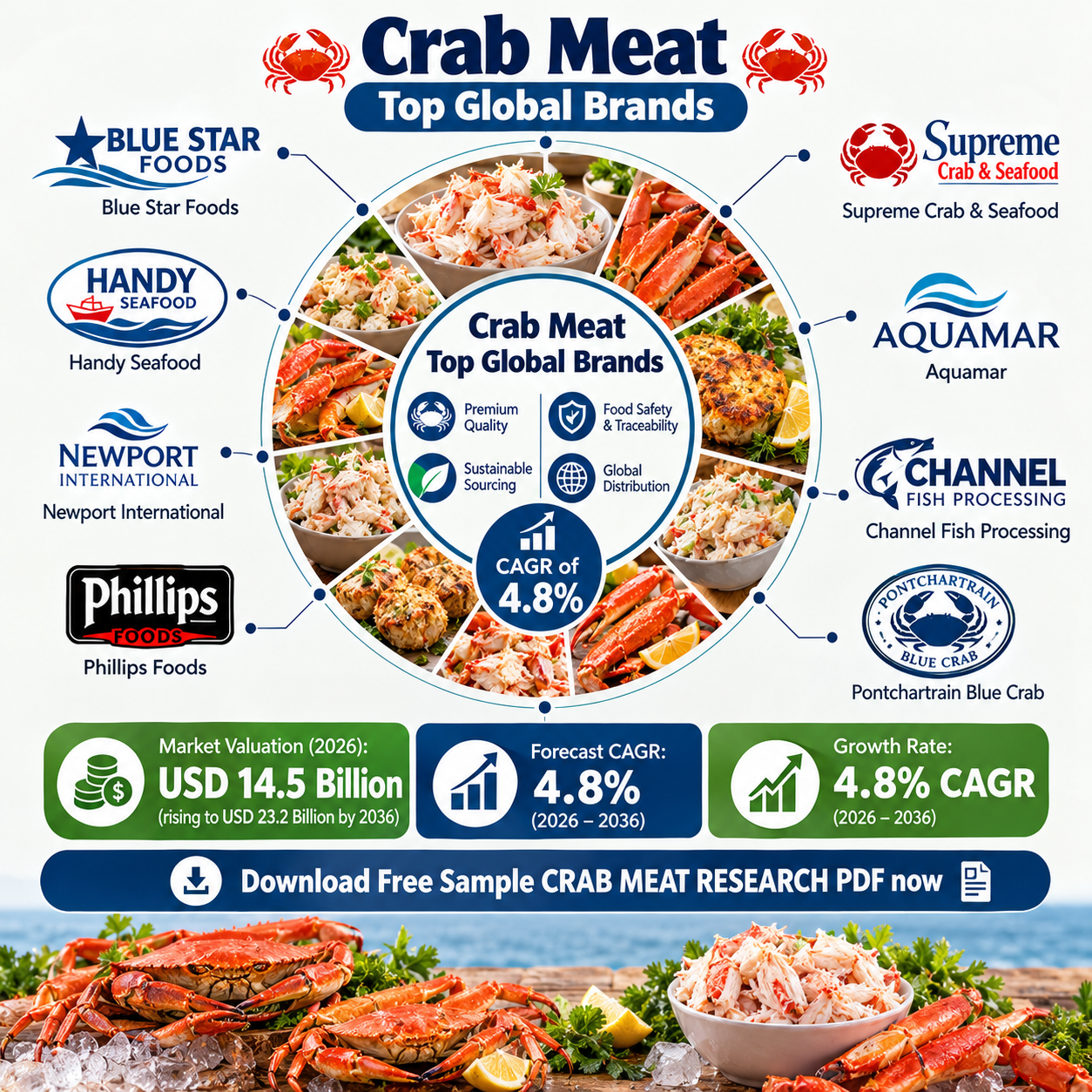
Crab Meat Market Demand for Premium Seafood Increases by FMI Report.
NEWARK, Del., October 19, 2026 — The global Crab Meat Market is gaining momentum as consumers, foodservice operators, and seafood processors increasingly seek high-quality seafood products for retail, restaurant, and ready-to-eat applications. According to the latest market intelligence report published by Future Market Insights (FMI), the market is valued at USD 963.8 million in 2025 and is projected to reach USD 1,525.6 million by 2035. The industry is anticipated to expand at a compound annual growth rate (CAGR) of 4.7% over the forecast period. Growth is supported by increasing demand for protein-rich seafood, premium dining experiences, convenient packaged products, and improved seafood processing and distribution capabilities.
Crab Meat Market Key Market Takeaways
- Market Valuation: USD 963.8 million in 2025, rising to USD 1,525.6 million by 2035.
- Growth Rate: Expanding at a 4.7% CAGR from 2025 to 2035.
- Leading Product Type: Lump crab meat is projected to account for approximately 60% of the product type segment in 2025.
- Leading Product Form: Fresh crab meat is expected to represent approximately 55% of the form segment in 2025.
- Fastest-Growing Country: China is projected to record the highest growth among the profiled countries, at a 6.3% CAGR.
- Other High-Growth Markets: The United States is forecast to expand at a 5.8% CAGR, followed by South Korea at 5.5% and Japan at 5.2%.
- Core Growth Driver: Increasing demand for premium seafood, high-protein foods, restaurant-based crab dishes, convenient packaged seafood, and traceable sourcing.
👉 Get Detailed Market Forecasts, Competitive Benchmarking & Industry Insights: Request a Sample Report: https://www.futuremarketinsights.com/reports/sample/rep-gb-17867
Industry Shifts & Market Dynamics
The crab meat market is evolving as consumers increasingly seek seafood products that combine nutritional value, premium taste, and preparation convenience. Crab meat is valued for its protein content, distinctive flavor, and versatility across restaurant menus, retail seafood products, salads, soups, pasta, dips, and prepared meals. These applications allow suppliers to serve premium foodservice establishments alongside mainstream retail and packaged seafood markets.
Product differentiation remains an important competitive factor. Lump crab meat is projected to account for approximately 60% of the product type segment in 2025, supported by its delicate texture, large meat pieces, and suitability for premium dishes such as crab cakes and seafood salads. Claw meat offers an alternative for soups, dips, sauces, and processed seafood applications where a more pronounced flavor and cost-effective ingredient can be advantageous.
Product form also influences purchasing decisions. Fresh crab meat is expected to represent approximately 55% of the market's form segment in 2025. Restaurants, seafood retailers, and specialty foodservice operators value fresh products for their flavor and texture. However, fresh crab meat requires careful handling, refrigeration, and efficient inventory management because of its limited shelf life.
Pasteurized, canned, and frozen crab meat formats offer manufacturers additional opportunities to serve customers seeking longer storage periods, simplified preparation, and more flexible distribution. These products can help reduce spoilage risks and support supply to retailers and foodservice customers beyond the immediate harvesting season.
Supply chain reliability remains a major consideration for the industry. Crab availability can be affected by seasonal harvesting patterns, environmental conditions, fishing regulations, and changes in crab populations. These factors can influence procurement costs, processing schedules, and product availability across international markets.
Companies that invest in sustainable sourcing, traceability, processing efficiency, cold-chain logistics, and product innovation are positioned to strengthen their competitive presence. Value-added products, including crab cakes, seasoned seafood, and convenient prepared formats, may also help suppliers differentiate their offerings and address changing consumer preferences.
Key Players Influencing the Crab Meat Market
Phillips Foods Inc., Blue Star Foods Corp., Newport International, Thai Union Group, Handy Seafood, Supreme Crab & Seafood, Harbour House Crabs, Bumble Bee Seafoods, Ocean Legacy, and Twin Tails Seafood are among the companies identified in the crab meat market landscape.
These companies participate in different parts of the seafood industry, including crab meat processing, packaged seafood distribution, premium product supply, and value-added seafood manufacturing. Competitive differentiation depends on product quality, sourcing practices, processing capabilities, food safety compliance, distribution networks, and the ability to maintain reliable supply.
Processors serving restaurants and foodservice operators must meet requirements for consistent product specifications, freshness, and dependable delivery. Retail-focused suppliers, meanwhile, need to balance packaging performance, shelf life, affordability, and consumer convenience.
As competition develops, manufacturers that combine dependable sourcing with effective processing and differentiated product portfolios may be better positioned to address opportunities across domestic and international markets.
Recent Developments in the Crab Meat Market
- Processing and Preservation: Improved freezing, pasteurization, and packaging techniques are creating opportunities to extend product usability and support distribution across wider geographic markets.
- Sustainable Sourcing: Greater attention to responsible harvesting, product origin, and seafood traceability is influencing procurement decisions among retailers, foodservice operators, and consumers.
- Convenience-Focused Product Development: Ready-to-eat seafood, prepared crab dishes, crab cakes, and packaged products provide opportunities to address changing meal preparation preferences.
- Supply Chain Modernization: Cold-chain management, quality assurance, and improved inventory controls remain important for maintaining product consistency and minimizing spoilage.
- Digital Seafood Distribution: Online grocery platforms and direct-to-consumer channels are expanding opportunities for seafood suppliers to reach customers seeking convenient access to fresh and processed products.
These developments reflect broader industry trends in seafood processing, sourcing, packaging, and distribution rather than independently verified announcements by every company listed.
For detailed Crab Meat Market analysis covering market size, forecasts, product types, forms, sales channels, regional opportunities, and competitive developments, visit the FMI report: Official Report: https://www.futuremarketinsights.com/reports/crab-meat-market
Regional Market Summary
According to Future Market Insights, China is projected to record the fastest growth among the profiled country markets, with a CAGR of 6.3% from 2025 to 2035. The country's established seafood consumption culture, demand for premium seafood, and expanding digital retail channels create opportunities for crab meat suppliers.
The United States is another important market, with an expected CAGR of 5.8%. Established seafood distribution networks, restaurant demand, and consumer interest in premium seafood products support market development. South Korea is projected to expand at a CAGR of 5.5%, supported by its seafood-oriented food culture and demand for convenient seafood products.
Japan is expected to register a CAGR of 5.2%, while the United Kingdom is forecast to grow at 4.9%. Across these markets, suppliers must address different preferences concerning product freshness, preparation formats, price points, and sourcing transparency.
- China: The crab meat market is projected to grow at a CAGR of 6.3% from 2025 to 2035, supported by seafood consumption, premium product demand, and expanding online distribution.
- United States: The market is expected to expand at a CAGR of 5.8%, driven by restaurant demand, packaged seafood consumption, and established retail distribution.
- South Korea: The market is projected to register a CAGR of 5.5%, supported by seafood-oriented food culture and demand for convenient product formats.
- Japan: The market is forecast to grow at a CAGR of 5.2%, supported by seafood consumption, prepared meal applications, and premium dining.
- United Kingdom: The market is expected to expand at a CAGR of 4.9%, supported by seafood consumption and demand for convenient retail and foodservice products.
- Australia: The market is projected to grow at a CAGR of 4.8%, supported by seafood consumption and demand from domestic and export markets.
- Germany: The market is expected to register a CAGR of 4.6%, with opportunities linked to international cuisine, convenient seafood formats, and health-conscious purchasing.
- France: The market is forecast to expand at a CAGR of 4.5%, supported by its established culinary culture and demand for premium seafood.
- Italy: The market is projected to grow at a CAGR of 4.4%, supported by coastal food traditions and demand for quality seafood products.
- New Zealand: The market is expected to expand at a CAGR of 4.2%, with opportunities linked to sustainable harvesting, domestic consumption, and seafood exports.
Analyst Insights
The crab meat market is increasingly shaped by demand for premium seafood, convenient product formats, and dependable sourcing. Lump crab meat remains an important product category because of its suitability for premium restaurant dishes and value-added seafood preparations. Fresh products appeal to customers prioritizing flavor and texture, while pasteurized, canned, and frozen formats provide advantages in storage, transportation, and product availability.
Sustainability and supply chain management are also central to the market's development. Seafood processors must navigate seasonal availability, changing environmental conditions, harvesting restrictions, and food safety requirements. These considerations can affect raw material costs and create challenges for maintaining consistent supply.
Manufacturers and distributors can strengthen their market positions by improving traceability, investing in cold-chain capabilities, diversifying sourcing arrangements, and expanding value-added product offerings. Packaging innovation and efficient processing may also help companies reduce spoilage and serve additional retail and foodservice applications.
As the industry develops, suppliers that balance product quality, affordability, sustainable sourcing, and distribution reliability are positioned to capture emerging opportunities in the global crab meat market.
Frequently Asked Questions
Q: What is the projected size of the crab meat market by 2035?
A: The global crab meat market is valued at USD 963.8 million in 2025 and is projected to reach USD 1,525.6 million by 2035, growing at a CAGR of 4.7%.
Q: Which product type leads the crab meat market?
A: Lump crab meat is projected to account for approximately 60% of the product type segment in 2025, supported by its premium texture and suitability for crab cakes, seafood salads, pasta, and other prepared dishes.
Q: Which product form holds the leading market share?
A: Fresh crab meat is expected to represent approximately 55% of the form segment in 2025, supported by demand from restaurants, specialty seafood retailers, and consumers seeking fresh seafood products.
Q: Which country exhibits the highest growth rate?
A: China is projected to record the highest growth among the profiled country markets, with a CAGR of 6.3% from 2025 to 2035.
Q: What factors are driving the crab meat market?
A: Market growth is supported by demand for protein-rich seafood, premium dining, convenient packaged products, expanding foodservice applications, and improvements in seafood processing and distribution.
Q: Who are the key players in the crab meat market?
A: Notable companies include Phillips Foods Inc., Blue Star Foods Corp., Newport International, Thai Union Group, Handy Seafood, Supreme Crab & Seafood, Harbour House Crabs, Bumble Bee Seafoods, Ocean Legacy, and Twin Tails Seafood.
Q: What challenges affect the crab meat market?
A: Key challenges include seasonal supply fluctuations, environmental pressures, harvesting regulations, raw material price volatility, cold-chain requirements, and food safety compliance.
Q: How is crab meat used across different industries?
A: Crab meat is used in restaurant dishes, crab cakes, soups, salads, dips, pasta, sushi, prepared meals, and packaged seafood products. Product selection depends on the desired texture, flavor, shelf life, preparation method, and cost requirements.
Q: How are sustainability requirements influencing the market?
A: Sustainability considerations are encouraging greater attention to responsible harvesting, traceability, sourcing transparency, and compliance with applicable seafood regulations. Suppliers that demonstrate reliable sourcing practices may be better positioned to meet buyer requirements.
Q: What is the role of frozen and pasteurized crab meat in market development?
A: Frozen and pasteurized products can offer longer storage periods and greater distribution flexibility than fresh crab meat. These formats support retail availability, foodservice procurement, and access to markets farther from harvesting locations.
Related Food & Beverage Industry Reports
Miso Paste Market https://www.futuremarketinsights.com/reports/miso-paste-market
Fava Beans Market https://www.futuremarketinsights.com/reports/fava-beans-market
Cassava Flour Market https://www.futuremarketinsights.com/reports/cassava-flour-market
Spirulina Beverages Market https://www.futuremarketinsights.com/reports/spirulina-beverages-market
UK Savory Ingredients Market https://www.futuremarketinsights.com/reports/united-kingdom-savory-ingredients-market
About Future Market Insights
Future Market Insights (FMI) is an ESOMAR-certified market research and consulting firm providing syndicated, customized, investment, and social media research across industries, including food and beverage, healthcare, chemicals, technology, and consumer products. FMI delivers market intelligence, competitive analysis, and strategic insights to help organizations evaluate emerging opportunities and make informed business decisions. The company has offices in the United States, the United Kingdom, the UAE, and India.
Media Contact
For Press & Corporate Inquiries
Rahul Singh
AVP – Marketing and Growth Strategy
Future Market Insights, Inc.
Phone: +91 8600020075
For Sales: sales@futuremarketinsights.com
For Media: Rahul.singh@futuremarketinsights.com
Website: https://www.futuremarketinsights.com/

 English
 Arabic
 French
 Spanish
 Portuguese
 Deutsch
 Dutch
 Italiano
 Russian
 Romaian
 Portuguese (Brazil)
 Greek