


How Tool Design Supports Safe Ball Joint Removal
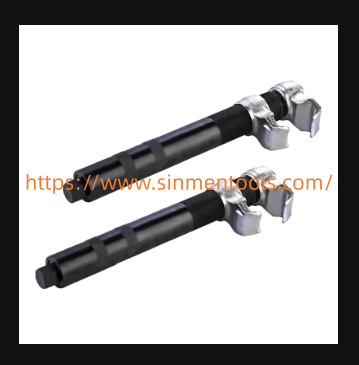
Steering and suspension assemblies contain closely connected components that must remain securely fitted during vehicle operation. During maintenance, separating these connections can be difficult because parts may be tightly seated or affected by corrosion and long-term use. A Ball Joint Separator is designed to help technicians separate suitable ball joint connections through a controlled mechanical action, reducing reliance on improvised methods that could damage nearby components. Its practical value depends on material quality, contact design, force application, and compatibility with the vehicle assembly.
Material selection influences how the tool responds to repeated mechanical loading. The working body and contact areas are commonly made from metal chosen for strength, rigidity, and resistance to wear. The quality of the material and its processing can affect whether the tool maintains its intended shape during use. Surface finishing also matters because the contact points must engage the assembly appropriately. Buyers should examine the overall construction, including joints and moving parts, rather than evaluating the product only by its external appearance.
The tool's contact structure is particularly important because steering and suspension layouts vary across vehicles. Some joints are relatively accessible, while others sit close to control arms, steering knuckles, brake components, or other surrounding structures. Different separator designs may use a forked profile, a screw-driven mechanism, or another arrangement suited to particular applications. Selecting the correct structure begins with understanding how the joint is mounted and where the tool can safely make contact.
A practical purchasing process starts with identifying the intended repair. Technicians should establish which connection needs to be separated, how much working space is available, and whether nearby parts restrict the approach. Vehicle service information can help identify the recommended procedure and any special requirements. Buyers should also review the tool manufacturer's stated applications instead of assuming that a single design is suitable for every steering or suspension system.
Mechanical operation determines how force reaches the joint. Some tools use a wedge-shaped contact surface to separate connected parts, while screw-operated designs apply pressure through a threaded mechanism. Each approach has different positioning and handling requirements. A suitable design should allow the operator to establish stable contact before force is applied. Correct alignment is essential because an improperly positioned tool can slip, damage surrounding surfaces, or create unpredictable movement during separation.
Compatibility should be considered alongside the tool's operating principle. The shape of the joint, the surrounding assembly, and the direction in which separation occurs all influence the appropriate design. A tool that fits one vehicle may not provide suitable access on another. Repair shops that service different vehicle types may need a selection of tools for different layouts, while specialist workshops may prioritize designs aligned with their regular maintenance work.
Safety depends on preparation as much as construction. Before using a separator, technicians should follow the vehicle manufacturer's service procedure, secure the vehicle appropriately, and inspect the tool for damage or wear. The working area should be arranged to reduce the risk of contact with moving components. Because a joint may release suddenly once the connection separates, technicians should keep clear of likely movement paths and wear suitable protective equipment. Improvised extensions or unsuitable striking methods should be avoided unless explicitly permitted by the tool's instructions.
User experience is influenced by how easily the tool can be positioned and adjusted. A well-organized structure can make it easier to identify the correct contact points, while accessible adjustment features can simplify setup in confined working areas. The tool should remain manageable while the technician aligns it with the joint and monitors the separation process. These details become especially relevant during repeated suspension work, where awkward positioning can increase effort and slow down routine maintenance.
Maintenance helps preserve the tool's working condition. Grease, road dirt, moisture, and other residues can collect on the contact surfaces and moving sections during repair work. Cleaning the tool after use makes it easier to inspect for cracks, deformation, worn threads, or other visible defects. Where lubrication is recommended, following the manufacturer's guidance can support smoother movement. Storing the tool in a dry, organized location also helps protect it from avoidable damage and corrosion.
Design and appearance can contribute to usability and product identification. A clearly defined working profile helps technicians recognize how the tool should engage the joint, while a well-finished surface can make cleaning and inspection more straightforward. Protective coatings may be useful for managing corrosion, depending on the material and working environment. Compact construction may improve access in restricted spaces, but the design must still provide suitable contact and structural support for the intended application.
Taizhou Xinming Technology Co., Ltd. supplies automotive repair tools for vehicle maintenance and workshop use. When evaluating products for a repair business or distribution range, buyers can discuss the intended vehicle applications, joint configurations, access limitations, material construction, and operating instructions with the supplier. These details help clarify whether a particular separator suits the expected repair work and whether additional tool designs may be needed for different service situations.
During suspension servicing, tool selection is closely connected to the condition of the vehicle and the repair procedure being followed. Technicians benefit from preparing the working area, confirming tool compatibility, and inspecting equipment before beginning the task. Businesses interested in automotive repair tools and related product information from Taizhou Xinming Technology Co., Ltd. can visit https://www.sinmentools.com/ to explore its available products and manufacturing services.

 English
 French
 Spanish
 Portuguese
 Deutsch
 Turkish
 Dutch
 Italiano
 Russian
 Romaian
 Portuguese (Brazil)
 Greek