


Climate Change and Global Governance: Meaning, Institutions, Agreements and Challenges
Introduction
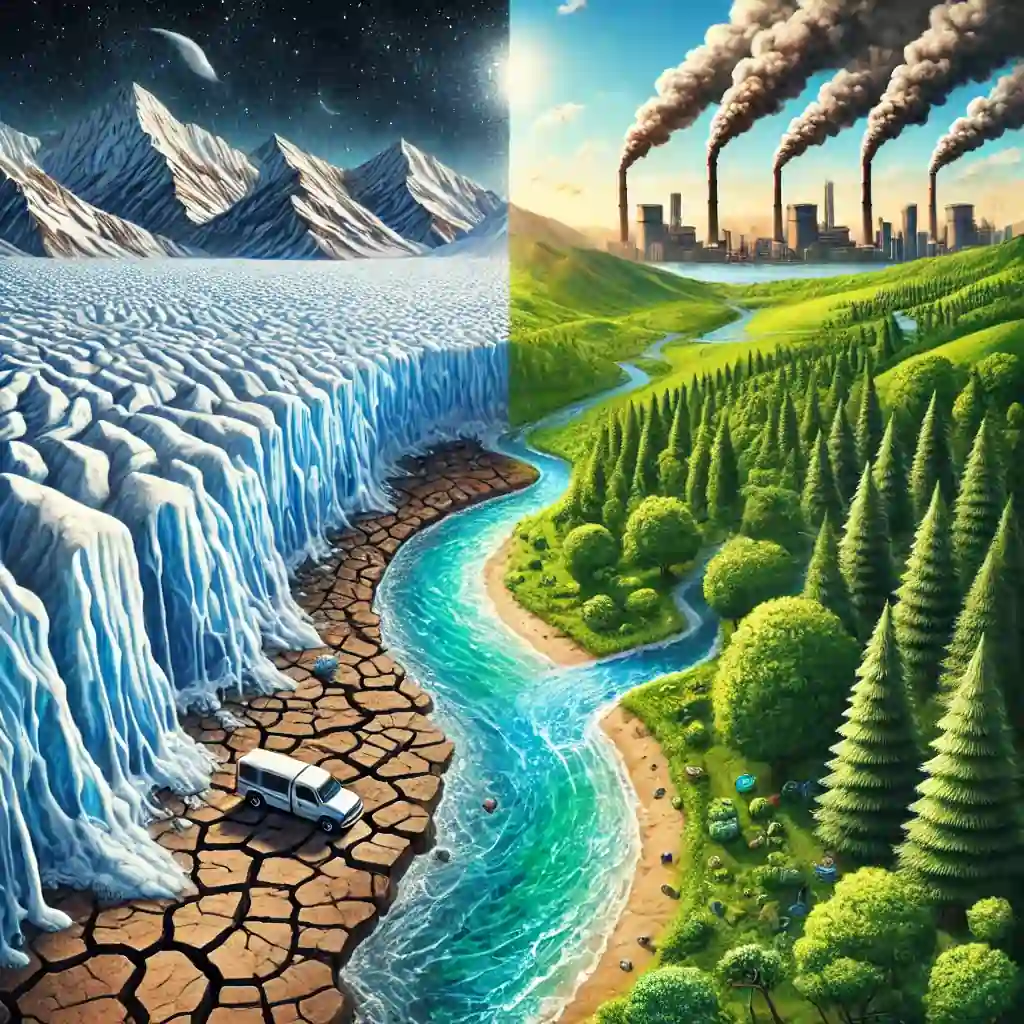
Climate change has emerged as one of the most significant global challenges of the 21st century. Rising global temperatures, extreme weather events, melting glaciers, sea-level rise, and biodiversity loss demonstrate that environmental problems are closely connected with international politics, economic development, and global security.
Climate change cannot be addressed by individual countries alone because greenhouse gas emissions produced in one country affect the global climate system. Its consequences cross national borders, making international cooperation essential. This has led to the development of global climate governance, a system of international institutions, treaties, norms, policies, and negotiations designed to address climate change.
In Political Science and International Relations, climate change and global governance are important topics for understanding multilateralism, international cooperation, North–South relations, environmental justice, and the role of international organizations.
For more related topics, explore the Climate Change section of Political Science Solution.
What Is Climate Change?
Climate change refers to long-term changes in temperatures, precipitation patterns, and other characteristics of the Earth's climate. Although climate patterns can change naturally, contemporary global warming is primarily driven by human activities, particularly the burning of fossil fuels, deforestation, and industrial processes.
These activities increase the concentration of greenhouse gases in the atmosphere, including carbon dioxide, methane, and nitrous oxide. These gases trap heat and contribute to global warming.
Major Causes of Climate Change
-
Burning fossil fuels: Coal, petroleum, and natural gas used for electricity, transportation, and industry release greenhouse gases.
-
Deforestation: The destruction of forests reduces the Earth's capacity to absorb carbon dioxide.
-
Industrial activities: Manufacturing, cement production, and other industrial processes contribute to emissions.
-
Agriculture: Livestock, rice cultivation, and fertilizer use release methane and nitrous oxide.
-
Unsustainable consumption: High levels of energy use, resource extraction, and waste generation intensify environmental pressures.
Major Effects of Climate Change
-
Rising average global temperatures.
-
More frequent or intense heatwaves in many regions.
-
Changing rainfall patterns and increased risks of floods and droughts.
-
Melting glaciers and rising sea levels.
-
Threats to agriculture, water security, and biodiversity.
-
Displacement of communities and growing economic losses.
-
Increased pressure on public health and national security.
Climate change is therefore not merely an environmental issue. It is also a political, economic, social, and developmental challenge.
What Is Global Governance?
Global governance refers to the rules, institutions, processes, and cooperative arrangements through which states and non-state actors address problems that extend beyond national borders.
Unlike national governance, global governance does not operate under a single world government. Instead, it functions through international organizations, treaties, diplomatic negotiations, regional institutions, civil society, scientific bodies, and partnerships involving governments and businesses.
For example, the United Nations Framework Convention on Climate Change (UNFCCC) provides an international framework for negotiations on climate change.
Meaning of Global Climate Governance
Global climate governance refers to the international system through which countries and other actors cooperate to reduce greenhouse gas emissions, adapt to climate impacts, mobilize climate finance, develop clean technologies, and promote sustainable development.
Its major objectives include:
-
Limiting global warming.
-
Reducing greenhouse gas emissions.
-
Strengthening climate adaptation.
-
Supporting vulnerable and developing countries.
-
Promoting climate finance and technology transfer.
-
Establishing common rules for monitoring and reporting climate action.
-
Addressing climate justice and unequal responsibility.
Global climate governance combines legally binding agreements, voluntary national commitments, international funding mechanisms, scientific assessments, and diplomatic negotiations.
Evolution of Global Climate Governance
The evolution of global climate governance reflects the growing recognition that environmental problems require collective international action.
1. United Nations Conference on the Human Environment, 1972
The Stockholm Conference of 1972 was a landmark in international environmental diplomacy. It placed environmental protection firmly on the international agenda and contributed to the establishment of the United Nations Environment Programme (UNEP).
Although the conference was not exclusively focused on climate change, it helped establish the foundations of international environmental cooperation.
2. Establishment of the IPCC, 1988
The Intergovernmental Panel on Climate Change (IPCC) was established in 1988 by the World Meteorological Organization (WMO) and UNEP.
Its primary function is to assess scientific research on climate change, including its causes, impacts, risks, and possible responses. The IPCC provides policymakers with scientific assessments but does not itself negotiate or implement climate treaties.
3. United Nations Framework Convention on Climate Change, 1992
The UNFCCC was adopted at the Rio Earth Summit in 1992 and entered into force in 1994.
Its objective is to stabilize greenhouse gas concentrations at a level that prevents dangerous human interference with the climate system.
The Convention introduced the principle of Common but Differentiated Responsibilities and Respective Capabilities (CBDR-RC). This principle recognizes that all countries have responsibilities to address climate change, but their historical contributions, capabilities, and circumstances differ.
4. Kyoto Protocol, 1997
The Kyoto Protocol was adopted in 1997 and entered into force in 2005. It established legally binding greenhouse gas emission reduction targets for participating developed countries during its commitment periods.
The protocol reflected the principle that industrialized countries should take the lead because of their historical emissions and greater economic capabilities.
Its mechanisms included emissions trading, the Clean Development Mechanism (CDM), and Joint Implementation.
The Kyoto Protocol was an important step in international climate cooperation, although its coverage and effectiveness were limited by uneven participation and implementation challenges.
5. Paris Agreement, 2015
The Paris Agreement was adopted at the 21st Conference of the Parties (COP21) in December 2015 and entered into force in November 2016.
It seeks to hold the increase in global average temperature to well below 2°C above pre-industrial levels while pursuing efforts to limit warming to 1.5°C.
Unlike the Kyoto Protocol's approach to binding emission targets for specified developed countries, the Paris Agreement brings nearly all countries into a common framework through nationally determined contributions (NDCs).
Under this system, countries submit climate action plans and are expected to strengthen their efforts over time. The agreement also includes provisions concerning adaptation, climate finance, transparency, and global stocktaking.
Read the official overview of the Paris Agreement.
Major Institutions of Global Climate Governance
Global climate governance operates through a network of international institutions and scientific bodies.
1. United Nations Framework Convention on Climate Change (UNFCCC)
The UNFCCC is the principal international treaty framework for climate negotiations.
Its functions include:
-
Organizing international climate negotiations.
-
Supporting the implementation of climate agreements.
-
Providing a framework for national climate commitments.
-
Facilitating discussions on mitigation, adaptation, and climate finance.
-
Supporting transparency and international cooperation.
The annual Conference of the Parties (COP) meetings are central to the UNFCCC process.
2. Conference of the Parties (COP)
The COP is the decision-making body of the UNFCCC. It brings together representatives of participating countries to review progress, negotiate agreements, and adopt decisions on climate action.
COP meetings address issues such as emission reduction targets, climate finance, adaptation, loss and damage, and the implementation of the Paris Agreement.
The COP process illustrates the importance of multilateral diplomacy in addressing global environmental problems.
3. Intergovernmental Panel on Climate Change (IPCC)
The IPCC provides scientific assessments that inform international climate negotiations and national policy decisions.
Its reports examine:
-
The physical science of climate change.
-
Climate impacts and vulnerability.
-
Adaptation strategies.
-
Greenhouse gas mitigation options.
The IPCC is important because effective global climate governance requires credible scientific evidence and a shared understanding of climate risks.
4. United Nations Environment Programme (UNEP)
UNEP promotes environmental cooperation, supports international environmental initiatives, and assesses gaps in climate action.
Its work includes evaluating emission reduction efforts, supporting environmental policy, and encouraging countries to strengthen climate commitments.
5. Green Climate Fund (GCF)
The Green Climate Fund was established under the UNFCCC framework to support climate action in developing countries.
It finances projects and programmes related to both mitigation and adaptation, with a focus on helping developing countries pursue low-emission and climate-resilient development.
6. World Bank and Other Multilateral Development Banks
International financial institutions support climate-related investments, including renewable energy, resilient infrastructure, sustainable agriculture, and disaster risk reduction.
Their role is important because climate action requires substantial financial resources, particularly in countries with limited domestic fiscal capacity.
Major International Climate Agreements
The following table summarizes the principal agreements and their significance.
| Agreement | Year | Major significance |
|---|---|---|
| Stockholm Conference | 1972 | Strengthened international environmental cooperation |
| UNFCCC | 1992 | Established the central framework for global climate negotiations |
| Kyoto Protocol | 1997 | Introduced binding emission reduction targets for specified developed countries |
| Paris Agreement | 2015 | Established a common climate framework based on national commitments |
| Glasgow Climate Pact | 2021 | Strengthened attention to mitigation, adaptation, and climate finance |
| COP27 decisions | 2022 | Established new arrangements for funding loss and damage, including a fund |
| COP28 UAE Consensus | 2023 | Called for transitioning away from fossil fuels in energy systems and accelerating climate action |
These developments demonstrate that global climate governance has gradually evolved from general environmental cooperation toward a more comprehensive system of climate commitments, finance, transparency, and implementation.
Key Principles of Global Climate Governance
1. Common but Differentiated Responsibilities and Respective Capabilities
CBDR-RC is one of the most important principles in international environmental politics.
It recognizes that climate change is a shared problem, but countries differ in their historical contributions to greenhouse gas emissions and their financial and technological capacities.
Developed countries are therefore expected to take the lead in climate action and support developing countries through finance, technology, and capacity-building.
This principle remains central to debates over climate justice and international responsibility.
2. Sustainable Development
Sustainable development seeks to meet present needs without compromising the ability of future generations to meet their own needs.
In climate governance, this means pursuing economic development while reducing emissions, protecting ecosystems, and improving social welfare.
Developing countries frequently emphasize the need to balance climate commitments with poverty reduction, energy access, industrialization, and employment.
3. Precautionary Principle
The precautionary principle suggests that a lack of complete scientific certainty should not be used as a reason to postpone measures to prevent serious or irreversible environmental damage.
It supports preventive action where climate risks are substantial, even when uncertainties remain about the exact scale or timing of particular impacts.
4. Intergenerational Equity
Intergenerational equity emphasizes the responsibility of the present generation to protect environmental resources and climate stability for future generations.
It connects climate governance with environmental ethics, human rights debates, and the concept of sustainable development.
5. Climate Justice
Climate justice focuses on the unequal distribution of climate risks, responsibilities, and resources.
Communities that have contributed relatively little to global emissions may face severe consequences because of their geographical exposure, poverty, limited infrastructure, or lack of adaptation resources.
Climate justice therefore calls for fair burden-sharing, support for vulnerable populations, and inclusive decision-making.
Major Mechanisms of Global Climate Governance
1. Mitigation
Climate mitigation refers to measures that reduce greenhouse gas emissions or increase the removal of greenhouse gases from the atmosphere.
Examples include:
-
Expanding renewable energy.
-
Improving energy efficiency.
-
Reducing deforestation.
-
Promoting sustainable transportation.
-
Electrifying suitable industrial and transport activities.
-
Protecting and restoring forests and wetlands.
Mitigation is essential for limiting the extent of future climate change.
2. Adaptation
Climate adaptation refers to adjustments in natural or human systems that reduce vulnerability to actual or expected climate impacts.
Examples include drought-resistant crops, flood protection, heat action plans, early warning systems, resilient infrastructure, and improved water management.
Adaptation is especially important for countries and communities already experiencing significant climate impacts.
3. Climate Finance
Climate finance refers to financial resources used to support mitigation and adaptation.
Developing countries often require international support because climate-resilient infrastructure, clean technology, and disaster preparedness involve substantial costs.
Climate finance remains a major issue in international negotiations because countries disagree over the scale of support, the responsibilities of contributors, and the balance between grants, loans, and private investment.
4. Technology Transfer
Technology transfer involves sharing or facilitating access to technologies, knowledge, expertise, and technical capacity that support climate action.
Examples include renewable energy systems, energy storage, climate-resilient agricultural technologies, and improved forecasting systems.
Technology transfer can help developing countries pursue lower-emission development without sacrificing essential development objectives.
5. Nationally Determined Contributions (NDCs)
NDCs are national climate action plans submitted under the Paris Agreement.
They communicate countries' intended efforts to reduce emissions and, where applicable, strengthen adaptation.
The NDC system allows countries to determine their own commitments while operating within a common international framework. Countries are expected to update and strengthen these contributions over time.
6. Transparency and Global Stocktake
Transparency arrangements help countries report their emissions, progress, and implementation efforts.
The Global Stocktake assesses collective progress toward the goals of the Paris Agreement. It is designed to inform countries as they strengthen future climate action.
These mechanisms are important because international climate cooperation depends on information, accountability, and confidence that commitments are being implemented.
Challenges to Global Climate Governance
Despite the development of international agreements, global climate governance faces several significant challenges.
1. North–South Divide
One of the most persistent challenges is disagreement between developed and developing countries.
Developing countries argue that industrialized nations bear a greater historical responsibility for accumulated greenhouse gas emissions and should provide more financial and technological support.
Developed countries, meanwhile, often emphasize the need for broader participation in emission reduction efforts because current and future emissions are generated across a wider range of economies.
This disagreement complicates negotiations over climate finance, mitigation targets, and responsibility-sharing.
2. Free-Rider Problem
Climate change presents a collective-action problem.
The benefits of reducing global emissions are shared internationally, but the economic and political costs of mitigation may be concentrated within individual countries.
As a result, governments may have incentives to benefit from other countries' efforts while making insufficient domestic commitments themselves.
This is known as the free-rider problem and helps explain why voluntary cooperation can be difficult to sustain.
3. Lack of Effective Enforcement
International climate agreements depend heavily on national implementation, reporting, diplomacy, and reputational pressure.
Although the Paris Agreement establishes legally binding procedural obligations, countries determine their own emissions targets. The agreement does not impose a uniform international penalty for failing to achieve every stated emissions target.
Consequently, a gap can emerge between announced commitments and actual climate outcomes.
4. Climate Finance Gap
Many developing countries require substantial investment to reduce emissions, prepare for climate impacts, and recover from climate-related disasters.
However, disagreements persist over the amount, accessibility, predictability, and form of international climate finance.
Limited resources can delay renewable energy projects, adaptation measures, and infrastructure improvements.
5. Geopolitical Rivalries
Competition over energy security, trade, industrial policy, critical minerals, and technological leadership can weaken international cooperation.
Countries may prioritize short-term economic interests over shared climate objectives. Geopolitical tensions can also affect technology transfer and the availability of financial support.
6. Continued Dependence on Fossil Fuels
Many economies remain dependent on coal, oil, and natural gas for electricity, transportation, employment, and government revenue.
Moving away from fossil fuels involves economic restructuring, infrastructure investment, and support for affected workers and communities.
The challenge is to ensure that the transition is socially fair while accelerating emission reductions.
7. Unequal Vulnerability
Small island developing states, least-developed countries, and vulnerable communities often face disproportionate climate risks.
Limited financial resources, inadequate infrastructure, and geographical exposure can make it difficult to prepare for extreme weather, rising seas, and changing rainfall patterns.
This inequality raises questions about global solidarity, climate justice, and the responsibilities of wealthier states.
Climate Change and International Relations
Climate change has become an important subject in International Relations because it challenges traditional understandings of state sovereignty, national interest, and international cooperation.
1. Realist Perspective
Realism emphasizes state interests, power, and competition in international politics.
From a realist perspective, climate cooperation can be difficult because states are concerned about economic competitiveness, energy security, and relative gains.
Governments may hesitate to adopt costly climate measures if they believe rival countries will gain economic advantages by avoiding similar commitments.
Nevertheless, climate impacts can also encourage cooperation when states recognize shared strategic risks.
2. Liberal Institutionalism
Liberal institutionalism argues that international institutions can facilitate cooperation by providing information, establishing rules, reducing uncertainty, and creating forums for negotiation.
The UNFCCC and Paris Agreement illustrate this approach by providing a common framework for national commitments, reporting, negotiations, and periodic assessments.
Institutions cannot eliminate all conflicts of interest, but they can make cooperation more achievable.
3. Constructivism
Constructivism emphasizes the role of norms, ideas, identities, and shared understandings in international politics.
Concepts such as climate justice, sustainable development, and intergenerational responsibility have influenced international debates and public expectations.
The growing recognition of climate change as a global responsibility illustrates how environmental norms can shape state behaviour and international policy.
4. Green Political Theory
Green political theory questions development models based on unlimited economic growth and resource exploitation.
It emphasizes ecological sustainability, environmental democracy, intergenerational justice, and the need to reconsider the relationship between human societies and nature.
This perspective draws attention to the structural causes of environmental degradation rather than treating climate change solely as a technical problem.
India and Global Climate Governance
India occupies an important position in international climate negotiations because it is a major developing economy with substantial energy needs, development priorities, and exposure to climate risks.
India's approach emphasizes climate action alongside poverty reduction, energy access, economic development, and equity.
India's Major Climate Priorities
-
Climate justice: India emphasizes fairness in distributing climate responsibilities, taking account of historical emissions and unequal capabilities.
-
Renewable energy: India has expanded its renewable energy ambitions and promotes solar power and other low-carbon technologies.
-
Energy access: India highlights the importance of reliable and affordable energy for households, agriculture, and industry.
-
Lifestyle for Environment (LiFE): This initiative promotes sustainable consumption and environmentally responsible lifestyles.
-
International Solar Alliance: Co-founded by India and France, the alliance promotes international cooperation on solar energy.
-
Adaptation and resilience: India prioritizes disaster preparedness, water security, climate-resilient agriculture, and infrastructure.
India's climate diplomacy seeks to reconcile international climate commitments with domestic development requirements.
Challenges for India
India faces several climate-related challenges, including extreme heat, changing monsoon patterns, water stress, agricultural vulnerability, coastal risks, and growing energy demand.
The country must expand clean energy, improve resilience, mobilize finance, and support vulnerable communities while ensuring inclusive economic development.
India's experience demonstrates the wider challenge facing developing countries: how to pursue climate action without undermining legitimate development goals.
The Role of Non-State Actors in Climate Governance
Although states remain central to international climate agreements, non-state actors also influence climate policy.
Non-Governmental Organizations
Environmental organizations monitor climate negotiations, advocate for stronger commitments, raise public awareness, and hold governments and corporations accountable.
Multinational Corporations
Businesses influence climate outcomes through their energy use, supply chains, production systems, and investment decisions. They can contribute to emission reductions but may also create obstacles when commercial interests conflict with climate objectives.
Scientific Community
Scientists provide evidence about climate trends, risks, and mitigation options. Scientific assessments help policymakers evaluate possible responses and understand the consequences of delayed action.
Civil Society and Indigenous Communities
Civil society groups and Indigenous communities contribute local knowledge, defend ecosystems, and advocate for environmental rights and fair climate policies.
Cities and Local Governments
Cities play an important role in public transportation, building efficiency, waste management, urban planning, and climate adaptation.
These actors demonstrate that global climate governance is not limited to international diplomacy; it also depends on implementation at national and local levels.
Future of Global Climate Governance
The future effectiveness of global climate governance will depend on whether countries can translate international commitments into measurable action.
Several priorities are especially important:
-
Strengthening national climate commitments and implementation.
-
Accelerating the transition toward low-emission energy systems.
-
Increasing predictable and accessible finance for developing countries.
-
Expanding adaptation and early warning systems.
-
Improving transparency and accountability.
-
Supporting workers and communities affected by the energy transition.
-
Strengthening cooperation on technology, research, and capacity-building.
-
Ensuring that climate decisions reflect the needs of vulnerable populations.
International cooperation must also address the political and economic barriers that prevent countries from implementing their commitments.
A successful system requires not only ambitious agreements but also adequate resources, effective domestic policies, public participation, and sustained political will.
Importance of Climate Change and Global Governance for UGC NET Political Science
Climate change and global governance are relevant to UGC NET Political Science and CUET PG because the topic connects several important areas of the syllabus:
-
International Relations and global politics.
-
International organizations and the United Nations.
-
Environmental politics and global governance.
-
Sustainable development.
-
North–South relations.
-
Global justice and human rights.
-
Multilateralism and international cooperation.
-
India’s foreign policy and climate diplomacy.
Students should pay particular attention to the UNFCCC, Kyoto Protocol, Paris Agreement, CBDR-RC, NDCs, IPCC, climate finance, and the major theoretical perspectives on international cooperation.
For further study, visit the Political Science Solution Climate Change category for related articles and current environmental issues.
Frequently Asked Questions (FAQs)
1. What is global climate governance?
Global climate governance is the system of international agreements, institutions, rules, and cooperative processes through which countries and other actors address climate change.
2. What is the role of the UNFCCC in climate governance?
The UNFCCC provides the main international framework for climate negotiations, including discussions on emission reduction, adaptation, finance, and the implementation of climate agreements.
3. What is the difference between the Kyoto Protocol and the Paris Agreement?
The Kyoto Protocol established binding emission reduction targets for specified developed countries during its commitment periods. The Paris Agreement establishes a common framework in which countries submit nationally determined climate commitments and strengthen their efforts over time.
4. What is CBDR-RC?
Common but Differentiated Responsibilities and Respective Capabilities is a principle recognizing that all countries share responsibility for addressing climate change, while their historical contributions and capacities differ.
5. What is climate justice?
Climate justice addresses the unequal distribution of climate impacts, responsibilities, and resources. It emphasizes fairness for vulnerable communities and countries with limited capacity to respond.
6. What is the role of the IPCC?
The IPCC assesses scientific research on climate change, including its causes, impacts, risks, and possible mitigation and adaptation strategies. Its assessments inform policymakers and international negotiations.
7. Why is climate change a global governance issue?
Climate change crosses national borders, affects shared environmental systems, and requires coordinated action on emissions, finance, technology, and adaptation. No country can independently solve the entire problem.
Conclusion
Climate change and global governance represent a central challenge for contemporary international politics. The development of the UNFCCC, Kyoto Protocol, and Paris Agreement demonstrates the importance of international institutions and multilateral cooperation in addressing global environmental risks.
However, differences in national interests, historical responsibility, financial capacity, and development priorities continue to complicate climate negotiations. The effectiveness of global climate governance therefore depends on cooperation, climate finance, technological progress, transparent reporting, and fair burden-sharing.
From a Political Science perspective, climate change illustrates both the possibilities and limitations of global governance. It shows that international institutions can establish shared rules and encourage cooperation, but successful implementation ultimately requires political commitment at both international and domestic levels.
The central challenge is to build a climate governance system that is effective, equitable, and capable of protecting both present and future generations.
References and Further Reading
-
United Nations Framework Convention on Climate Change (UNFCCC). The Paris Agreement.
-
UNFCCC. The Kyoto Protocol.
-
UNFCCC. Key Aspects of the Paris Agreement.
-
Intergovernmental Panel on Climate Change (IPCC). Official Website.
-
United Nations Environment Programme (UNEP). Official Website.
-
Political Science Solution. Climate Change: Articles and Study Resources.
-
Political Science Solution. State of Climate 2024 Report: Earth Crosses the 1.5°C Danger Line.
-
Political Science Solution. COP29: Climate Finance and Global Action.

 English
 Arabic
 French
 Spanish
 Portuguese
 Deutsch
 Turkish
 Italiano
 Russian
 Romaian
 Portuguese (Brazil)
 Greek