


Which Technical Details Should Buyers Discuss With qianxunele?
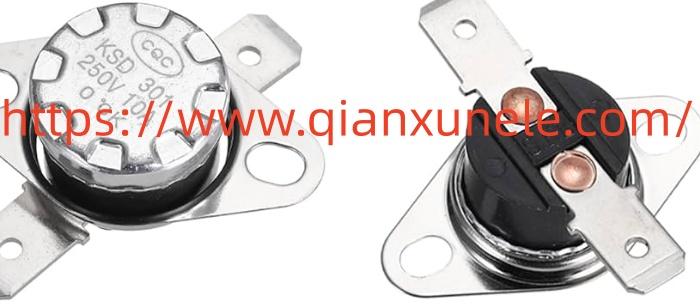
KSD 301 Steam Iron Thermostat selection requires careful evaluation of temperature response, electrical ratings, physical dimensions, and compatibility with the intended appliance. Buyers who establish these requirements before requesting quotations can communicate more clearly with suppliers and reduce the risk of receiving components that do not match their design. A structured review also helps purchasing and engineering teams coordinate product testing and production preparation.
Establish the Required Operating Temperature
The required temperature range should be defined according to the appliance design and its intended working conditions. Buyers need to consider the heating element, plate materials, internal layout, and expected operating cycle before selecting a suitable component.
Switching temperature and reset temperature are two important values to review. The switching point determines when the contacts change state as the component responds to heat, while the reset point describes when the contacts return after cooling. Their relationship influences the heating cycle and should match the requirements established by the design team.
Ask the supplier for the specified operating range, permitted tolerance, and relevant verification details. If the application requires particular temperature behavior, document those expectations before sample approval. This provides a clearer reference for technical assessment and helps avoid relying on a product description alone.
Verify Electrical Specifications
Electrical ratings should correspond to the circuit in which the component will be installed. Buyers should check rated voltage, current capacity, contact arrangement, and the type of load controlled by the device.
Contact configuration is also important. A normally open arrangement and a normally closed arrangement behave differently, so the correct option depends on the appliance circuit. Components that appear similar externally may not be interchangeable when their electrical specifications differ.
Provide the supplier with relevant circuit information and the expected operating conditions. Engineering staff can use these details to review the proposed model against the application requirements. The complete appliance should then undergo appropriate electrical and safety evaluations, including checks of wiring, insulation, protective features, and applicable standards.
Compare Dimensions and Mounting Requirements
Physical compatibility can affect assembly efficiency and product operation. Before ordering, review the component's overall dimensions, mounting method, terminal position, connection orientation, and contact with the heat source.
The relationship between the sensing area and the heating plate deserves particular attention. Differences in contact position or mounting pressure may affect how the component responds to temperature changes. Buyers should therefore provide dimensional drawings or clear installation information when asking a supplier to recommend a model.
For replacement applications, compare the proposed component with the existing part rather than relying on a similar product name. For new designs, check the available installation space and surrounding materials. If possible, obtain samples and assess their fit within the actual assembly before confirming a production quantity.
Ask How Product Quality Is Verified
A purchasing review should include the supplier's inspection procedures and documentation. Depending on the agreed specification, checks may cover switching behavior, reset performance, electrical characteristics, terminal condition, dimensions, and repeatability across operating cycles.
Buyers should clarify which inspection records are available and how deviations are managed. Establishing acceptance criteria before production helps both parties understand what must be checked and what actions are required if a component does not meet the agreed requirements.
Sample approval is another important step. Evaluate samples against the intended application and retain the approved specification for future reference. If construction, materials, or other technical details change, agree on a review process before accepting the revised product. Documented requirements make it easier for purchasing, engineering, and quality teams to work from the same information.
Plan Orders and Maintain Clear Communication
Procurement teams should discuss order quantities, delivery schedules, packaging, labeling, and documentation before confirming a purchase. These details affect inventory preparation and the coordination of component deliveries with appliance assembly.
When requesting a quotation, share the target temperature, electrical ratings, mounting dimensions, application details, and estimated quantity. Complete information helps the supplier evaluate the request and identify unanswered technical questions early in the process.
For repeat purchases, maintain records of approved specifications and any authorized revisions. This helps reduce misunderstandings when new orders are placed and provides a reference for incoming inspection. Buyers should also confirm how samples, technical questions, and production updates will be communicated.For manufacturers sourcing temperature-control components, qianxunele provides a contact point for discussing product specifications and application requirements. Before making an inquiry, prepare your drawings, electrical details, target operating range, and expected quantity so the proposed model can be assessed against your design. Visit https://www.qianxunele.com/product/ to review product information and discuss suitable options for your manufacturing needs.

 English
 Arabic
 French
 Spanish
 Portuguese
 Deutsch
 Turkish
 Dutch
 Russian
 Romaian
 Portuguese (Brazil)
 Greek