


How to Choose the Right Used OEM Airbags and Replacement Auto Parts
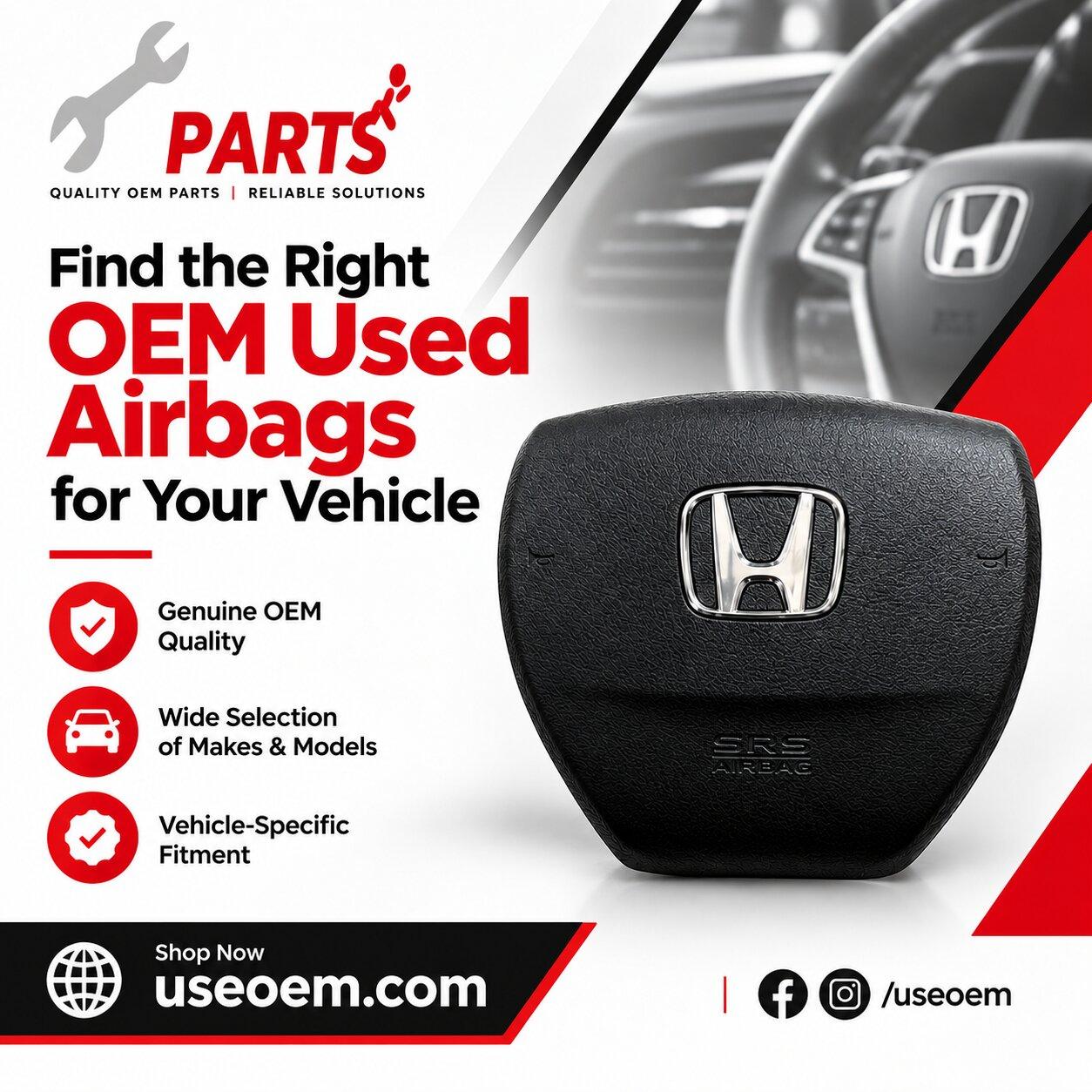
After a vehicle accident or interior component failure, finding the correct replacement part is an important step in the repair process. Vehicle owners, collision repair professionals, and auto body shops need to consider vehicle compatibility, component condition, original equipment manufacturer (OEM) specifications, and installation requirements before purchasing replacement components. Use OEM helps customers explore used OEM airbags and factory-original automotive parts for a range of vehicle makes and models.
Choosing a replacement airbag involves more than matching the vehicle's make and model. Airbag systems are designed around specific vehicle configurations, and even small differences in model year, trim, part number, or installation position can affect compatibility. Understanding these factors can help customers make informed purchasing decisions and communicate more effectively with qualified automotive repair professionals.
Why Vehicle Compatibility Matters When Buying Replacement Parts
Modern vehicles contain interconnected safety systems that rely on components designed for particular applications. A driver-side steering wheel airbag, passenger-side dashboard airbag, side airbag, and roof curtain airbag each serve different positions and functions. These components are not automatically interchangeable.
Before selecting a replacement, identify the vehicle's exact year, make, model, and trim. Where available, compare the original part number and other manufacturer-specific identifiers. VIN-based compatibility checks can provide additional information about the vehicle configuration and help narrow down suitable replacement options.
At Use OEM, customers can explore replacement components for different vehicle applications. Checking compatibility before ordering can reduce the risk of receiving a part that does not match the intended vehicle.
Understanding Used OEM Airbags
Used OEM airbags are original equipment components removed from donor vehicles. Their previous use does not, by itself, establish whether a particular component is suitable for reuse. Condition, history, application, applicable regulations, and professional inspection all matter.
An airbag that has deployed must not be treated as an undeployed replacement. Customers should also understand that visual appearance alone cannot establish the operational condition of an airbag or its related safety system. A qualified professional should assess whether a replacement component is appropriate for the specific repair.
When researching used auto airbags, look for clear product information, accurate part identification, and a seller that can help verify vehicle fitment. Ask questions about the component's condition and the information available about its origin before completing a purchase.
Common Types of Automotive Airbags
Different airbag locations provide protection in different areas of a vehicle. Identifying the required position is essential when searching for a replacement.
-
Driver-side steering wheel airbags: Installed in the steering wheel assembly.
-
Passenger-side airbags: Commonly positioned within the dashboard area.
-
Side airbags: Located in designated seating or side structures, depending on the vehicle.
-
Roof curtain airbags: Positioned along the roofline to provide side-impact head protection.
-
Knee airbags: Installed in certain vehicles to provide protection around the lower leg area.
Availability and configuration vary by vehicle. Always match the replacement to the original application rather than relying on a general description or appearance.
What to Check Before Purchasing a Used OEM Replacement Part
A careful selection process can help vehicle owners and repair businesses avoid unnecessary delays.
1. Confirm the vehicle details
Gather the VIN, model year, make, model, and trim information. These details help identify the correct application, although a VIN check should not replace confirmation of the component's part number and specifications.
2. Verify the part number
Compare the number on the original component with the replacement listing when possible. Some part numbers have supersessions or application-specific variations, so a qualified parts specialist should confirm any differences.
3. Understand the component's condition
Review the product description and ask whether the component is used and undeployed, where applicable. Request clarification about its known history and condition. Do not assume a part is safe or functional based solely on a photograph or a seller's description.
4. Review shipping and return policies
Clear shipping and return information makes purchasing easier, particularly when sourcing automotive parts for a repair. Check the seller's terms before ordering and confirm how a fitment concern or return request will be handled.
5. Arrange professional installation
Airbags are part of a vehicle's supplemental restraint system (SRS). Installation, diagnostics, and any required system repairs should be handled by qualified automotive professionals following the vehicle manufacturer's service information and applicable safety requirements. Never attempt to test an airbag using improvised electrical methods.
How Use OEM Helps Customers Find Replacement Components
Finding a replacement part can be challenging when several versions exist for the same vehicle. Use OEM provides an online inventory of used OEM airbags and other factory-original automotive components, helping customers explore options based on their vehicle requirements.
The inventory includes airbag applications for different makes and models, along with selected components such as seat belts, steering wheels, dashboards, and other interior parts. Customers can use the available product details to identify potential matches and seek VIN-based fitment assistance before ordering.
Use OEM also offers free shipping and a 30-day return policy, subject to the applicable terms. Reviewing the listing and confirming compatibility before purchase can help customers choose more confidently.
Explore the available inventory at Use OEM to find used OEM airbags and other replacement auto parts for your vehicle.
Why Accurate Part Selection Matters for Collision Repairs
Choosing the correct replacement component helps repair professionals follow a more organized repair process. Incorrect fitment can lead to delays, additional shipping, and the need to source another part. For safety-related components, compatibility and proper installation are especially important.
Vehicle owners should work with a qualified repair facility to determine which components require replacement after a collision. The technician should follow manufacturer repair procedures, inspect related components, and verify that the restraint system is properly addressed before the vehicle returns to service.
For additional safety guidance, consult the National Highway Traffic Safety Administration (NHTSA) and the vehicle manufacturer's service information. These resources can help explain airbag safety and the importance of following appropriate repair procedures.
Frequently Asked Questions
What does OEM mean in automotive parts?
OEM stands for Original Equipment Manufacturer. In automotive parts searches, the term generally refers to components associated with the vehicle's original equipment specifications, rather than generic replacement designs.
Are used OEM airbags compatible with every vehicle of the same model?
No. Compatibility can vary by model year, trim, production configuration, part number, and airbag position. Verify the specific application before purchasing.
How can I identify the correct replacement airbag?
Start with the vehicle's VIN, year, make, and model. Compare the original part number where available and request confirmation from a qualified parts specialist before ordering.
What should I know before buying a used airbag?
Confirm its application, disclosed condition, available history, and return terms. An undeployed appearance does not prove that an airbag is functional or safe for reuse. A qualified professional should determine suitability and follow applicable manufacturer procedures and regulations.
Does Use OEM offer other replacement auto parts?
Yes. In addition to used OEM airbags, Use OEM lists selected automotive components such as seat belts, steering wheels, dashboards, and other interior parts. Availability varies by vehicle and inventory.
Final Thoughts
Selecting a replacement airbag requires careful attention to vehicle compatibility, part identification, component condition, and professional installation. Taking time to verify these details can help prevent avoidable purchasing mistakes and support a more informed repair process.
Use OEM gives customers a place to explore used OEM airbags and other factory-original automotive replacement parts. Visit useoem.com to review available products and confirm fitment before placing an order.

 English
 French
 Spanish
 Portuguese
 Deutsch
 Turkish
 Dutch
 Italiano
 Russian
 Romaian
 Portuguese (Brazil)
 Greek