


Should You Turn Off Your Gas or Electric Geyser Before Sleeping?
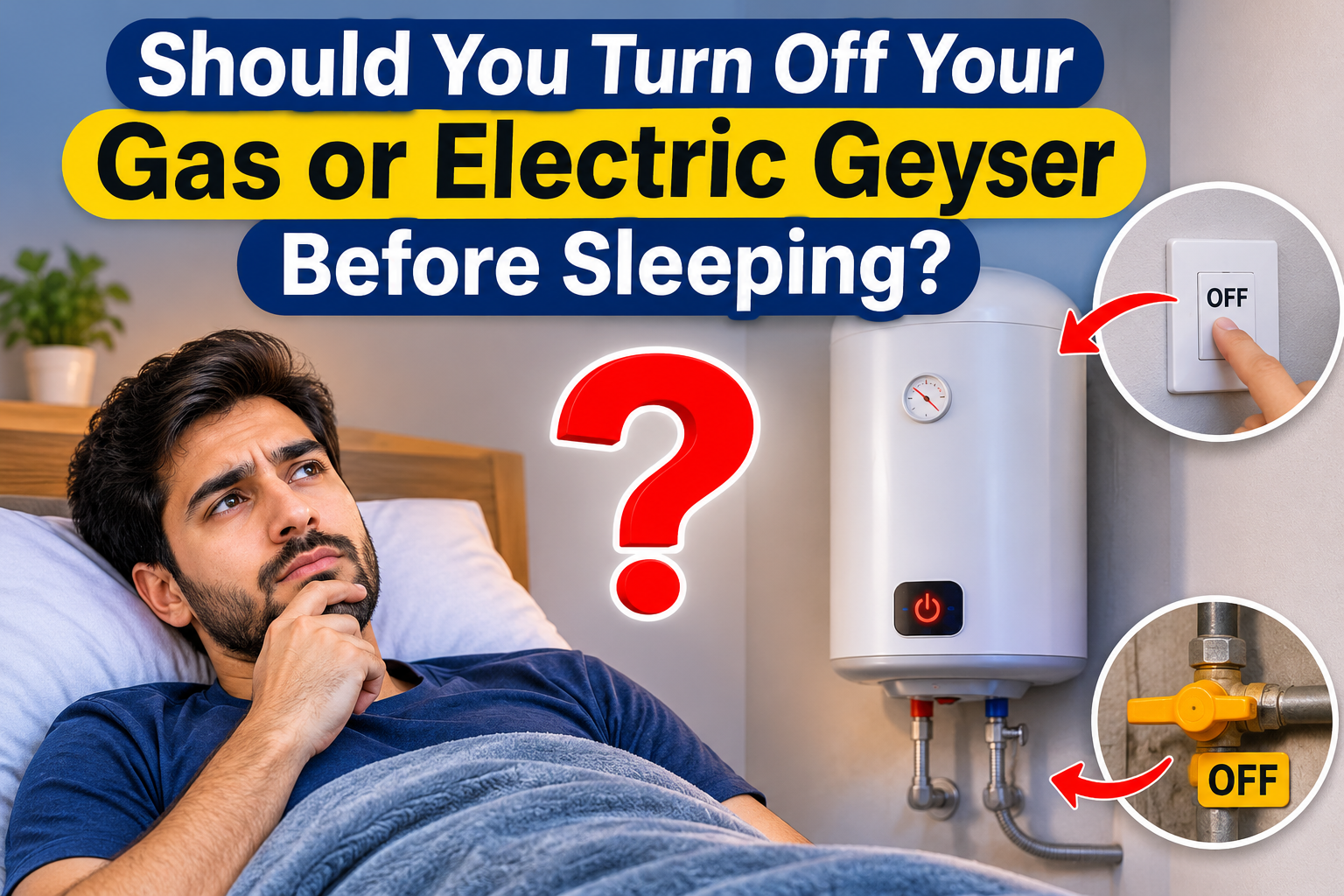
Many households in Pakistan leave their geysers running overnight so hot water is available first thing in the morning. Others prefer switching them off before sleeping to avoid unnecessary gas or electricity consumption. But which habit is better for your monthly bills, appliance performance, and household safety?
The answer depends on whether you use a gas storage heater, an electric storage model, or an instant water heater. Each operates differently and has its own energy requirements. If your existing appliance is consuming more energy than expected, comparing the latest geyser price may help you understand the alternatives, but changing how you use your current heater could be enough.
Understanding what happens inside a water heater overnight can help you make a more practical decision.
How Storage Geysers Work Overnight
Storage geysers keep a quantity of heated water inside an insulated tank. Once the water reaches the selected temperature, the thermostat stops the main heating process. When the stored water cools, the heating system may activate again to maintain the temperature.
This process happens even when nobody opens a hot water tap. Heat slowly escapes through the tank and connected pipes, causing the appliance to consume additional energy. The amount of heat loss depends on insulation, room temperature, and the thermostat setting.
A well-insulated storage geyser generally loses less heat than a poorly insulated one. However, even good insulation cannot eliminate standby losses completely.
Electric Geyser Consumption During Sleeping Hours
An electric storage geyser uses a heating element to warm water. Once the thermostat reaches its set temperature, the element switches off and only operates again when additional heating is required.
This means an electric geyser does not necessarily consume its full rated power throughout the night. For example, a 2000W appliance does not automatically use 16 electricity units over eight hours. That would only happen if its heating element operated continuously at full power during that period.
When no hot water is being used, most energy consumption comes from replacing heat lost from the stored water. The amount varies depending on tank insulation and operating conditions.
Switching off a conventional storage heater overnight may reduce these losses, although the actual savings can be modest for a well-insulated appliance.
Gas Geyser Operation at Night
Gas storage water heaters also maintain a selected water temperature. Their burners operate when heating is required and stop when the water reaches the thermostat setting.
Some traditional models have standing pilot flames that consume a small amount of gas even when the main burner is not operating. Other appliances use electronic or battery-powered ignition systems.
The operating design determines how much fuel the geyser consumes when nobody is using hot water. A storage heater with a pilot system behaves differently from an instant gas heater that activates when water flows.
If you are considering a replacement, compare the available models and gas geyser price alongside ignition requirements, safety controls, and warranty coverage.
Energy Savings From Switching Off a Geyser
Turning off a storage geyser for an extended period generally reduces the energy used to maintain stored water temperature. However, the appliance must reheat the water when it is switched on again.
This reheating does not automatically cancel all the savings. When the water is allowed to cool, the temperature difference between the tank and its surroundings becomes smaller, reducing heat loss.
The savings depend on several factors, including tank size, insulation, overnight temperature, and how long the heater remains switched off.
For households that need hot water immediately after waking up, convenience also matters. A storage geyser may require additional time to heat water after being switched on.
Instant Geysers and Overnight Energy Consumption
Instant water heaters operate differently from storage models. Instead of maintaining a large tank of hot water, they generally heat water when someone opens a tap.
This means there is usually little reason to switch an instant geyser off solely to prevent storage-related heat losses. However, some models have pilot flames, electronic controls, or standby functions that consume energy.
The manufacturer's instructions should determine whether the appliance can remain in standby mode safely.
For gas instant heaters, proper ventilation and functioning combustion-safety controls are particularly important. Do not assume that every model has identical operating requirements simply because it heats water on demand.
Safety Considerations for Gas Water Heaters
Gas geysers need suitable ventilation, safe combustion, and properly installed exhaust systems. These requirements remain important whether the heater operates during the day or overnight.
A correctly installed appliance designed for continuous automatic operation may be able to remain in its normal operating mode. However, this should never be assumed for an older or poorly maintained geyser.
If you notice a gas smell, soot marks, unusual ignition sounds, or suspected exhaust problems, stop using the appliance and seek professional assistance. In the event of a suspected gas leak, leave the area and contact the gas emergency service from a safe location.
Never disable flame-failure protection or modify gas controls to keep the heater operating.
Electrical Safety and Thermostat Protection
Electric water heaters also require proper installation and maintenance. Suitable wiring, earthing, and circuit protection help reduce the risk of electrical faults.
Modern storage heaters may include thermostats and high-temperature safety cut-offs. These components regulate heating and protect against certain abnormal operating conditions.
However, protective features do not make damaged appliances safe. Repeated circuit-breaker trips, burning smells, leaking water near electrical parts, or unusual overheating require professional attention.
If your electric geyser has recently developed problems, arrange an inspection before leaving it operating unattended.
Hot Water Availability in the Morning
One reason people leave their geysers running overnight is to avoid waiting for hot water in the morning.
A storage heater that remains at its operating temperature can provide hot water without requiring a full reheating cycle.
However, switching it off overnight may be practical if your household has enough time to heat water before bathing.
The required heating time depends on storage capacity, heating power, and incoming water temperature. Larger tanks may take longer to recover, particularly during winter.
For households with busy morning routines, convenience should be considered alongside possible energy savings.
Using Timers and Built-In Heating Controls
Some electric storage water heaters support programmed heating schedules or compatible timer controls.
These systems can help households manage when the appliance heats water. For example, a suitable programmed schedule may prepare hot water before the family's usual morning routine.
However, an external timer should only be used if it is electrically rated for the appliance and permitted by the manufacturer.
A high-power water heater should never be connected to an ordinary plug-in timer that cannot safely handle its electrical load.
Certain modern heaters also provide dedicated economy or vacation modes. These functions should be used according to the product instructions rather than improvised through wiring modifications.
Temperature Settings and Water Hygiene
Some homeowners reduce the thermostat to the lowest setting to save electricity. Although lower temperatures can reduce heat loss, excessively low storage temperatures can create water hygiene concerns.
Legionella bacteria can grow under certain conditions in inadequately maintained hot-water systems. For many stored hot-water installations, temperatures around 60°C are commonly recommended for controlling this risk, with suitable mixing protection to reduce scalding at taps.
The correct temperature depends on the system design and applicable safety guidance.
Instead of frequently changing the thermostat, follow the manufacturer's recommended settings. If you are uncertain, have a qualified technician check the water heater and its temperature-control arrangement.
Choosing a Practical Overnight Routine
There is no single overnight operating routine that suits every household.
A family that needs hot water at several different times may benefit from keeping an approved, properly maintained storage heater in its normal automatic operating mode.
A household that uses hot water only during limited periods may reduce standby losses through an appropriate heating schedule.
Instant water heaters have different requirements because they do not normally maintain a large stored supply.
The best approach is to consider appliance design, hot-water demand, safety requirements, and expected energy costs rather than following one rule for every geyser.
Frequently Asked Questions
Does an electric geyser consume electricity all night?
A storage geyser may consume electricity periodically to maintain water temperature. It does not necessarily operate continuously at full power.
Is it safe to leave a gas geyser on overnight?
It depends on the specific appliance, installation, and manufacturer instructions. Proper ventilation and functioning safety controls are essential.
Does switching off a geyser save electricity?
Switching off a conventional storage heater for extended periods can reduce standby heat losses, although actual savings depend on the appliance and usage.
Will reheating water in the morning use more energy?
Reheating requires energy, but it does not automatically eliminate the savings from reduced overnight heat loss.
Should instant geysers be switched off before sleeping?
Follow the manufacturer's instructions. Many on-demand models have minimal storage-related losses, but standby and safety requirements vary.
Final Verdict: The Best Overnight Geyser Routine
Whether you should turn off your geyser before sleeping depends on its heating technology and your household's requirements.
Electric storage geysers can lose heat overnight, so a suitable heating schedule may help reduce unnecessary electricity consumption. Gas storage models also experience standby losses, while certain designs consume additional fuel through pilot flames.
Instant water heaters generally avoid the need to maintain a large heated tank, but their standby behaviour varies.
Regardless of the appliance type, safety should remain the priority. Never leave a faulty geyser operating unattended or ignore the manufacturer's installation and operating instructions.

 English
 Arabic
 French
 Spanish
 Portuguese
 Deutsch
 Turkish
 Dutch
 Italiano
 Russian
 Romaian
 Portuguese (Brazil)