


How Can Chendiao Fully Automatic Angle Cutting Band Saw Machine Support Production
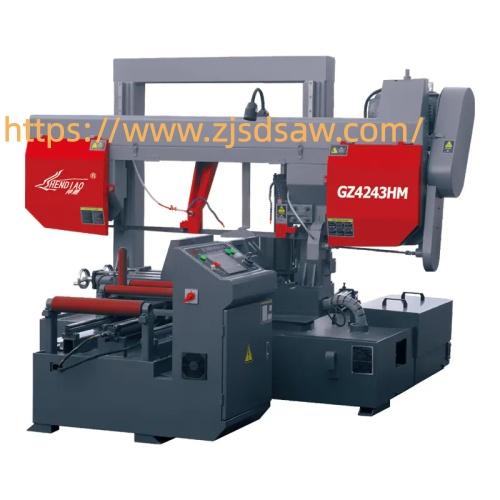
Fully Automatic Angle Cutting Band Saw Machine selection begins with a practical question: what does your production line need to cut each day, and how consistently must those parts be delivered? For metal fabrication businesses, the right equipment should match actual workloads rather than simply offer a long list of technical features. Material dimensions, cutting angles, order quantities, and available operator time all influence which configuration makes sense. A careful assessment of these factors helps manufacturers choose equipment that fits their current workflow while leaving room for future changes.
Start with the materials moving through your workshop. Some factories process round steel bars throughout the day, while others handle square tubing, rectangular profiles, or solid metal sections for structural components. These workpieces place different demands on the sawing process. A machine suitable for smaller profiles may not accommodate a large solid section at the required angle. Before comparing models, record the maximum dimensions of your regular workpieces, the materials you process most frequently, and any occasional jobs that require additional capacity. Check the rated cutting range at each intended angle, since available capacity can change as the saw head moves away from its straight-cut position.
Cutting angles deserve equal attention. A workshop producing frames, support structures, machine bases, or metal assemblies may switch between straight cuts and several miter angles during a typical shift. If these changes happen frequently, the method used to set and verify each angle becomes an important part of the purchasing decision. Automatic angle adjustment can reduce repetitive manual steps on compatible machines, but buyers should confirm the available angle range and how adjustments are programmed. Consider whether your production involves a few standard angles or a varied schedule of custom requirements. The answer affects both equipment selection and the amount of setup time needed between jobs.
Production volume is another useful starting point. A business cutting a small batch of components every few days has different needs from a factory processing hundreds of pieces for recurring orders. Automatic feeding and programmable cutting sequences can reduce the need for repeated manual positioning, particularly when the same dimensions appear throughout a batch. However, automation should match the real workload. If jobs change constantly and quantities remain low, flexibility and straightforward setup may matter more than features designed around long production runs. For repetitive orders, review the feeding method, indexing capability, control interface, and how easily operators can save or adjust job settings.
Material handling can also influence the final decision. Long steel sections need adequate support before and after the cutting area, while heavy workpieces require suitable clamping to remain stable during operation. An undersized support arrangement can complicate loading and make it harder to maintain an orderly workflow. Check the space required for the machine, feeding equipment, material storage, and safe movement around the work area. It is also worth considering how operators will load raw stock, remove finished parts, and manage offcuts. A machine that fits the production floor and the material flow is easier to integrate into daily work.
Blade selection and maintenance should not be treated as afterthoughts. Blade specifications need to suit the material, section shape, and cutting conditions. Incorrect blade choice, unsuitable cutting speed, insufficient coolant, or poor tension can contribute to uneven cuts and premature wear. Ask about blade replacement procedures, access to routine service points, chip removal, and the availability of consumables. Operators should also understand how to monitor cutting performance and identify changes that may signal a worn blade or an incorrect setting. Consistent maintenance supports predictable operation and helps avoid interruptions during busy production periods.
When comparing equipment from different manufacturers, look beyond the purchase price. Consider the machine configuration, included accessories, installation requirements, operator training, spare parts, and technical support. Request specifications for the actual workpieces you plan to process, rather than relying on a general description of the machine. If possible, provide sample dimensions, material grades, cutting angles, and expected batch quantities when discussing your needs with a supplier. These details make it easier to assess whether the proposed configuration aligns with your production targets. They also help identify any optional equipment that may be necessary for your application.
For manufacturers comparing industrial sawing solutions, Chendiao offers a starting point for reviewing equipment options against real workshop requirements. Before making a decision, prepare a short list of your common materials, maximum section sizes, required angles, daily cutting volume, and available floor space. These details help turn a broad search into a more focused technical discussion. You can review the companys product range and machine information at https://www.zjsdsaw.com/ and use your production requirements to identify a configuration suited to your operation.

 English
 Arabic
 French
 Spanish
 Portuguese
 Deutsch
 Turkish
 Dutch
 Russian
 Romaian
 Portuguese (Brazil)
 Greek