


How Can Exosome Hair Therapy Revive Weak Hair?
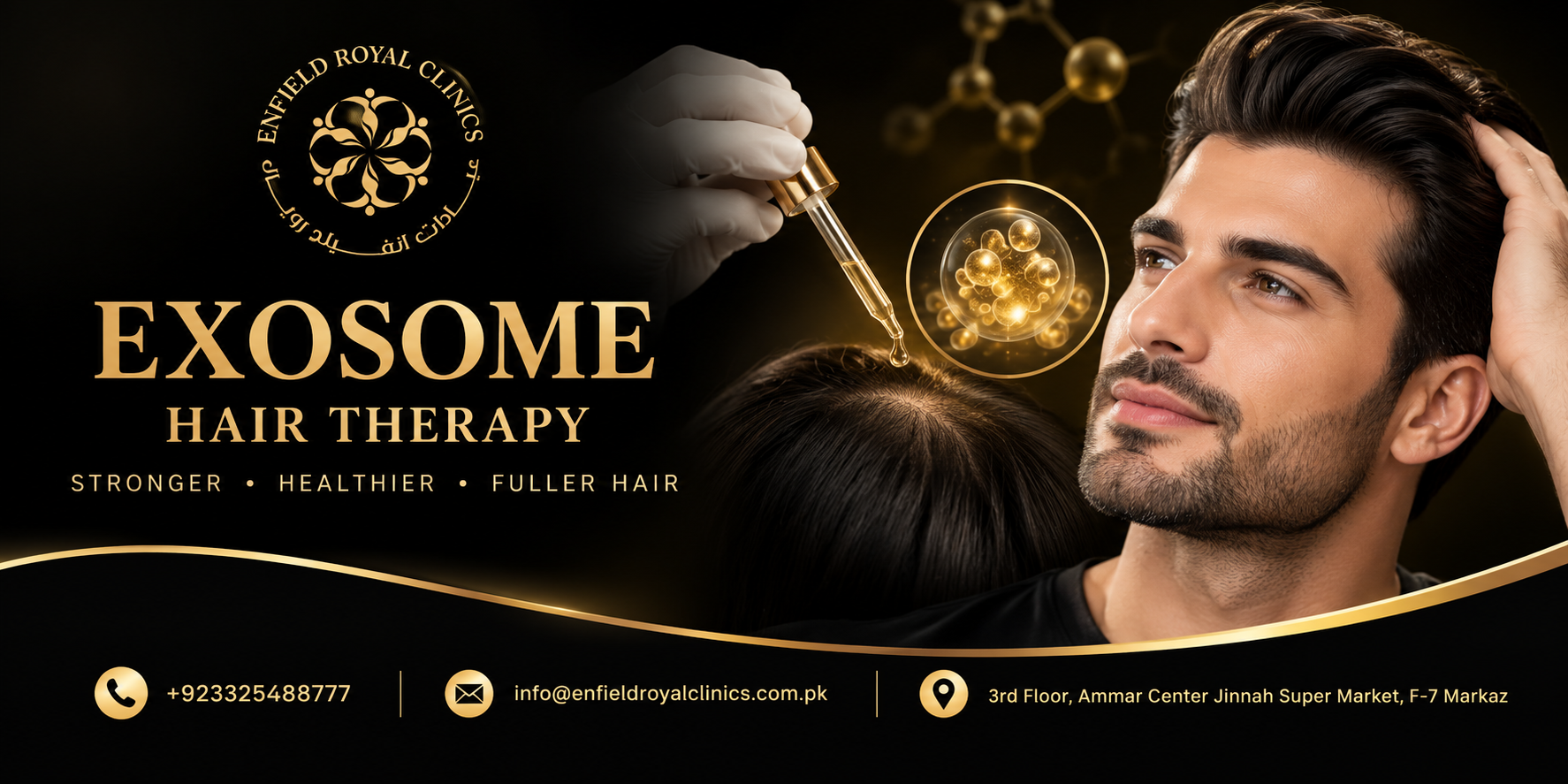
Weak, thin, and lifeless hair can be frustrating for people who want to maintain healthy hair and a fuller appearance. Hair may gradually lose its thickness, become more fragile, or shed more than usual because of genetics, hormonal changes, nutritional deficiencies, stress, or certain medical conditions. Understanding the underlying cause is essential before choosing a hair restoration treatment.
One emerging approach attracting attention is exosome-based hair therapy. Researchers are exploring how exosomes may influence cellular communication and biological processes associated with hair follicle health. For individuals researching Exosome Hair Therapy in Islamabad, learning how the treatment works, what benefits it might offer, and what limitations remain can help them make informed decisions.
Although early research has shown promising possibilities, exosome therapy is not yet a well-established treatment for weak hair. Its effectiveness depends on factors that researchers are still investigating, including the product used, the cause of hair loss, and the condition of the scalp.
What Is Exosome Hair Therapy and How Does It Work?
Exosomes are tiny extracellular vesicles released by cells. They carry biological materials, including proteins, lipids, and signaling molecules, that help cells communicate with one another. Scientists are studying their potential applications in regenerative medicine, including research involving hair follicles and scalp tissue.
Exosome hair therapy aims to introduce an exosome-containing preparation to the scalp to influence biological processes associated with hair growth. Depending on the product and treatment protocol, the preparation may be delivered through topical application, injections, or a procedure involving microneedling.
Unlike a hair transplant, this approach does not involve moving hair follicles from one part of the scalp to another. Instead, researchers are investigating whether exosome-related signals could help support the environment in which existing follicles function.
However, not all exosome preparations are identical. Their sources, composition, manufacturing standards, and biological activity can differ. Consequently, evidence supporting one preparation cannot automatically be applied to every product marketed for hair restoration.
Patients should understand that exosome therapy remains an emerging field. More rigorous clinical trials are needed to establish which preparations are effective, which patients may benefit, and whether any improvements can be maintained over the long term.
How Can Exosome Hair Therapy Revive Weak Hair?
Hair follicles pass through natural growth, transition, and resting phases. When this cycle is disrupted or follicles gradually become smaller, the hair may appear thinner, weaker, or less dense. Researchers are investigating whether exosomes can influence cellular signals involved in follicle activity and the scalp environment.
The potential benefits being studied include the following.
Supporting hair follicle activity: Researchers are examining whether certain exosome preparations may influence pathways associated with the normal hair growth cycle. However, this potential effect has not been firmly established for routine clinical use.
Improving the appearance of hair density: Some early clinical reports have described improvements in measured hair density after particular exosome-based treatments. Larger controlled studies are needed to determine how consistent these findings are.
Potentially influencing hair thickness: Researchers are investigating whether exosome-related signaling may support changes in hair shaft thickness. Results may vary depending on the underlying condition and treatment protocol.
Supporting scalp tissue research: Exosomes are being studied for their possible role in cellular communication and tissue repair. Whether these mechanisms translate into meaningful, lasting hair restoration remains uncertain.
It is important to distinguish these research possibilities from proven benefits. Exosome therapy cannot currently be guaranteed to revive every weak hair follicle, prevent all future shedding, or restore hair in completely bald areas.
For people considering Exosome Hair Therapy in Islamabad, a professional assessment can help determine whether the hair concern may respond to established treatments or requires further investigation before an emerging therapy is considered.
Who May Benefit From Exosome Hair Therapy?
The suitability of any hair restoration treatment depends on the cause of the hair problem. Weak hair does not always indicate the same condition, and a treatment that may help one person might not be appropriate for another.
People with hereditary hair thinning may notice gradual changes around the crown, temples, or central scalp. This condition, known as androgenetic alopecia, involves genetic and hormonal influences that can cause follicles to shrink over time. Exosome-based approaches are being investigated for this type of hair loss, but their effectiveness remains uncertain.
Temporary shedding can occur after illness, significant stress, surgery, or other physical changes. Nutritional deficiencies, thyroid disorders, and certain medications can also contribute to hair loss. In these situations, identifying and treating the underlying cause is essential.
A medical assessment is especially important when hair loss is sudden, occurs in distinct patches, or is accompanied by scalp pain, scaling, redness, or inflammation. These symptoms may indicate a condition requiring specific treatment.
Before proceeding, patients should discuss their medical history, current medications, allergies, previous hair treatments, and scalp symptoms. Depending on the findings, a healthcare professional may recommend blood tests or other investigations to identify contributing factors.
Exosome therapy should not replace appropriate medical treatment for a diagnosed condition. It is also important to recognize that advanced hair loss may require a different approach from early thinning.
What Happens During Exosome Hair Therapy?
The exact procedure varies according to the preparation and delivery method. Patients should receive a clear explanation of the proposed process before agreeing to treatment.
Initial assessment: The provider evaluates the scalp, pattern of hair loss, hair density, and medical history. Photographs or scalp imaging may be used to document the initial condition.
Product and procedure discussion: The patient should be informed about the product's source, composition, quality controls, intended use, and available safety evidence. The provider should also explain the uncertainty surrounding expected results.
Scalp preparation: If treatment proceeds, the scalp is prepared according to the chosen method. The delivery technique may involve topical application, injections, or microneedling, each of which carries different considerations.
Application and aftercare: The preparation is administered according to the relevant protocol. The patient then receives instructions on scalp care, washing, and any temporary activity restrictions.
There is no universally established exosome hair treatment schedule supported by strong evidence. The number of sessions, intervals between treatments, and need for repeat procedures remain uncertain.
Patients should be cautious of claims promising immediate hair growth or guaranteed results. Progress, if any, generally needs to be evaluated over time using consistent photographs and appropriate measurements rather than assumptions based on a single appointment.
Is Exosome Hair Therapy Safe for Weak Hair?
Safety is an important consideration because exosome products can vary considerably in their composition, source, and manufacturing quality. Research to date has provided some encouraging early findings, but it has not established the long-term safety of every product marketed for hair restoration.
Potential side effects depend partly on the delivery method. Redness, tenderness, itching, swelling, or discomfort may occur. Procedures involving needles or microneedling can also carry risks such as bleeding, infection, or skin injury.
Product quality requires particular attention. Patients should ask whether the preparation has appropriate sterility and quality testing, whether its source is clearly documented, and whether it is authorized for its intended use under applicable regulations.
The US Food and Drug Administration states that no exosome products are FDA-approved. Patients in Pakistan should separately verify the relevant local regulatory requirements and the authorization status of the specific preparation being offered.
A qualified healthcare professional should explain the known risks, the uncertainties, and the alternatives before treatment. Severe pain, spreading redness, fever, pus, or other signs of infection after a procedure require prompt medical attention.
How Can Patients Maintain Stronger, Healthier Hair?
Hair health depends on more than a single treatment. A comprehensive approach can help address preventable causes of weakness and support the results of an appropriate hair management plan.
A balanced diet containing adequate protein, iron, and other essential nutrients supports normal hair growth. However, supplements should not be taken indiscriminately; nutritional deficiencies are best assessed and treated appropriately.
Gentle hair care can also reduce breakage. Excessive heat styling, harsh chemical treatments, tight hairstyles, and aggressive brushing may damage the hair shaft. Reducing these practices can help hair retain its existing strength, although it will not necessarily reverse hereditary hair loss.
For suitable patients, established options such as topical minoxidil or prescription treatments may be discussed with a healthcare professional. Their suitability depends on the type of hair loss, medical history, and potential side effects. Treating an underlying thyroid problem or nutritional deficiency may also be important.
Patients considering Exosome Hair Therapy in Islamabad should view it within this broader context. Identifying the cause of weak hair and reviewing treatments with stronger clinical evidence can help establish a more realistic and effective plan.
Frequently Asked Questions
1. Can Exosome Hair Therapy make weak hair thicker?
Some early studies have reported improvements in hair thickness or density following certain exosome-based interventions. However, evidence remains limited, and consistent results have not been established. The outcome depends on the underlying condition, the product used, and individual factors.
2. How long does it take to see results from Exosome Hair Therapy?
There is no reliable, universal timeline for results. Studies use different preparations and follow-up periods, so their findings cannot establish a standard schedule. Patients should discuss realistic expectations and arrange consistent follow-up assessments.
3. Can exosome therapy stop hair fall completely?
No treatment can be guaranteed to stop every form of hair loss. Exosome therapy remains under investigation, and persistent shedding may indicate an underlying condition that requires diagnosis and treatment. Identifying the cause is an essential first step.
4. Is Exosome Hair Therapy suitable for everyone with weak hair?
No. Suitability depends on the cause and severity of hair loss, scalp health, medical history, and the available evidence for the proposed product. A professional evaluation can help determine whether established treatments or further investigations would be more appropriate.
Conclusion
Exosome hair therapy is an emerging area of hair restoration research that may offer new possibilities for supporting hair follicle health. Early findings have generated interest in its potential to improve hair density and thickness, but stronger clinical evidence is still needed to confirm its effectiveness and long-term safety.
Anyone considering Exosome Hair Therapy in Islamabad should seek an accurate diagnosis, verify product quality, and understand the limitations of current research before proceeding. Combining realistic expectations with appropriate medical guidance and a suitable hair care plan can help individuals make informed decisions about maintaining healthier-looking hair.

 Arabic
 French
 Spanish
 Portuguese
 Deutsch
 Turkish
 Dutch
 Italiano
 Russian
 Romaian
 Portuguese (Brazil)
 Greek