


Ama Dablam Gear List & Training for Ama Dablam
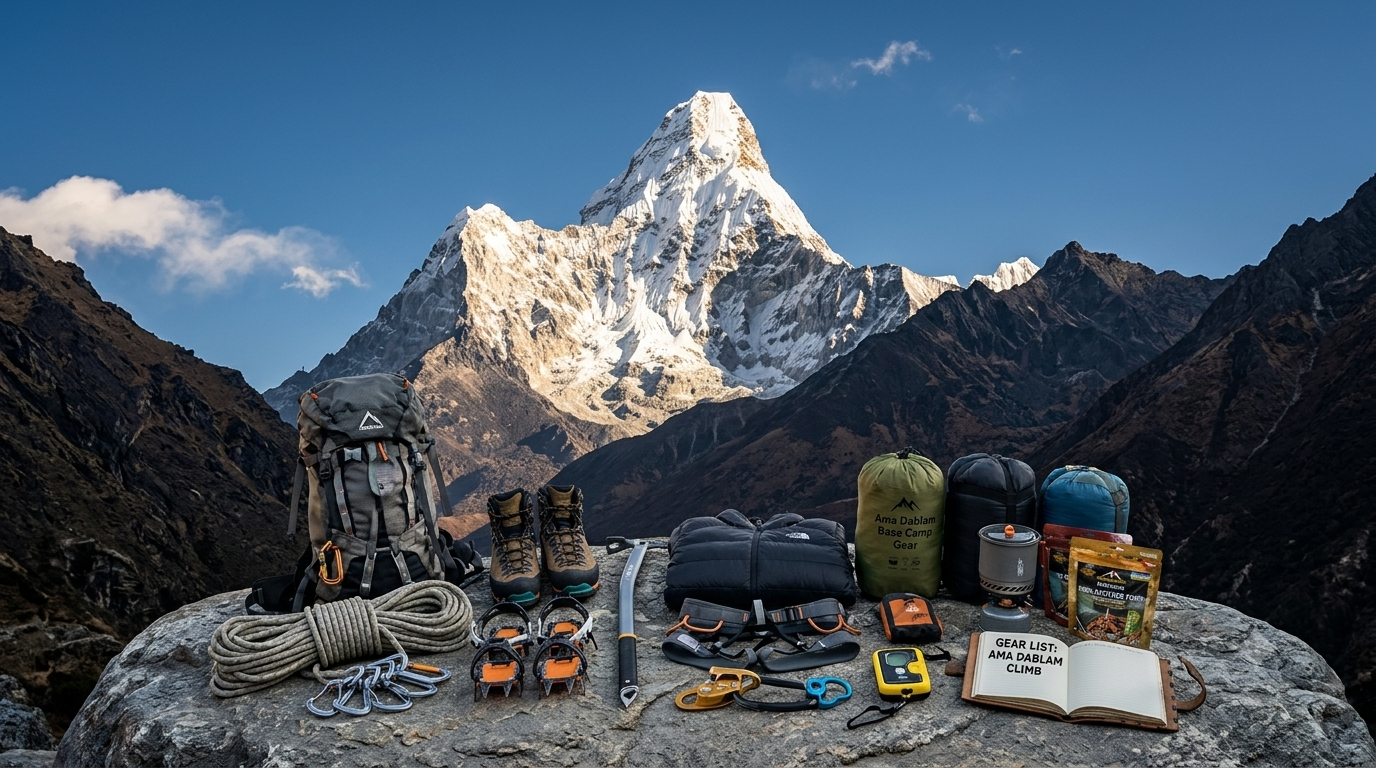
Preparing for Ama Dablam requires more than buying expensive mountaineering equipment. Climbers need a carefully selected gear system, strong physical conditioning, technical experience, and a realistic understanding of high-altitude conditions. At approximately 6,812 metres, Ama Dablam is a demanding Himalayan mountain known for its exposed ridges, steep climbing sections, and rapidly changing weather.
A well-planned ama dablam gear list helps climbers prepare for cold temperatures, technical rock and ice, long summit days, and extended periods at base camp. However, packing the right equipment is only one part of expedition preparation. Knowing how to use every essential item under pressure is equally important.
This guide covers the clothing, climbing equipment, footwear, personal essentials, and physical preparation needed for an Ama Dablam expedition. It also explains how Training for Ama Dablam can help experienced mountaineers prepare for the physical and technical demands of the climb.
Why Is the Right Ama Dablam Gear List Important?
Ama Dablam is not a conventional trekking destination. Depending on the route and conditions, climbers may encounter steep snow, ice, exposed ridges, fixed ropes, and technical rock sections. These environments require specialized equipment that supports warmth, mobility, protection, and efficient climbing.
The wrong boots can make crampon use difficult. Inadequate gloves can reduce dexterity in cold conditions, while poorly chosen clothing may cause excessive sweating during the approach and dangerous cooling during rest periods.
Before purchasing equipment, request a detailed checklist from your expedition operator. Gear requirements can vary according to the season, route conditions, team arrangements, and equipment provided by the organizer.
1. Mountaineering Clothing and Layering System
A reliable layering system helps climbers manage temperature changes while moving between lower trekking elevations, base camp, and exposed climbing terrain.
Base Layers
Choose moisture-wicking thermal tops and bottoms that help move sweat away from your skin. Merino wool or suitable synthetic fabrics are practical options.
Pack enough clean base layers for the expedition schedule, but avoid unnecessary duplicates that add weight.
Insulating Layers
A lightweight fleece or active insulation layer can provide warmth during movement. A thicker insulated jacket may be useful for colder conditions and periods spent at camp.
The exact combination depends on the season, individual cold tolerance, and the expedition's clothing recommendations.
Down or Synthetic Insulated Jacket
A high-quality insulated jacket is an important part of an Ama Dablam packing plan. It should provide sufficient warmth for the expected conditions without restricting movement.
Check the jacket's fit over your other layers and make sure it works with your harness and backpack.
Waterproof and Windproof Shell
A protective outer layer helps shield you from wind, snow, and precipitation. Look for a shell that allows comfortable movement and fits over your insulation layers.
Pack waterproof trousers or suitable protective legwear as recommended by your operator.
Gloves and Headwear
Carry a combination of lightweight gloves for active movement and warmer gloves or mittens for colder conditions. The exact glove system should match the route, expected temperatures, and dexterity required for rope work.
Useful accessories include a warm hat, a neck gaiter or balaclava, and a sun hat for the approach.
2. Mountaineering Boots and Footwear
Footwear is one of the most important decisions when assembling an ama dablam gear list.
Technical Mountaineering Boots
Choose boots compatible with the crampons required for the route. They should provide suitable insulation, ankle support, and a secure fit without causing pressure points.
Test them on training hikes and during technical practice. New boots can cause blisters, discomfort, or cold feet when used for long periods.
Trekking Boots or Approach Footwear
Comfortable trekking footwear is useful for the approach through the Khumbu region. Your operator can advise whether separate trekking boots are necessary for your itinerary.
Socks and Camp Footwear
Pack suitable mountaineering socks, spare pairs, and comfortable footwear for use around camp. Avoid overly tight combinations of boots and socks, which may affect circulation.
3. Technical Climbing Equipment
Ama Dablam requires technical mountaineering competence, and your equipment must match the climbing route.
A typical personal equipment checklist may include:
-
Climbing helmet suitable for mountaineering.
-
Harness compatible with the intended climbing system.
-
Crampons matched to your boots and the route.
-
Appropriate ice axe or axes, as specified by the expedition leader.
-
Locking and non-locking carabiners of the required types.
-
Approved ascenders, descenders, and other rope-system equipment where required.
-
Prusik loops or other specified backup equipment.
-
A climbing sling and other personal protection items listed by your operator.
Not every climber will need every item listed above. Some equipment may be supplied or standardized by the expedition team.
Important: Do not choose technical equipment based only on online recommendations. Have a qualified mountaineering professional confirm compatibility, demonstrate its correct use, and explain the team's rope and safety systems before departure.
4. Sleeping Equipment and Base Camp Essentials
Your expedition may involve several days at base camp and nights at higher camps. Sleeping requirements vary according to the season, campsite, and operator's arrangements.
Your checklist may include:
-
A sleeping bag rated for the expected minimum temperatures.
-
A suitable sleeping mat where required.
-
A compact pillow or alternative for improved comfort.
-
A headlamp with spare batteries.
-
Reusable water bottles or insulated containers.
-
A thermos if recommended for the route.
-
Earplugs and personal hygiene supplies.
Ask the operator whether tents, mattresses, sleeping arrangements, and higher-camp equipment are provided. Confirm the required sleeping-bag temperature rating rather than relying on a generic recommendation.
5. Personal Essentials and Health Supplies
Small personal items can make a significant difference during an extended expedition.
Include the following where appropriate:
-
High-altitude sunglasses and suitable eye protection.
-
Sunscreen and lip balm with strong UV protection.
-
Personal first-aid supplies.
-
Any prescribed medicines in their original packaging.
-
Blister-care materials and basic hygiene products.
-
Personal identification, permits, and insurance documents.
-
A power bank or batteries compatible with your equipment.
-
Water-treatment supplies if required by the operator.
Discuss altitude-related risks and personal medication needs with a qualified healthcare professional before the expedition. Your team should explain how medical concerns are reported and how emergency assistance is arranged.
6. Backpack and Packing Strategy
A practical packing system separates items needed during the approach from equipment reserved for technical climbing and higher camps.
Use a comfortable backpack with enough capacity for the equipment you are personally responsible for carrying. A smaller daypack may be suitable for selected stages, depending on the operator's arrangements.
Organize your equipment into categories such as clothing, technical gear, personal essentials, and camp supplies. Waterproof bags can help keep spare layers and critical items dry.
Before departure, weigh your packed equipment and remove nonessential items. Excess weight increases fatigue, particularly at altitude, but reducing weight should never mean leaving behind required safety equipment.
Label shared or expedition-issued equipment clearly and confirm baggage weight limits for flights and porter services.
7. Training for Ama Dablam: Physical Preparation
Training for Ama Dablam should begin well before the expedition. Climbers need sustained endurance, strength, balance, and the ability to move efficiently while carrying equipment.
A structured training programme should reflect your current fitness, climbing experience, and planned departure date.
Cardiovascular Endurance
Build a consistent aerobic base through activities such as hiking, cycling, running, or stair climbing. Gradually increase duration and intensity rather than attempting exhausting sessions too early.
Long uphill hikes can help prepare you for repeated days of movement in mountainous terrain.
Leg and Core Strength
Exercises such as step-ups, squats, lunges, and core stability work can improve balance and efficiency while carrying a pack.
Include upper-body and pulling exercises where appropriate, but prioritize controlled technique and recovery.
Loaded Hiking
Progressively practise hiking with a backpack similar to the load you expect to carry. Begin with manageable weight and duration, then increase gradually as your conditioning improves.
Practise on varied terrain and allow recovery between demanding sessions.
Technical Mountaineering Practice
Physical training cannot replace technical instruction. Climbers should practise crampon movement, ice-axe use, rope systems, fixed-line techniques, and appropriate glacier travel with qualified instructors.
Prior experience on suitable alpine routes is essential preparation for a technically demanding objective such as Ama Dablam.
8. How Far in Advance Should You Prepare?
Many climbers benefit from several months of structured preparation, although the appropriate timeline depends on their starting fitness and technical background.
A practical approach is to divide preparation into three phases:
Foundation phase: Establish consistent aerobic exercise, basic strength training, and regular hikes.
Build phase: Increase endurance, practise loaded hikes, and complete relevant technical training. Include recovery periods so that training remains sustainable.
Specific preparation phase: Rehearse your expected equipment system, practise with the boots and gloves you plan to use, and review expedition procedures with your team.
Avoid making sudden increases in training volume immediately before departure. Arriving healthy, rested, and technically prepared is more valuable than trying to compensate for months of missed preparation in a few weeks.
9. Common Ama Dablam Packing Mistakes to Avoid
Even experienced trekkers can make avoidable mistakes when preparing for a technical expedition.
-
Buying equipment without testing it: Practise with boots, gloves, harnesses, and other personal gear before departure.
-
Ignoring compatibility: Boots, crampons, and technical equipment must work together correctly.
-
Packing too many spare items: Unnecessary weight can make the approach more tiring.
-
Underestimating cold conditions: Use a layering system appropriate for the expected temperatures and wind.
-
Relying entirely on fitness: Technical climbing skills and high-altitude experience remain essential.
-
Skipping the final gear check: Review every item with your operator and resolve missing or unsuitable equipment before travel.
Conclusion: Prepare Smart for Ama Dablam
A carefully organized ama dablam gear list helps you prepare for the demands of one of Nepal's most recognizable technical mountains. From insulated clothing and mountaineering boots to rope-system equipment and personal essentials, every item should have a clear purpose and be suitable for the planned route.
Equally important, Training for Ama Dablam should combine endurance, strength, technical instruction, and experience on appropriate alpine objectives. No packing checklist or fitness programme can guarantee a summit, and climbers must be prepared to change plans when conditions become unsafe.
Frequently Asked Questions (FAQs)
1. What should an Ama Dablam gear list include?
A typical list includes technical mountaineering boots, crampons, an ice axe, a helmet, a harness, suitable clothing layers, gloves, eye protection, sleeping equipment, a headlamp, and personal essentials. The final list must match the route and operator's requirements.
2. How should I prepare for Ama Dablam?
Preparation should include cardiovascular endurance, strength training, loaded hikes, acclimatization planning, and supervised technical mountaineering practice. Climbers should also have relevant experience on appropriate alpine routes.
3. How many layers are needed for Ama Dablam?
There is no single correct number. Most systems combine a moisture-wicking base layer, one or more insulating layers, and a weather-resistant shell. Additional insulation and suitable gloves are selected according to conditions and personal needs.
4. Are technical climbing tools provided by the expedition operator?
Some operators provide selected group or technical equipment, while other items are the climber's responsibility. Confirm exactly what is included before purchasing or packing your gear.
5. Can a beginner train for Ama Dablam?
A beginner can start developing fitness and mountaineering skills, but Ama Dablam is not an appropriate first technical climb. Climbers should complete suitable training and gain experience on progressively challenging alpine objectives before considering the expedition.

 Arabic
 French
 Spanish
 Portuguese
 Deutsch
 Turkish
 Dutch
 Italiano
 Russian
 Romaian
 Portuguese (Brazil)
 Greek