


India’s Water Pump Demand Is Shifting Toward Solar and Smarter Systems
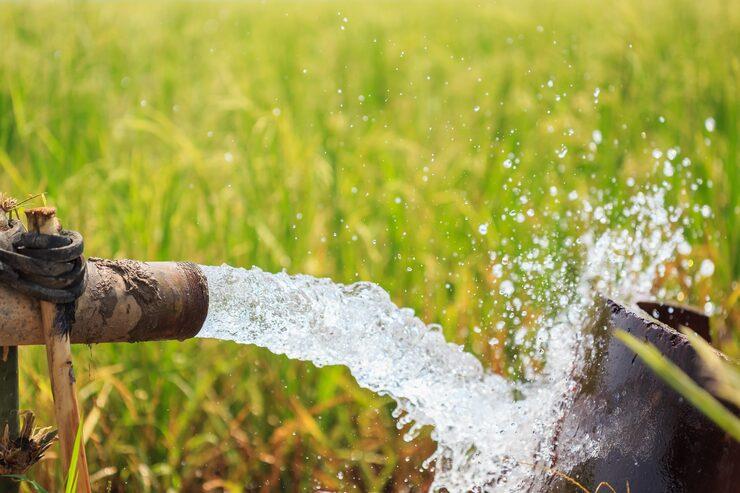
India’s water pump industry is being shaped by agricultural irrigation, rural water-supply expansion, urban infrastructure development, industrial activity, and the transition toward more energy-efficient pumping. Government-backed programs are increasing demand for irrigation and household water systems, while solar pumping and digital controls are changing how equipment is powered, monitored, and maintained across different applications.
According to the India water pump market analysis published by Markntel Advisor, the sector was valued at around USD 3.40 billion in 2025 and is projected to reach USD 4.92 billion by 2032, expanding at a CAGR of 4.49% during 2026–2032. Centrifugal pumps held the leading position in 2025, while water and wastewater represented around 33.8% of demand and HVAC is projected to be the fastest-growing end-user segment at a 7.25% CAGR through 2032.
Agriculture Remains a Core Source of Demand
Irrigation has historically been one of the most important applications for water pumps in India. The industry analysis estimates that the country has around 21 million irrigation pumps, with a substantial share relying on subsidized electricity or diesel. This installed base creates sustained replacement requirements while agricultural water access programs continue to support new installations.
Government support is also encouraging farmers to consider alternatives to conventional electricity- and diesel-powered equipment. The PM-KUSUM program is supporting the deployment of standalone solar agriculture pumps and solarization of existing pumping systems, creating demand for solar-compatible submersible and surface pumps.
The Ministry of New and Renewable Energy continues to implement renewable-energy initiatives that include solar-powered agricultural pumping. Such programs can reduce dependence on conventional energy sources while improving access to pumping in areas where grid reliability remains uneven.
Solar Pumping Is Becoming a Major Growth Opportunity
Solar-powered pumping is increasingly moving from a specialized application toward a broader component of India's water infrastructure. The industry analysis identifies the integration of pumps with solar and hybrid systems as one of the most significant opportunities through 2032.
The shift is supported by agricultural electrification gaps, electricity costs, diesel dependence, and government procurement programs. Solar pumping can provide farmers with greater control over irrigation while reducing recurring fuel or electricity expenses, although the initial investment remains higher than for some conventional systems.
The scale of procurement is also expanding. In 2026, Shakti Pumps received a ₹654.03 crore contract from Karnataka Renewable Energy Development Limited for 16,780 solar water pumping systems under PM-KUSUM. Such projects demonstrate how government-linked programs are creating substantial procurement pipelines for solar pumping equipment.
Municipal Water Programs Are Expanding Equipment Demand
Water supply infrastructure is another important demand driver. Programs such as the Jal Jeevan Mission and AMRUT are expanding rural piped-water access, sanitation connectivity, and urban water infrastructure, creating requirements for booster, distribution, submersible, and other pumping systems.
The industry analysis notes that rural water-supply initiatives are generating sustained demand for pumps as India works toward household tap connections. Urbanization is simultaneously increasing requirements for water distribution, sewage handling, drainage, and infrastructure supporting rapidly expanding cities.
These developments create demand across both new infrastructure and replacement projects. As existing networks age, municipalities increasingly need equipment that can provide reliable performance while controlling electricity consumption.
Centrifugal Pumps Maintain Their Leading Position
Centrifugal pumps remained the leading pump type in 2025 because of their efficiency, relatively simple construction, cost competitiveness, and reliability in high-volume applications. They are widely used across municipal water supply, irrigation, industrial utilities, construction dewatering, and HVAC circulation.
Their established manufacturing and distribution ecosystem in India also supports adoption. Domestic availability can simplify procurement, maintenance, and replacement compared with more specialized equipment.
However, submersible pumps are expected to gain penetration faster during the forecast period. Rising demand for borewell irrigation, rural drinking-water supply, groundwater extraction, and decentralized pumping in Tier-2 and Tier-3 locations is supporting this development.
Water and Wastewater Infrastructure Remains Important
Water and wastewater represented around 33.8% of India's water pump demand in 2025, making it the largest end-user category. Municipal spending on raw-water transfer, pressure boosting, sewage lifting, drainage, and treatment infrastructure supports continuous demand.
Wastewater management is becoming more important as urban populations grow and environmental requirements become more demanding. Pumps are required across multiple treatment stages, including wastewater transfer, sludge handling, filtration, and treated-water distribution.
The Ministry of Housing and Urban Affairs continues to oversee urban infrastructure programs that include water and sanitation development, supporting a policy environment in which pumping equipment remains integral to municipal modernization.
HVAC Is Creating a New Growth Channel
Although water and wastewater remains the largest end-user category, HVAC is projected to grow the fastest, at a 7.25% CAGR during 2026–2032. Expanding commercial buildings, hospitals, airports, metros, IT parks, and data centers are increasing demand for chilled-water and circulation pumps.
These applications place greater emphasis on energy-efficient pumping because HVAC systems can operate for extended periods. Variable-frequency drives and efficient motors allow pump output to be adjusted according to cooling requirements, potentially reducing unnecessary energy consumption.
The expansion of India's commercial and digital infrastructure therefore creates an additional demand channel beyond traditional agriculture and municipal water applications.
Smart Pumps Are Changing Maintenance
IoT-enabled pumps are becoming increasingly relevant across urban utilities, industrial facilities, large farms, and commercial buildings. Integrated sensors can monitor parameters such as flow, pressure, power consumption, and pump condition, while connected platforms can provide remote access to operating information.
These capabilities can support predictive maintenance by identifying abnormal performance before equipment failure occurs. In agriculture, smart solar pumps can also provide remote control, irrigation scheduling, and telemetry functions.
The industry analysis identifies smart and IoT-enabled pumps as a prominent current trend, supported by falling sensor costs, improving connectivity, energy-efficiency awareness, and the development of smart-city and smart-agriculture initiatives.
Low-Cost Products Remain a Challenge
The expansion of India's pump industry is accompanied by a highly fragmented and price-sensitive supply environment. The industry analysis identifies counterfeit, duplicate, and low-quality products as a significant challenge, particularly in rural markets where purchasing decisions can prioritize initial price over lifecycle performance.
Lower-quality pumps can consume more electricity, experience more frequent breakdowns, and have shorter operating lives. This can ultimately increase ownership costs even when the initial purchase price is lower.
Affordability and limited awareness of total cost of ownership can therefore slow adoption of high-efficiency pumps. The challenge is particularly relevant as manufacturers seek to move users toward smart, solar-compatible, and digitally monitored equipment.
The Industry Is Moving Toward Energy-Aware Pumping
India's water pump landscape is increasingly being shaped by the convergence of agricultural demand, government infrastructure programs, renewable energy, urbanization, and digital technology. Centrifugal pumps are expected to remain the dominant technology, while submersible systems and solar-compatible equipment are gaining importance in decentralized applications.
The development of smart pumps is adding another dimension to the sector by enabling remote monitoring, predictive maintenance, and more precise energy management. At the same time, HVAC and industrial applications are broadening demand beyond traditional agricultural and municipal uses.
The broader direction points toward pumping systems that combine reliable water movement with energy efficiency, renewable power compatibility, and digital control. India's ability to expand water access while managing energy consumption will continue to influence how the country's pumping infrastructure develops.

 English
 Arabic
 French
 Spanish
 Portuguese
 Deutsch
 Turkish
 Italiano
 Russian
 Romaian
 Portuguese (Brazil)
 Greek