


FUE Hair Transplant vs. Non-Surgical Hair Loss Treatments: Which Should You Consider?
Hair loss can develop gradually, affecting the hairline, temples, crown, or overall scalp density. People exploring treatment options often compare hair transplantation with non-surgical approaches. Understanding the differences can help them decide what to discuss with a qualified medical professional.
Follicular Unit Extraction (FUE) is a surgical technique that moves individual hair follicles to areas affected by hair loss. Non-surgical treatments, meanwhile, may help manage certain causes of hair thinning or support existing hair.
The right option depends on the cause of hair loss, its progression, medical suitability, and individual goals.
What Is an FUE Hair Transplant?
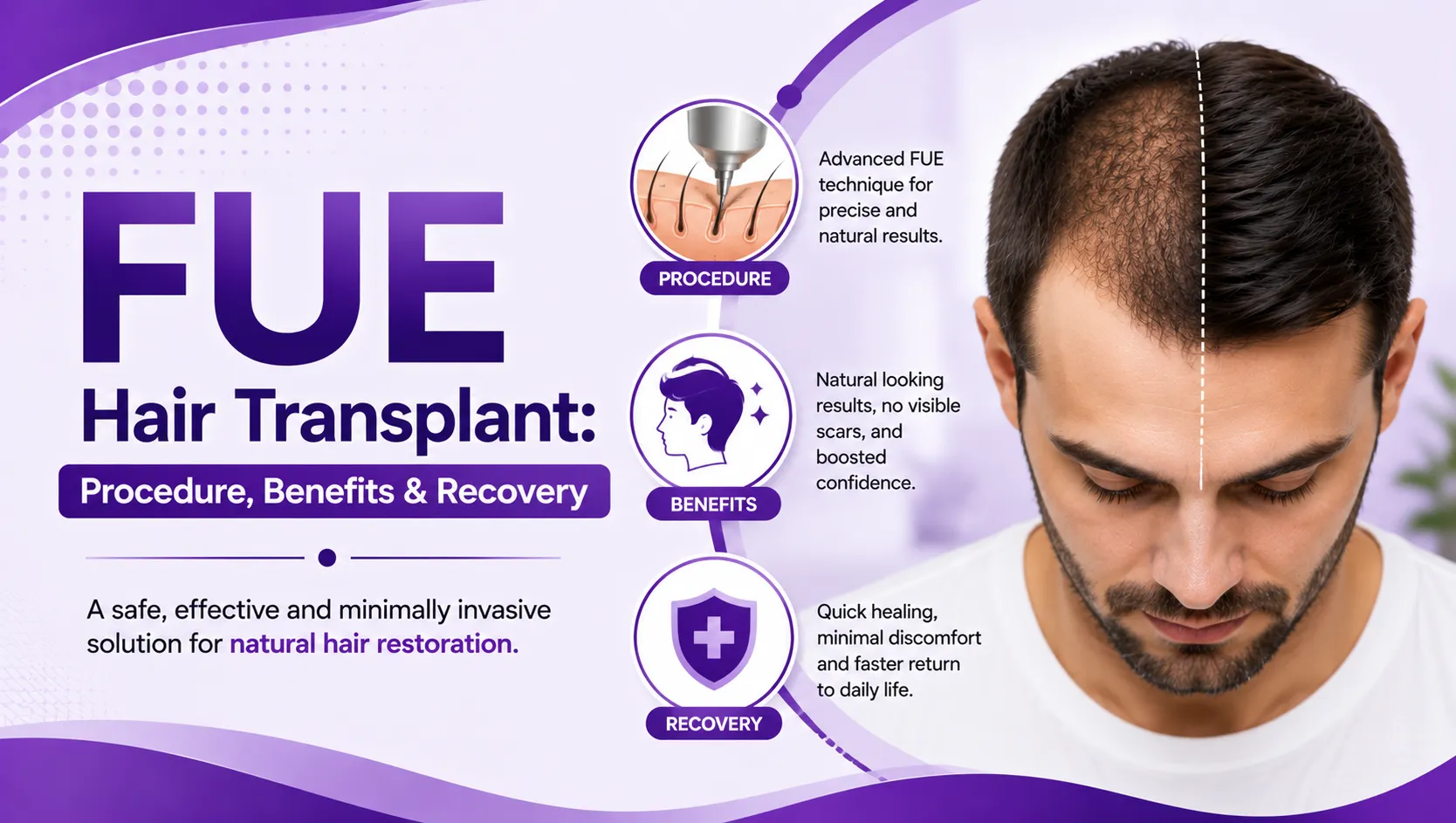
FUE is a surgical hair restoration procedure. A surgeon extracts individual follicular units from a donor area, usually the back or sides of the scalp, and implants them into areas with reduced hair density.
The technique avoids removing a strip of scalp, although small extraction scars may remain. Careful graft placement is important for achieving a natural-looking result.
FUE may be considered for people with pattern hair loss who have sufficient donor hair. It does not stop untreated hair from continuing to thin.
What Are Non-Surgical Hair Loss Treatments?
Non-surgical treatments aim to manage hair loss without transplant surgery. The appropriate option depends on the underlying cause.
Medication: Certain medicines, such as topical minoxidil, may help manage pattern hair loss in suitable patients. Results vary, and continued use may be needed to maintain benefits.
Treatment of underlying conditions: Hair shedding caused by nutritional deficiencies, thyroid problems, or other medical conditions may require targeted treatment.
Platelet-rich plasma (PRP): PRP involves preparing a concentration of platelets from the patient's blood and injecting it into the scalp. Some patients may experience improvement, but evidence and results vary.
A clinician should assess the cause of hair loss before recommending a treatment. Not every option is suitable for every patient.
FUE vs. Non-Surgical Treatments: Key Differences
The main difference is how each approach addresses hair loss.
FUE redistributes existing follicles from one area of the scalp to another. It can help restore hair in selected areas where density has been lost.
Non-surgical treatments may help slow certain types of hair loss, support existing hair, or address an underlying cause. They generally do not provide the same direct redistribution of follicles as a transplant.
FUE involves surgery, recovery time, and potential complications. Non-surgical treatments have their own limitations, possible side effects, and ongoing costs.
Some patients may benefit from a combination of approaches under medical supervision.
Who May Consider an FUE Hair Transplant?
FUE may be appropriate for people with stable pattern hair loss and adequate donor hair. It can be used to address a receding hairline, thinning temples, or selected areas of scalp hair loss.
However, patients with active scalp conditions, sudden unexplained shedding, or insufficient donor hair may need further assessment before considering surgery.
A surgeon should evaluate donor density, scalp health, medical history, and future hair loss risk before recommending transplantation.
How Long Do Results Take?
Hair transplant results develop gradually. Transplanted hairs often shed during the first few weeks, followed by new growth over the following months.
Initial growth may become noticeable around three to four months after surgery. More visible changes often develop between six and nine months, while the final result may take 12 months or longer.
Non-surgical treatments also require patience. The time needed to see improvement depends on the treatment, the cause of hair loss, and individual response.
Neither approach guarantees a particular result.
What Should You Consider Before Choosing a Treatment?
Before making a decision, consider the following questions:
-
What is causing your hair loss?
-
Is your hair loss stable or still progressing?
-
Do you have enough healthy donor hair for transplantation?
-
What benefits and limitations apply to each option?
-
What are the treatment costs and maintenance requirements?
-
What side effects or complications should you understand?
A qualified medical professional can help you compare suitable options and set realistic expectations.
How to Find Reliable Hair Restoration Information
When researching hair restoration, look for clear information about treatment methods, surgeon qualifications, potential risks, and recovery. Be cautious of claims promising guaranteed growth or perfect density.
For readers considering surgical restoration, this guide to FUE hair transplant in Pakistan provides further information about the procedure and factors to discuss during a consultation.
Conclusion
FUE hair transplant and non-surgical treatments serve different purposes. FUE moves follicles to areas affected by hair loss, while non-surgical approaches may help manage certain causes or slow further thinning.
The most suitable option depends on the diagnosis, donor hair availability, treatment goals, and medical history. A professional assessment can help determine which approach is appropriate and whether a combined treatment plan may be beneficial.

 English
 Arabic
 French
 Spanish
 Portuguese
 Deutsch
 Turkish
 Dutch
 Italiano
 Russian
 Romaian
 Portuguese (Brazil)