


How to Choose the Best Packaging for Pencils
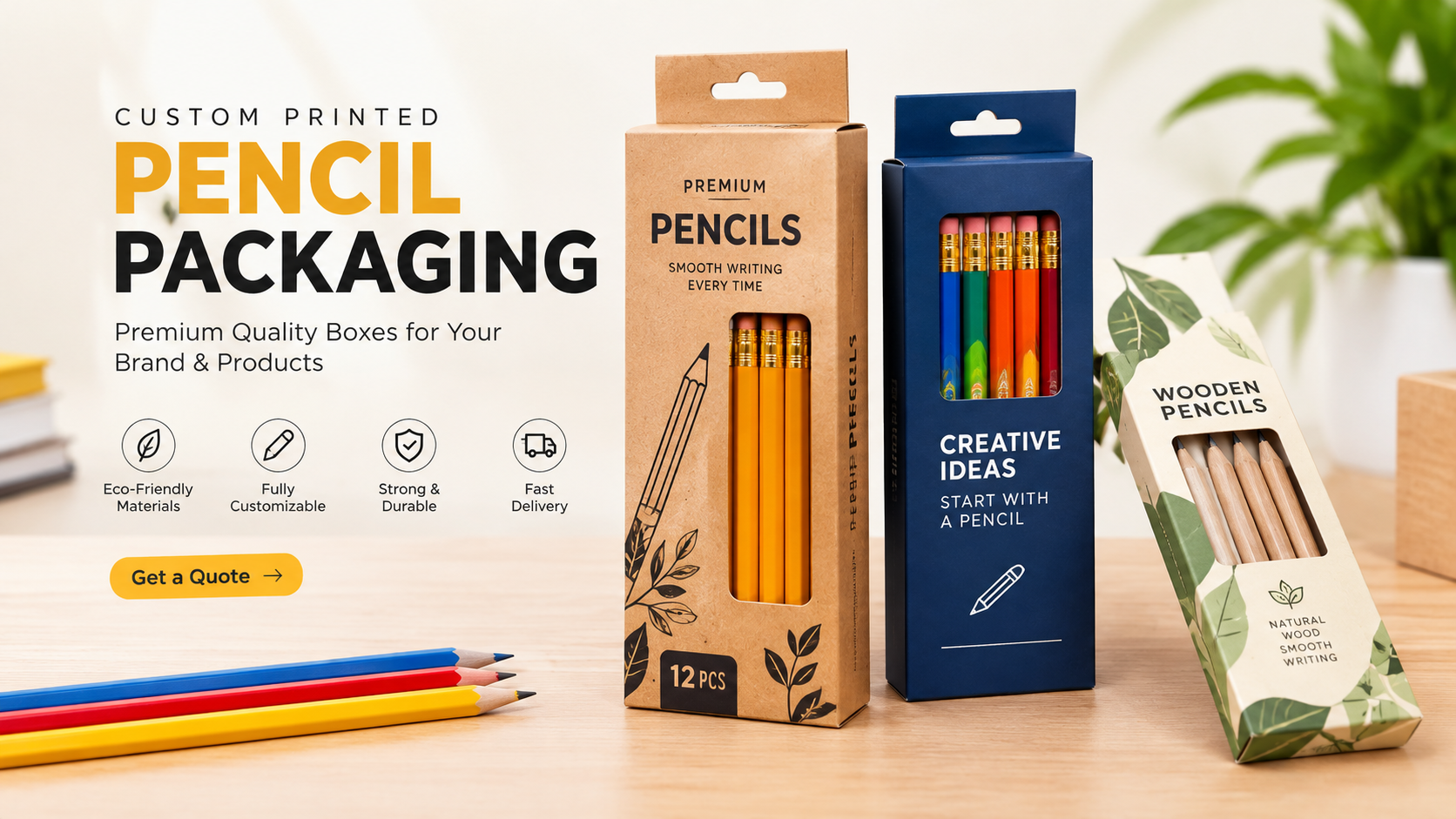
Pencil packaging plays an important role in protecting stationery products, organizing inventory, and creating a positive first impression. Whether you sell graphite pencils, colored pencils, mechanical pencils, or premium writing sets, the right packaging should balance durability, functionality, presentation, and cost. For manufacturers and stationery brands, choosing suitable packaging can also support product differentiation and consistent brand recognition across retail and wholesale channels.
With several materials, box styles, and printing options available, selecting the best solution starts with understanding your product, target customers, and distribution requirements. A well-planned packaging design helps keep pencils organized while presenting them professionally.
1. Identify Your Pencil Packaging Requirements
Before selecting a packaging style, consider the type and quantity of pencils you intend to sell. Individual pencils require different packaging from classroom multipacks, artist collections, or premium stationery gift sets. The custom pencil packaging allows businesses to choose suitable box sizes and designs according to their specific product requirements. For example, a basic retail pack may need a compact structure that displays the product clearly, while a colored pencil set may require internal compartments to keep different colors organized. Premium writing sets may benefit from a more rigid box that creates a refined presentation. Consider factors such as pencil length, diameter, and quantity; whether the pencils include sharpeners, erasers, or other accessories; retail display, online orders, or bulk distribution; required protection against bending, scratches, and movement; and your budget, storage space, and packaging quantities. Defining these requirements early helps narrow down suitable materials and box dimensions.
2. Choose the Right Pencil Packaging Material
Packaging material affects strength, appearance, print quality, and overall cost. The best choice depends on the product's value, intended use, and distribution conditions.
Paperboard Packaging
Paperboard is a practical option for everyday pencil sets, school supplies, and retail stationery products. It offers a printable surface for product information, branding, and illustrations while supporting lightweight packaging designs.
Different paperboard grades provide different levels of stiffness and durability. Select a grade that can accommodate the product weight and withstand normal handling throughout storage and distribution.
Corrugated Packaging
Corrugated cardboard can provide additional structural protection for bulk pencil shipments, multi-pack orders, and shipping cartons. Its fluted construction helps absorb certain handling impacts, making it useful for secondary packaging and transportation.
Rigid Boxes
Rigid boxes are often suitable for premium pencils, professional drawing sets, corporate gifts, and specialty stationery collections. Their sturdy construction can create a higher-end presentation, although they generally require more storage space and may cost more than folding cartons.
Compare material samples before making a final decision. Packaging should meet practical performance requirements without adding unnecessary weight or expense.
3. Select a Functional Box Design
The packaging structure should keep pencils organized and make the product easy to access. Several designs can serve different purposes.
Folding cartons are suitable for many retail pencil packs because they can be customized in different sizes and printed with product details.
Boxes with inserts can help keep pencils separated, particularly in colored pencil collections or mixed stationery sets. Inserts should fit securely without making the packaging unnecessarily complicated.
Window boxes can allow customers to see the pencils without opening the package. Their suitability depends on display requirements, product protection, and the design of the window.
Gift boxes can be appropriate for premium pencils and curated stationery collections. Additional compartments may accommodate accessories while maintaining an organized presentation.
Always confirm the internal dimensions before approving production. A box that is too tight can make products difficult to remove, while excessive empty space can allow pencils to shift during transit.
4. Use Custom Pencil Packaging to Build Brand Recognition
Packaging is an opportunity to communicate what makes your stationery products distinctive. With custom pencil packaging, brands can incorporate their logo, brand colors, typography, product names, and other visual elements into a consistent design.
For school supplies, clear product identification and readable information may be priorities. For artist-grade pencils, brands might emphasize the product range, color selection, or intended application. Premium stationery businesses may prefer restrained graphics and carefully selected finishes.
Effective design should remain clear rather than overcrowded. Use a visual hierarchy that makes the brand name, product type, quantity, and important information easy to find.
Before printing a large order, request an artwork proof or physical sample. Check color accuracy, text readability, dimensions, and the overall appearance of the finished box.
5. Explore Printing and Finishing Options
Printing helps transform a basic carton into packaging that reflects your brand identity. Depending on the supplier and material, available options may include digital printing, offset printing, matte or gloss finishes, embossing, and foil accents.
Digital printing may be useful for smaller runs or designs requiring frequent changes. Offset printing may be appropriate for larger production quantities, depending on setup costs and artwork requirements.
Finishing options should support the product rather than distract from it. For example, a subtle matte finish may suit a minimalist stationery brand, while selected foil details can help distinguish a premium collection.
Businesses ordering custom printed stationery boxes should evaluate print quality, material specifications, minimum order quantities, and production timelines before choosing a supplier.
6. Consider Cost, Wholesale Quantities, and Storage
Packaging costs depend on several factors, including material grade, box dimensions, printing method, finishing, inserts, order quantity, and shipping.
Wholesale orders may reduce the unit cost, but ordering excessive quantities can create storage problems and tie up working capital. Estimate demand carefully and compare the total delivered cost rather than considering the quoted unit price alone.
Ask suppliers about minimum order quantities, sample availability, production lead times, artwork charges, and repeat-order consistency. A clear specification sheet can also help maintain consistent packaging across future production runs.
7. Evaluate Sustainability and Product Protection
Many stationery businesses consider material efficiency and recyclability when selecting packaging. Paper-based options may be appropriate for certain products, but environmental performance depends on the complete design, coatings, adhesives, material sourcing, and local recycling infrastructure.
Avoid assuming that every paper-based package is automatically recyclable or environmentally preferable. Verify relevant supplier claims and consider reducing unnecessary packaging components where practical.
Product protection matters as well. Evaluate whether the box keeps pencils organized and resists normal handling damage. For online sales, test the complete shipping arrangement because retail packaging alone may not provide sufficient protection during delivery.
Conclusion
Choosing the best packaging for pencils involves more than selecting an attractive box. Businesses should consider pencil dimensions, material strength, box structure, printing quality, order quantities, shipping conditions, and sustainability requirements.
By comparing samples and working with a reliable packaging manufacturer, stationery brands can develop packaging that protects their products, supports brand recognition, and meets practical business needs. The ideal solution is one that fits the product, serves the intended customer, and delivers consistent quality without unnecessary complexity or cost.

 Arabic
 French
 Spanish
 Portuguese
 Deutsch
 Turkish
 Dutch
 Italiano
 Russian
 Romaian
 Portuguese (Brazil)
 Greek