


Efficient Liquid Delivery for Modern Farming Machinery
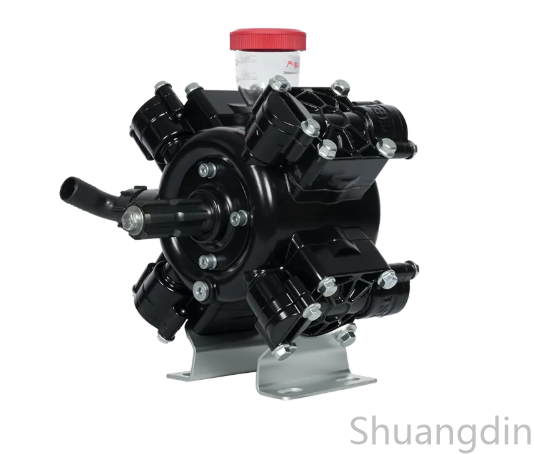
Crop spraying equipment must deliver treatment liquids consistently while operating under changing field conditions, variable application rates, and repeated exposure to agricultural chemicals. The pumping assembly plays a central role in moving liquid from the tank through the distribution system to the spray nozzles. A Crop Spraying Diaphragm Pump uses a flexible membrane and one-way valves to create repeated suction and discharge cycles. This mechanism can support agricultural applications involving compatible pesticides, fertilizers, and other liquid treatments. For machinery manufacturers and equipment suppliers, understanding pump construction and hydraulic requirements helps ensure that the selected system suits its intended working environment.
The diaphragm moves to change the volume of the pumping chamber. During the intake phase, chamber expansion draws liquid through the inlet valve. During discharge, the diaphragm moves in the opposite direction, reducing chamber volume and pushing liquid through the outlet valve. Repeated cycles create the flow needed by the connected spray circuit. Stable operation depends on diaphragm flexibility, valve sealing, chamber geometry, and the accuracy of the drive mechanism. Consistent manufacturing and correct assembly help reduce performance variations during extended use.
Material compatibility is a major consideration because agricultural formulations contain different chemical ingredients and additives. Some liquids may affect elastomers, seals, metal surfaces, or polymer components after prolonged exposure. EPDM, NBR, and other specialized materials may be considered for specific applications, but their suitability depends on the exact formulation, concentration, temperature, and exposure duration. Buyers should confirm compatibility with the pump manufacturer before choosing wetted components. Appropriate material selection helps limit swelling, cracking, corrosion, and leakage while supporting more predictable maintenance intervals.
The valve assembly directly influences fluid delivery. Inlet and outlet valves must respond to pressure changes and close effectively to prevent unwanted reverse flow. If particles or chemical deposits interfere with valve movement, the pump may experience reduced output, unstable pressure, or inconsistent liquid delivery. Valve materials should withstand repeated operating cycles and remain compatible with the intended liquid. Accurate dimensions and consistent assembly help maintain effective sealing, while appropriate filtration can reduce the risk of particles entering the pumping chamber.
Hydraulic matching is essential to the performance of the complete sprayer. The pump must provide sufficient flow for the selected nozzles while overcoming resistance from filters, hoses, connectors, and distribution manifolds. Required capacity depends on the number of active outlets, application rate, working width, and operating speed. If the pump cannot meet the system demand, spray distribution may become uneven. Excessive pressure can also increase stress on hoses and seals. Evaluating the full hydraulic circuit helps equipment designers select a suitable pump configuration.
Pressure regulation helps keep operation within the intended range as spraying demand changes. Depending on the system design, regulators and bypass arrangements can control excess flow and protect connected components. Filters should be selected to retain unwanted particles without creating excessive restriction. Regular inspection is necessary because a blocked filter can reduce intake flow and affect pump performance. Hoses, clamps, and fittings must be suitable for the expected working pressure and chemically compatible with the liquid being transferred.
Mechanical durability depends on the diaphragm, drive assembly, housing, and mounting structure working together correctly. Continuous diaphragm flexing creates fatigue stress, while vibration and misalignment may accelerate wear in connected components. Housing rigidity and secure mounting help maintain mechanical alignment during operation. Manufacturers can assess durability through pressure-cycle testing, endurance trials, leakage inspections, and vibration evaluation under representative working conditions. These procedures help identify potential weaknesses before equipment is supplied to agricultural machinery manufacturers or distributors.
Maintenance should be part of the regular spraying routine. Operators should inspect hoses, fittings, filters, valves, and accessible seals for damage, leakage, or blockage. After use, the system should be flushed according to the chemical label and the pump manufacturer's instructions. Correct cleaning helps prevent residue accumulation and reduces the risk of contamination when switching between treatments. Before seasonal storage, users should follow recommended procedures for draining, cleaning, and protecting wetted components. Timely replacement of worn parts can reduce interruptions during important crop treatment periods.
For agricultural equipment manufacturers, wholesalers, and distributors, selecting a Crop Spraying Diaphragm Pump involves evaluating chemical compatibility, flow requirements, pressure stability, component quality, and replacement part availability. A properly matched pump can support reliable crop treatment when integrated with suitable nozzles, filtration, and pressure controls. SHUANG DIN Co Ltd. provides agricultural diaphragm pump solutions for fluid handling applications, and buyers can learn more about the company at https://www.agriculturaldiaphragmpump.com/about/ when evaluating equipment options for agricultural spraying projects.

 English
 Arabic
 French
 Spanish
 Portuguese
 Deutsch
 Turkish
 Dutch
 Italiano
 Russian
 Romaian
 Greek