


Residential Solar System: Benefits, Cost & Installation Process
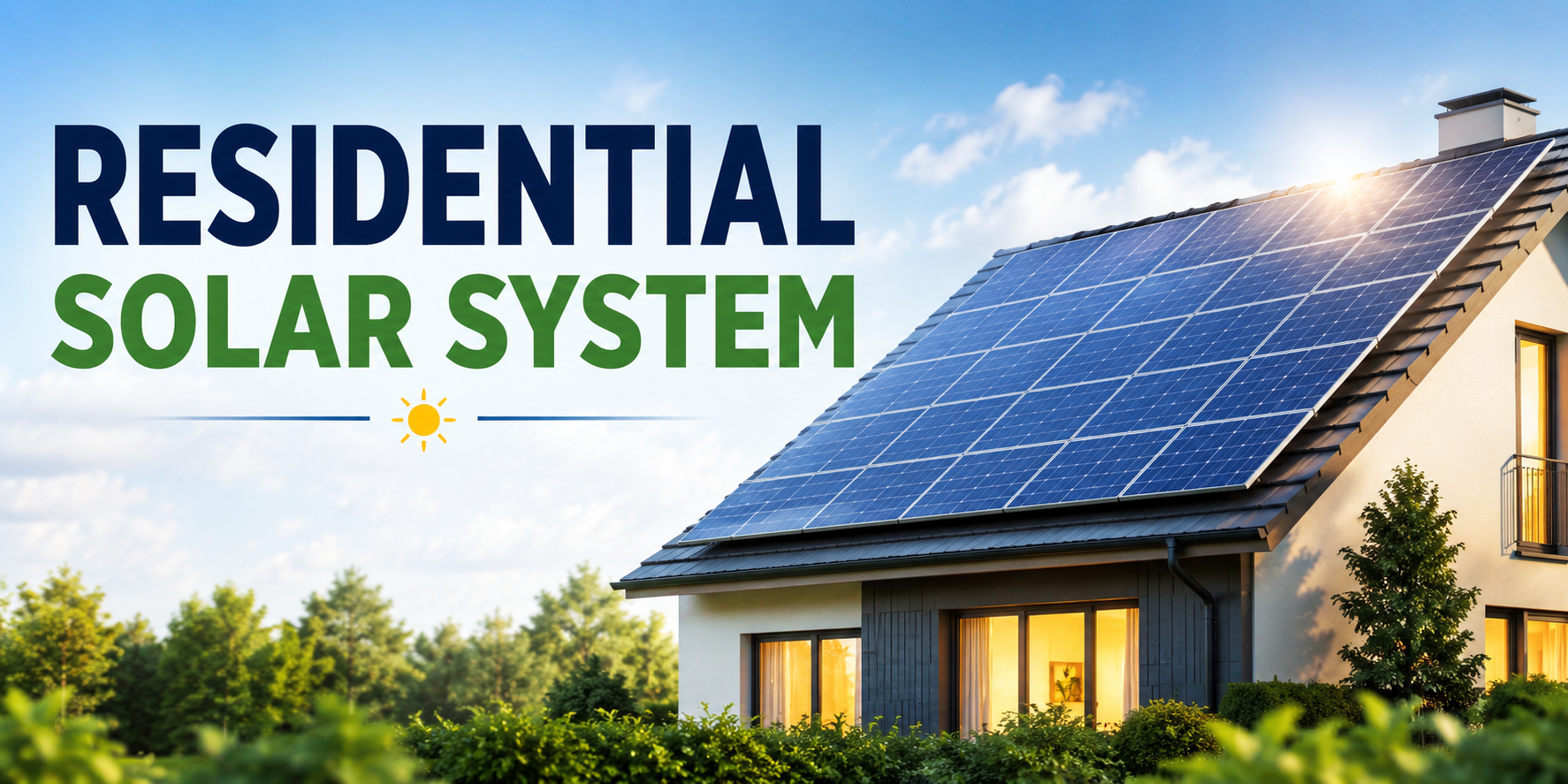
Electricity is an essential part of everyday life, but rising power bills can put pressure on household budgets. This is one of the main reasons why many homeowners are choosing a residential solar system. Solar energy helps generate electricity from sunlight, reducing dependence on the grid and lowering monthly electricity costs.
In this guide, you will learn what a residential solar system is, its benefits, estimated costs, and the installation process.
What Is a Residential Solar System?
A residential solar system is a setup that converts sunlight into electricity for home use. Solar panels installed on the rooftop capture sunlight and generate power. This electricity can be used to run household appliances such as fans, lights, air conditioners, refrigerators, and other electrical equipment.
A typical residential solar system includes:
-
Solar Panels
-
Solar Inverter
-
Mounting Structure
-
AC and DC Cables
-
Net Meter (for on-grid systems)
Together, these components help provide clean and reliable energy for your home.
Types of Residential Solar Systems
On-Grid Solar System
An on-grid solar system is connected to the electricity grid. It allows homeowners to use solar power during the day and grid electricity when needed. Excess electricity can be sent back to the grid through net metering.
Off-Grid Solar System
An off-grid system works independently from the electricity grid. It usually includes batteries to store energy for use during the night or on cloudy days.
Hybrid Solar System
A hybrid solar system combines the benefits of both on-grid and off-grid systems. It is connected to the grid and also includes battery storage for backup power.
Key Benefits of a Residential Solar System
Lower Electricity Bills
One of the biggest advantages of a residential solar system is reduced electricity expenses. By generating your own electricity, you can significantly lower monthly power bills.
Clean and Renewable Energy
Solar energy is a renewable source of power. It helps reduce dependence on fossil fuels and supports a cleaner environment.
Low Maintenance
Solar systems require minimal maintenance. Regular cleaning and occasional inspections are usually enough to keep the system performing well.
Increased Property Value
Homes equipped with solar systems are often more attractive to buyers because of the potential savings on electricity costs.
Energy Independence
Generating your own electricity reduces dependence on utility companies and protects homeowners from future increases in electricity prices.
Long-Term Savings
Although there is an initial investment, solar systems can provide savings for many years. Most quality systems have a lifespan of 25 years or more.
Residential Solar System Cost in India
The cost of a residential solar system depends on several factors.
Factors Affecting Solar System Cost
System Size
Larger systems generate more electricity and generally cost more than smaller systems.
Solar Panel Type
The efficiency and technology of the solar panels influence the overall project cost.
Inverter Type
Different inverter technologies have different prices and performance levels.
Roof Condition
The condition and structure of the roof can affect installation requirements and costs.
Installation and Electrical Work
Professional installation, wiring, safety equipment, and approvals also contribute to the total investment.
Estimated Residential Solar System Cost
The approximate cost may vary depending on location, equipment quality, and project requirements.
| System Size | Suitable For |
|---|---|
| 1 kW | Small homes |
| 2 kW | Small to medium households |
| 3 kW | Average family homes |
| 5 kW | Homes with higher electricity usage |
| 10 kW | Large residential properties |
It is always recommended to consult a trusted solar provider like raynex power for an accurate site-specific quotation.
Residential Solar System Installation Process
A proper installation process is important for safety, efficiency, and long-term performance.
Step 1: Site Survey and Energy Assessment
The installation team evaluates your roof space, sunlight availability, and monthly electricity consumption.
Step 2: System Design and Planning
Based on the assessment, experts design a system that matches your energy requirements and available roof area.
Step 3: Selecting Quality Components
Choosing reliable solar panels, inverters, and mounting structures helps ensure better performance and durability.
Step 4: Mounting Structure Installation
The mounting structure is securely fixed on the rooftop to support the solar panels.
Step 5: Solar Panel Installation
Solar panels are installed and positioned to receive maximum sunlight throughout the day.
Step 6: Inverter and Electrical Connections
The inverter and electrical wiring are connected according to safety standards.
Step 7: Net Metering Approval
For on-grid systems, a net meter is installed after approval from the electricity distribution company.
Step 8: Testing and Commissioning
The complete system is tested to ensure proper operation before it starts generating electricity.
How to Choose the Right Residential Solar System
Selecting the right solar system is important for getting the best results.
Analyze Your Electricity Usage
Review your monthly electricity bills to understand your energy consumption.
Check Rooftop Space
Ensure that sufficient roof area is available for installing solar panels.
Select Quality Equipment
Investing in reliable solar panels and inverters can improve efficiency and system life.
Choose an Experienced Solar EPC Company
An experienced solar EPC company can provide proper design, installation, and support services.
Compare Warranties and Service Support
Always check product warranties and after-sales service before making a decision.
Government Subsidies for Residential Solar Systems
The Government of India supports the adoption of rooftop solar systems through subsidy programs for eligible residential consumers.
These programs help reduce the overall installation cost and encourage homeowners to switch to clean energy.
Since subsidy schemes may change over time, homeowners should verify the latest guidelines through official government channels or consult their solar installation provider.
Common Mistakes to Avoid
Choosing the Wrong System Size
An undersized system may not meet electricity needs, while an oversized system may increase investment unnecessarily.
Ignoring Roof Shading
Trees, nearby buildings, and other obstructions can reduce solar panel performance.
Selecting Low-Quality Components
Poor-quality equipment may lead to lower efficiency and higher maintenance costs.
Not Planning for Future Needs
Future electricity requirements should be considered during system design.
Hiring Inexperienced Installers
Professional installation plays a major role in safety, performance, and system lifespan.
Maintenance Tips for Residential Solar Systems
Proper maintenance helps maintain good performance over the years.
-
Clean solar panels regularly to remove dust and dirt.
-
Monitor system performance through available monitoring tools.
-
Inspect electrical connections periodically.
-
Schedule professional inspections when required.
-
Keep surrounding areas free from objects that may create shade.
With proper care, a residential solar system can continue delivering reliable power for decades.
Why Choose Raynex Power Solution for Residential Solar Installation?
Choosing the right installation partner is just as important as choosing the right equipment.
Raynex Power Solution provides complete residential solar solutions, including:
-
Customized system design
-
High-quality solar components
-
Professional installation services
-
End-to-end project support
-
Reliable after-sales assistance
With proper planning and expert execution, homeowners can maximize the benefits of solar energy and achieve long-term savings.
Conclusion
A residential solar system is a smart investment for homeowners looking to reduce electricity bills and adopt clean energy. It offers long-term savings, low maintenance requirements, and reliable power generation for many years.
Understanding the benefits, costs, and installation process can help you make an informed decision. By choosing quality equipment and working with an experienced solar EPC company like Raynex Power Solution, you can enjoy a safe, efficient, and cost-effective solar energy system for your home.
Frequently Asked Questions
How much does a residential solar system cost in India?
The cost depends on system size, equipment quality, installation requirements, and location.
How many solar panels are required for a house?
The number of panels depends on your electricity consumption and the capacity of the selected solar panels.
How long does a residential solar system last?
Most quality solar panels can perform effectively for 25 years or more with proper maintenance.
Is government subsidy available for residential solar systems?
Yes, eligible residential consumers may receive subsidies under government rooftop solar programs.
How much can I save with a residential solar system?
Savings depend on electricity consumption, system size, sunlight availability, and local electricity tariffs. In many cases, homeowners can significantly reduce their monthly electricity bills.

 English
 Arabic
 French
 Spanish
 Portuguese
 Turkish
 Dutch
Dutch
 Italiano
 Russian
 Romaian
 Portuguese (Brazil)
 Greek
Greek