


Applique Digitizing Services: 5 Design Rules for Clean Edges
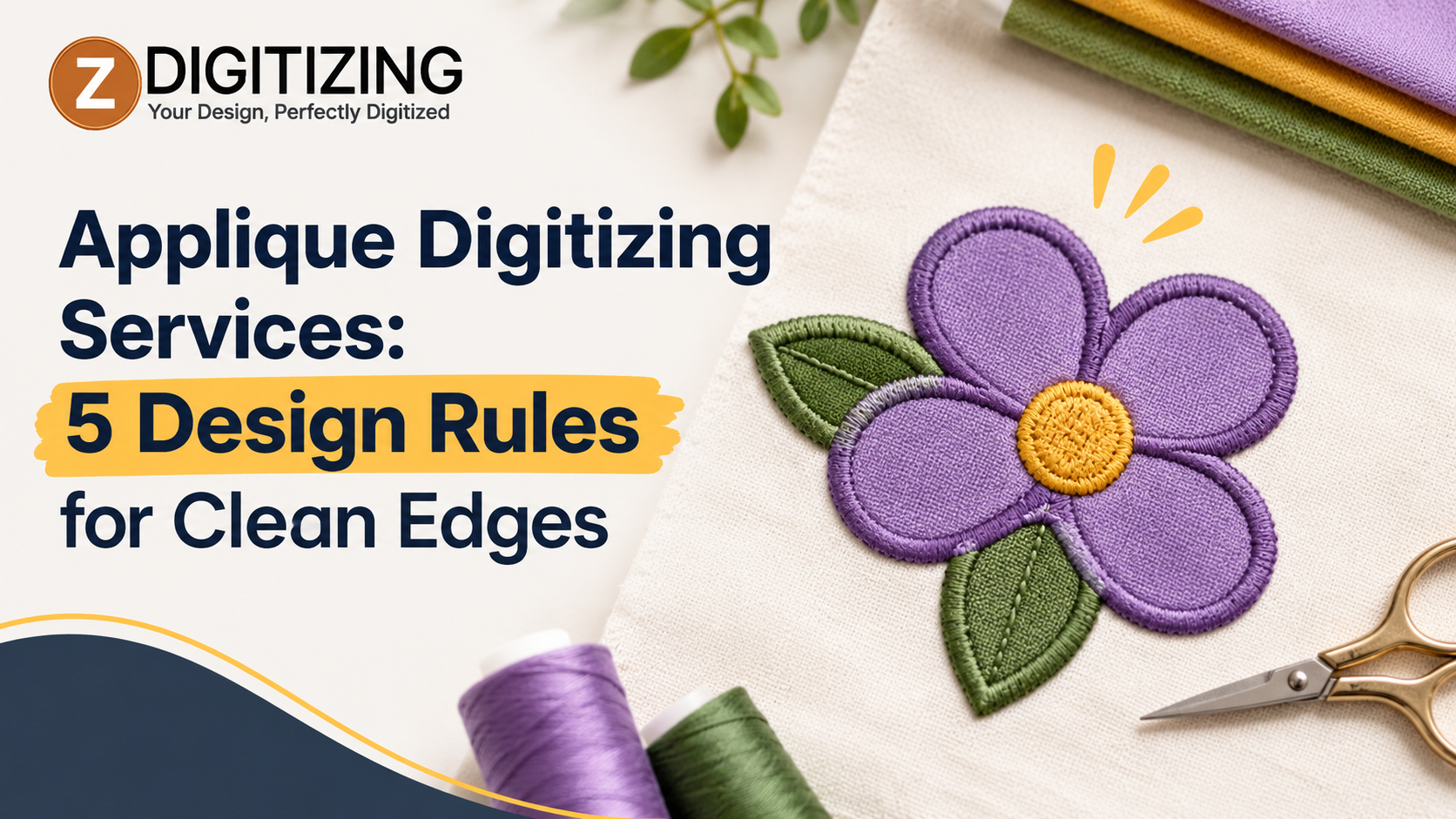
Applique goes wrong when a design asks fabric to do what only thread can do. Five simple rules prevent most of the trouble. Our Applique digitizing Services build stitch files that place, secure, and finish fabric shapes, and this guide shows you how to design for them.
Follow these rules to prepare artwork for Applique Embroidery Digitizing and get clean edges on every garment.
What Are Applique Digitizing Services?
Applique digitizing services convert artwork into a stitch file for applique embroidery, where fabric pieces are stitched onto a garment instead of filled with thread. The file tells the machine where to place the fabric, how to hold it down, and how to cover the edges.
A JPG or PNG cannot do this because those formats only store images. A digitized applique file stores stitch instructions for each stage.
How the Stitch File Works
Understanding the stages makes the rules easier to follow:
-
Placement line: The machine stitches an outline that shows where the fabric goes.
-
Material placement: The operator lays the fabric over the outline.
-
Tack-down stitch: The machine stitches around the fabric to hold it in place.
-
Trimming: Excess fabric is trimmed away from the stitching.
-
Cover stitch: A satin border stitches over the raw edge to finish and seal it.
Rule 1: Choose Bold, Simple Shapes
Fabric needs enough area to cut, place, and cover. Large letters, numbers, badges, stars, and shields work well.
Avoid tiny shapes and thin strips of fabric. They are hard to cut, hard to place, and easy to lose under the border. If a design includes fine detail, let thread handle the detail and fabric handle the bold shapes.
Rule 2: Watch Corners and Narrow Channels
Sharp interior corners and narrow gaps between shapes cause trouble. Fabric does not bend into tight points the way thread does, so corners round off or fray.
Design with these limits in mind:
-
Soften sharp inside corners: Slightly rounded corners cut and cover more cleanly.
-
Leave space between shapes: Narrow channels make borders collide.
-
Keep shapes large enough: Small pieces slip during tack-down.
Rule 3: Plan the Border Width
The satin cover stitch seals the raw edge, so border width matters. A border that is too narrow lets the fabric edge peek out. A border that is too dense turns stiff.
Fabrics that fray easily need wider borders. Tell us the applique fabric you plan to use so we can set the border for it.
Rule 4: Match Fabrics to the Garment
Both the base garment and the applique fabric affect the result:
-
Base fabric: Stable fabrics such as twill hold shape best, while thin or stretchy fabrics can distort under stitching.
-
Applique fabric: Felt and twill are common choices, and fabrics that fray need extra border coverage.
-
Placement: A chest, a cap, and a jacket back each change what the design can handle.
Tell us the garment, the applique fabric, and the placement before we begin.
Rule 5: Send Clean Artwork and the Right File Details
Clear input makes a clear file. Gather these items:
-
The best version of your artwork, such as a vector file, a clear PNG, or a high-resolution JPG
-
The finished width and height you want
-
The garment and fabric type
-
The applique fabric and color, if you know them
-
Thread colors or Pantone references, if you have them
-
Your machine's file format
Common machine formats include:
-
DST: Widely used on commercial machines
-
PES: Common with Brother and Babylock machines
-
EXP: Used with Melco machines
-
JEF: Used with Janome machines
If your artwork needs cleanup first, our vector art service and our convert image to embroidery file service can prepare it before digitizing begins.
What Our Process Looks Like
At ZDigitizing, we follow a clear process for every applique file:
-
You send your artwork. Include the design, garment type, placement, and finished size.
-
We review the design. We flag thin shapes, tight corners, and details that will not hold up as fabric.
-
We build the stitch file. We set placement, tack-down, and cover stitches for applique.
-
You receive the file. We deliver it in the format your machine reads.
Our Applique Embroidery Digitizing work builds each file for fabric placement, not as a converted flat file.
Settings Behind a Clean Applique File
A good file sets each of these on purpose:
-
Tack-down stitch: It must hold the fabric firmly without bunching it.
-
Stitch density: Too many stitches make the border stiff, and too few expose the fabric edge.
-
Underlay: Foundation stitches stabilize the border and give it a smooth base.
-
Pull compensation: Thread pulls fabric inward as it sews, so digitizers adjust shapes to offset that pull.
-
Stitch order: The sequence of stitching affects alignment and the number of stops.
Test Before You Run the Order
A sample on the real garment shows problems a screen cannot. Check for fabric edges peeking out, puckered fabric, shifting pieces, and lost corners. Fixing the file after a sample costs far less than fixing a full run of garments.
Are Professional Applique Digitizing Services Worth It?
Professional digitizing is worth it when an applique design must look clean and consistent across many garments. Applique leaves little room for error, because exposed edges and shifted fabric are easy to see. Auto-digitizing software can produce a quick file, but it often misses the placement, tack-down, and cover settings that applique requires.
Design Once, Stitch Cleanly Every Time
Good rules and a file built for fabric work together. At ZDigitizing, we build each applique file around the design, the garment, and the finished size. Our applique digitizing services focus on secure placement, clean borders, and shapes that hold up in production.
If you have artwork ready, send it to us with the garment type and size, and we will help you decide what to adjust before the design reaches the machine. You can also explore our patch digitizing and 3D puff embroidery digitizing services.
FAQs
What are applique digitizing services?
Applique digitizing services convert artwork into a stitch file for applique embroidery. The file sets the placement line, tack-down stitch, and satin cover stitch, so a machine can attach fabric pieces to a garment cleanly.
What shapes work best for applique?
Bold shapes with clear edges work best, such as large letters, numbers, and simple badges. Tiny shapes, thin strips, and tight corners are hard to cut and cover. We review your artwork and suggest changes when a design needs simplifying.
How wide should an applique border be?
The border must be wide enough to cover the cut fabric edge. The right width depends on the fabric, since fabrics that fray need more coverage. Tell us your applique fabric, and we will set the border for it.
Can I use a regular embroidery file for applique?
No. A regular file does not include the placement line, tack-down stitch, or cover border that applique needs. Using one often leaves fabric unsecured or edges exposed. We build a separate applique file for each design.
What should I send for applique embroidery digitizing?
Send the clearest version of your artwork, ideally a vector file or a high-resolution image. Include the garment type, finished size, applique fabric, and thread colors. With those details, our team can start your Applique Embroidery Digitizing without back-and-forth.

 English
 French
 Spanish
 Portuguese
 Deutsch
 Turkish
 Dutch
 Italiano
 Russian
 Romaian
 Portuguese (Brazil)
 Greek