


Practical Considerations for Squeeze Roller Manufacturing and Maintenance
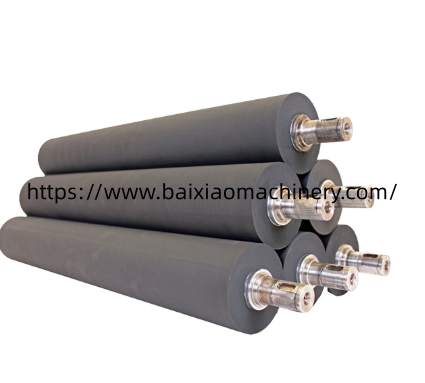
In many production environments, controlled pressure is essential for moving materials, removing excess liquid, and maintaining consistent contact between surfaces. A Squeeze Rollers system can support these operations by applying pressure through rotating contact surfaces, helping regulate material flow during processing. Its effectiveness depends on the material being handled, the roller covering, the mechanical arrangement, and the surrounding operating conditions. Understanding these relationships helps manufacturers select equipment components that suit their processes rather than relying on general product descriptions.
Material composition has a direct influence on roller behavior. Rubber coverings are widely used because their elasticity can help create stable contact with materials passing through a machine. Different natural and synthetic rubber compounds offer different balances of flexibility, wear resistance, grip, and resistance to oils or cleaning agents. In applications involving delicate sheets or flexible materials, a suitable covering may help distribute contact pressure while reducing the risk of surface damage. The appropriate compound must be chosen according to the process environment and the characteristics of the material being handled.
The supporting structure is equally important. A roller assembly may combine a rigid core with an elastomeric covering, allowing the core to provide structural support while the outer layer establishes the working surface. Reliable bonding between these components helps the covering remain securely attached during operation. Surface preparation, curing, and finishing all influence the quality of the finished assembly. If the covering becomes uneven or separates from the core, pressure distribution and material handling may become inconsistent, potentially affecting the wider production process.
Choosing a suitable roller begins with identifying the actual processing task. Some applications require excess liquid to be removed from textiles or other absorbent materials, while others use pressure to improve contact, guide flexible products, or support coating and laminating operations. Buyers should consider the material's thickness and flexibility, its sensitivity to surface marks, and whether the process involves moisture, chemicals, adhesives, or other substances. Explaining these conditions to a manufacturer can help establish which covering materials and surface finishes deserve further evaluation.
Supplier assessment should focus on manufacturing expertise as well as product availability. Buyers may wish to understand how the manufacturer selects rubber compounds, prepares roller cores, controls bonding processes, and inspects the finished surface. Consistent production practices are important because variations in covering quality can influence the behavior of rollers used within the same production line. For replacement applications, sharing information about the existing machine, mounting arrangement, and processing material can help improve compatibility and reduce installation uncertainty.
Functional performance depends on the relationship between pressure, rotation, and material movement. The roller covering must provide suitable contact without creating unnecessary resistance or damaging the processed surface. The mechanical arrangement should support stable rotation and maintain the intended relationship between contacting rollers. In processes involving liquids, surface condition and pressure distribution can influence how evenly excess moisture is removed. In coating or laminating applications, consistent contact may help support a more uniform result. These outcomes depend on the complete process, so the roller should be evaluated as part of the production system.
The user experience extends beyond the immediate processing result. Operators need to load materials correctly, recognize abnormal surface conditions, and maintain equipment according to established procedures. Rollers exposed to adhesives, fibers, oils, or residue may require regular cleaning to preserve their working surfaces. Maintenance teams should inspect coverings for cuts, swelling, uneven wear, or other signs of deterioration. Choosing a material compatible with the process can make routine care more manageable, while accessible installation arrangements can simplify inspection and replacement.
Design and appearance influence both practical performance and product quality. A uniform surface finish can support consistent contact, while carefully finished edges help reduce unwanted interference with materials moving through the machine. The covering may need to balance elasticity with enough structural stability to maintain its intended shape during use. Different applications may require smooth surfaces or specialized textures depending on the desired interaction with the processed material. Visual consistency is useful, but the priority should remain the relationship between surface design, material compatibility, and the function of the finished roller.
Zhejiang Province, Ruian Baixiao Machinery Co., Ltd. operates in the machinery sector, where suitable component selection and manufacturing quality are important considerations for industrial customers. Businesses evaluating squeeze roller solutions should identify their processing requirements, explain the materials involved, and confirm compatibility with the intended equipment before selecting a product. Reviewing the supplier's current offerings and discussing application details can help clarify which solutions merit further assessment. More information about the company's machinery products and related offerings is available at https://www.baixiaomachinery.com/.

 English
 Arabic
 French
 Spanish
 Portuguese
 Deutsch
 Turkish
 Dutch
 Italiano
 Russian
 Romaian
 Greek