


How Can New Buyers Verify Orders with minidumperfactory?
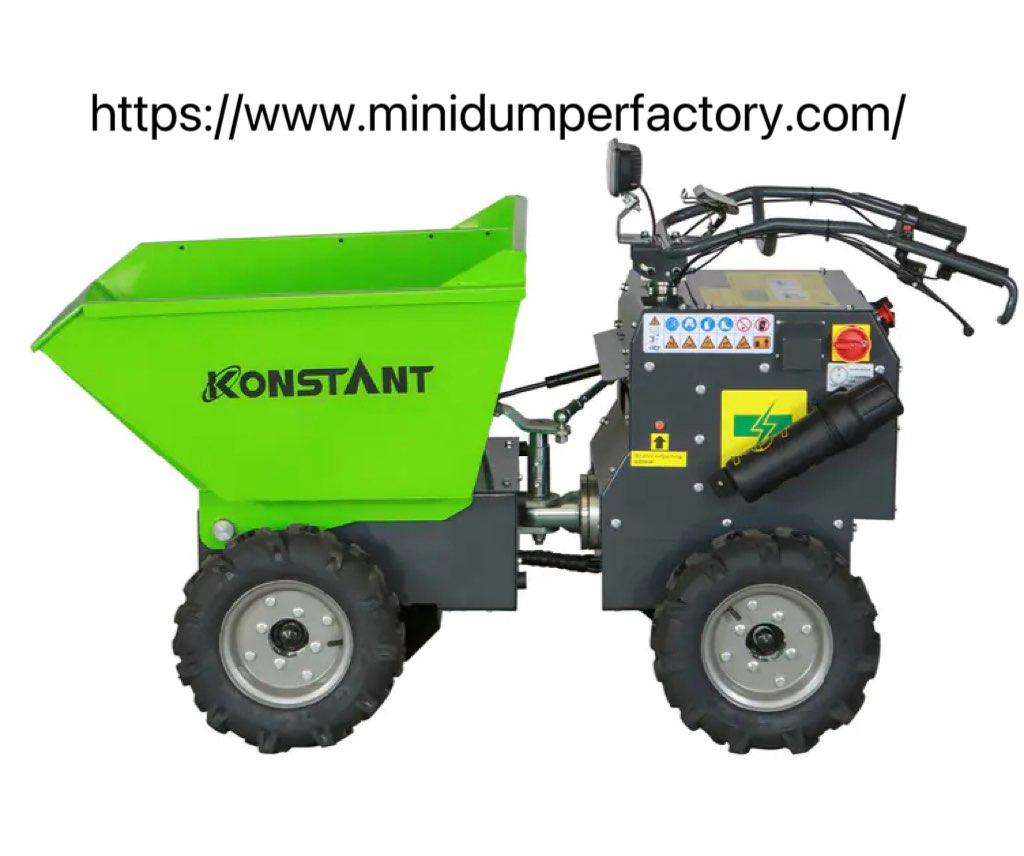
Mini Dumper Factory evaluation should begin with verifiable information about production arrangements, product specifications, inspection procedures, and order management. For importers, distributors, rental businesses, and contractors, choosing a manufacturing partner involves more than reviewing catalogue photographs or comparing quotations. Buyers need to know how requirements are recorded, how equipment is checked before shipment, and how technical questions are handled throughout the purchasing process. A structured evaluation can help reduce misunderstandings and make supplier comparisons more practical.
Verify the Company and Its Responsibilities
Before discussing detailed specifications, confirm the legal business information, production address, product range, and responsibilities of the company receiving the order. Buyers should understand whether the supplier manufactures the equipment directly or coordinates production through other facilities.
This distinction does not automatically determine whether a supplier is suitable. Transparency is the key consideration. Ask who handles production coordination, final inspection, technical documentation, and communication if a problem arises.
Where possible, arrange an on-site visit or a live video meeting. Request a view of relevant assembly areas, equipment preparation, and inspection activities. Current, specific information is more useful than relying entirely on general promotional photographs.
Establish Clear Product Specifications
A purchasing specification should identify exactly what the buyer expects to receive. It can include the model number, rated payload, overall dimensions, power configuration, hopper design, drive arrangement, accessories, and other agreed details.
Buyers should also ask how changes are managed after an order is confirmed. For example, a requested engine change, revised label, or alternative accessory should be documented and approved by both parties before implementation.
Written records help prevent differences between the quotation, production instructions, and delivered equipment. For distributors handling several configurations, consistent model identification also makes repeat orders easier to organize.
Before approving an order, compare the final specification against the quotation and relevant technical drawings. Record unresolved questions instead of assuming that an informal conversation has settled every detail.
Examine the Inspection Process
Ask the supplier to explain which checks are performed before equipment leaves the production site. Depending on the model, these may cover the machine configuration, visible assembly condition, operating functions, included accessories, and packaging.
Request relevant inspection records, photographs, or videos where available. If an independent inspection is required, agree on its scope, timing, and acceptance criteria before the equipment reaches the final preparation stage.
It is also useful to clarify how an unsuccessful check is handled. Buyers should understand whether an issue is documented, corrected, and checked again before shipment. This discussion establishes a clearer process than relying on a general statement about product quality.
For larger orders, define which items need verification across the batch. Sample approval can help confirm expectations, while the remaining units should still be checked according to the agreed purchasing requirements.
Confirm Customization and Branding Details
Customization can help distributors prepare equipment for a particular market, but every requested change needs a clearly defined scope. Buyers may want to discuss exterior color, logo placement, nameplates, manuals, packaging artwork, or selected product configurations.
Ask which changes are available for the requested model and whether they affect order quantities, production schedules, or approval procedures. Provide usable logo files, artwork, drawings, and written instructions before the relevant work begins.
Where a sample or visual proof is available, approve it before batch production. Confirm the placement and spelling of branding, the required language for manuals, and any market-specific information that must appear on the product or package.
Keeping an approved record of these details can make subsequent orders more consistent and reduce repeated clarification between purchasing and production teams.
Review Spare Parts and Technical Support
Purchasing decisions should account for equipment use after delivery. Buyers can request information about routine service items, parts diagrams, component identification, operating manuals, and procedures for requesting technical assistance.
For distributors and rental businesses, replacement part planning can be particularly important because equipment may operate at several customer locations. Ask which components require regular inspection and how the correct replacement can be identified when needed.
Clarify how technical questions are submitted, what information should accompany a service request, and which documents are available to support troubleshooting. Warranty coverage, exclusions, and claim procedures should also be confirmed in writing rather than assumed.
These discussions give purchasing teams a clearer picture of the support arrangements available for their intended business model.
Check Packaging and Shipment Coordination
Production completion is only one stage of an equipment order. Buyers should confirm packaging arrangements, shipment dimensions, loading plans, accessory packing, and documents required for the destination market.
If several models or configurations are included in one shipment, ask how each unit and its accessories will be identified. Clear labels and packing lists can help the receiving team check the shipment and direct equipment to the correct warehouse or customer.
Discuss delivery schedules using realistic production and transportation arrangements. Confirm the agreed shipment milestone, the documents to be provided, and the process for communicating changes. Buyers should also check destination-specific import and compliance requirements with relevant professionals before finalizing the order.
Prepare a Practical Supplier Evaluation Checklist
A structured checklist makes it easier to compare suppliers using consistent criteria. Consider company information, production arrangements, approved specifications, inspection evidence, customization, spare parts, documentation, packaging, and communication procedures.
For each item, record the evidence received, outstanding questions, and agreed follow-up actions. This creates a useful reference for internal purchasing decisions and future discussions.For businesses sourcing compact equipment for construction, landscaping, or agricultural applications, minidumperfactory provides a starting point for reviewing product information and preparing a purchasing inquiry. Visit https://www.minidumperfactory.com/product/ to review available equipment and discuss the specifications, customization requirements, and supply arrangements relevant to your business.

 English
 Arabic
 French
 Spanish
 Deutsch
 Turkish
 Dutch
 Italiano
 Russian
 Romaian
 Portuguese (Brazil)
 Greek