


What Should Buyers Check Before Ordering from sweelin-motor?
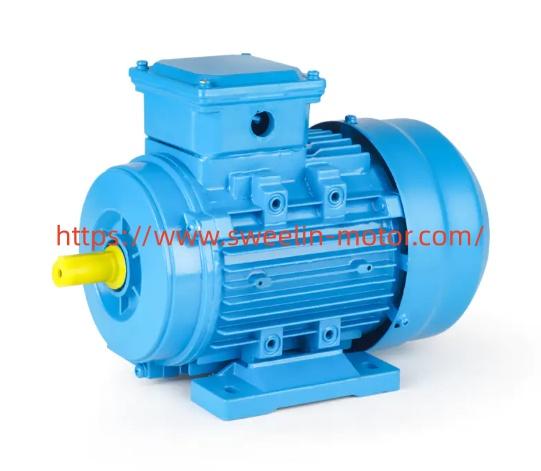
Wholesale Electric Motor Supplier selection involves evaluating technical compatibility, manufacturing procedures, product documentation, and delivery arrangements. For importers, distributors, and equipment manufacturers, purchasing decisions can affect installation plans, inventory management, and customer commitments. Preparing clear requirements before requesting quotations helps both parties discuss practical details and establish expectations before production begins.
Identify the Application and Required Specifications
Begin by defining the intended application. Rated power, voltage, frequency, rotational speed, phase configuration, and mounting dimensions can affect whether a product fits the equipment. Buyers should also consider the operating environment, duty cycle, ventilation, and exposure to moisture or dust.
Prepare a specification sheet before requesting prices. Include the required values, installation details, estimated quantity, and any customization needs. For replacement projects, photographs, nameplate information, and dimensional drawings can help clarify the existing configuration.
For new equipment, explain the expected load and operating conditions. These details give the manufacturer a clearer basis for discussing suitable options and help avoid quotations that cover different technical configurations.
Examine Technical Documents
Documentation provides a reference for checking whether the proposed product matches the application. Request the relevant data sheet, dimensional drawing, connection information, and available test records for the specific model under consideration.
Review the rated output, voltage, frequency, speed, insulation characteristics, enclosure protection, and mounting dimensions where applicable. Confirm that the documents correspond to the quoted configuration rather than a similar model with different characteristics.
For international purchases, check which conformity documents are required in the destination market. Verify the issuing organization, validity, scope, and covered product models when certificates are provided.
If any information remains unclear, request written clarification before approving the quotation. Accurate records help purchasing, engineering, and receiving teams work from the same technical reference.
Ask About Production and Inspection Procedures
Manufacturing procedures can provide useful insight into how agreed requirements are checked. Ask which inspections take place during assembly and before dispatch, and whether the results can be documented.
Depending on the product design, relevant checks may include electrical measurements, insulation resistance, dimensional accuracy, vibration, noise, and temperature-related performance. The inspection plan should reflect the agreed specifications and intended operating conditions.
For larger orders, consider requesting an inspection report or discussing a pre-shipment inspection. Clarify how nonconforming items are identified, recorded, and addressed before goods leave the production site.
Specific questions are more useful than general assurances. Written inspection criteria and supporting records give both parties a shared basis for reviewing product consistency.
Review Samples Before Approving a Large Order
Sample evaluation allows buyers to check important details before committing to a larger quantity. Depending on the application, review dimensions, terminal arrangements, labels, surface finish, packaging, and relevant operating characteristics.
After approval, retain the sample reference, drawings, data sheet, and inspection criteria. Ask how these requirements will be communicated to production staff and how proposed changes will be reviewed.
For repeat purchases, approved records provide a reference for checking later deliveries. When customization is involved, confirm the details that require written approval, such as special labels, packaging artwork, shaft dimensions, or connection arrangements.
This preparation is especially useful when several departments participate in purchasing, engineering, and quality control.
Compare Quotations Beyond the Unit Price
A quotation should identify the product configuration, order quantity, minimum purchase requirements, packaging, payment terms, shipping arrangements, and validity period.
Ask whether additional charges apply to samples, customized components, special packaging, or tooling. A clear cost breakdown helps the purchasing team estimate the overall expense instead of comparing unit prices alone.
Also review warranty coverage and procedures for addressing incorrect goods or product discrepancies. Transportation, storage, inspection, and possible replacement costs can influence the final purchasing budget.
Use the same comparison sheet for every candidate. This makes differences in technical scope and commercial conditions easier to identify before a decision is made.
Confirm Production Capacity and Delivery Timing
A delivery estimate may depend on specification approval, material preparation, assembly, inspection, packaging, and transportation. Confirm when the quoted lead time begins and whether it refers to production completion or shipment departure.
For recurring orders, discuss expected quantities and purchasing frequency early. If several models are needed, clarify whether they can be prepared within the requested schedule and whether separate packaging or labeling is necessary.
Request written milestones and agree on how schedule changes will be communicated. A designated contact can help coordinate updates with procurement and logistics teams, particularly when international transportation is involved.
Clarify Communication and After-Sales Support
Before confirming an order, establish how technical questions, document requests, warranty claims, and replacement inquiries will be handled. Review warranty coverage, exclusions, required evidence, and the process for submitting a claim.
Written communication is useful when both parties operate in different time zones. Keep records of approved specifications, drawing revisions, payment milestones, and shipping arrangements to reduce misunderstandings.
A practical evaluation checklist should cover technical requirements, documentation, inspection criteria, sample approval, quotation details, delivery milestones, and after-sales responsibilities. Resolve outstanding questions before authorizing production.For distributors, importers, and equipment manufacturers, a structured review can make purchasing discussions more focused and connect product choices with actual project needs. Visit https://www.sweelin-motor.com/ to review company information and available products, then contact sweelin-motor with your intended application, technical specifications, estimated order quantity, and destination market to discuss suitable configurations and production arrangements.

 Arabic
 French
 Spanish
 Portuguese
 Deutsch
 Turkish
 Dutch
 Italiano
 Russian
 Romaian
 Portuguese (Brazil)
 Greek