


Best Pilot Training in India for Aspiring Commercial Pilots
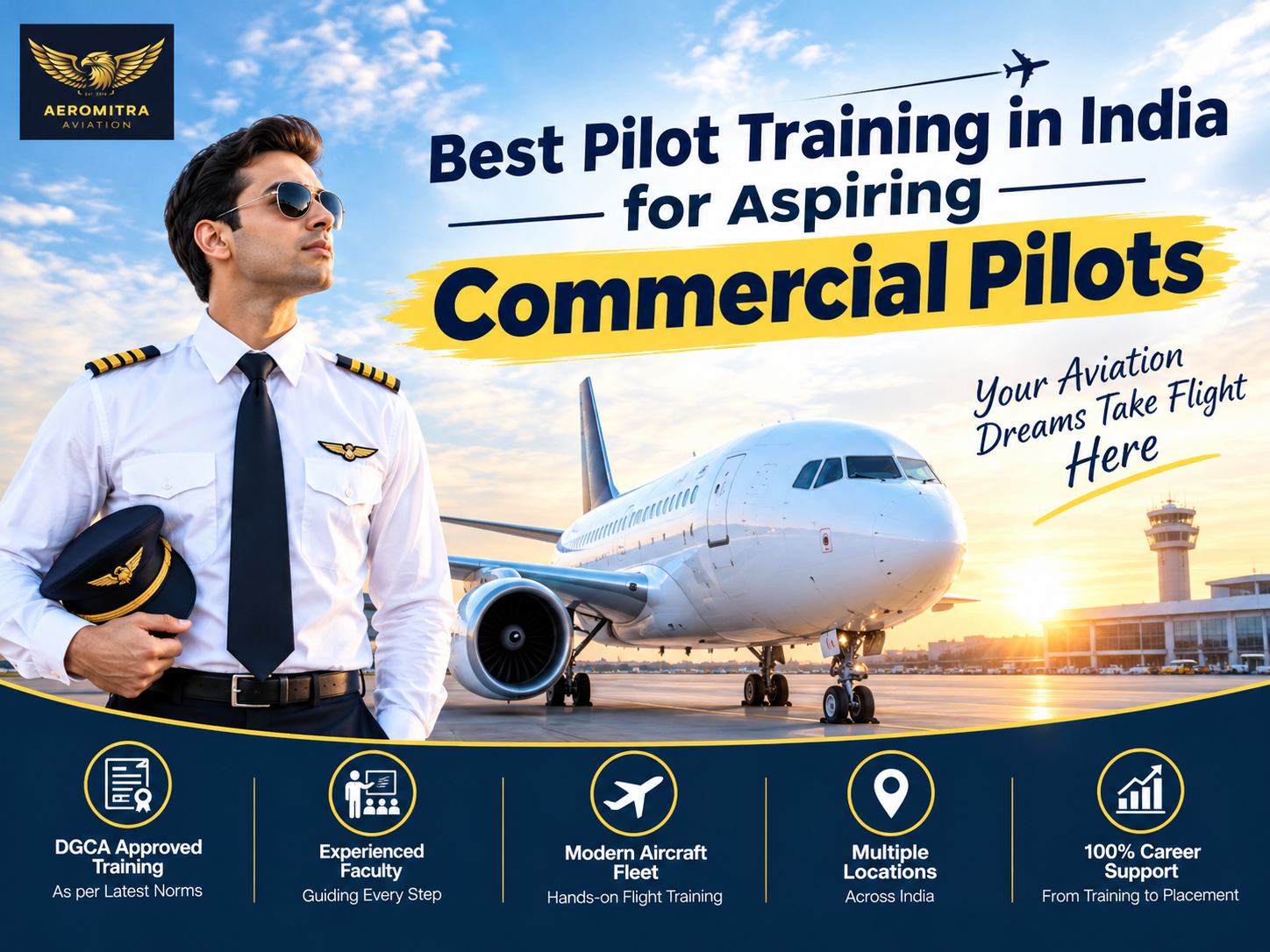
Becoming a commercial pilot is an exciting goal for students who dream of flying aircraft and building a career in aviation. Choosing the best pilot training in India is an important first step because the right training pathway helps aspiring pilots understand aviation regulations, develop flying skills, and prepare for the responsibilities of a professional pilot. Students should research training requirements, medical eligibility, ground classes, flight experience, and overall costs before making a decision.
AeroMitra helps aspiring aviators explore their training options and understand the steps involved in pursuing a Commercial Pilot Licence (CPL). With careful planning and the right guidance, students can make informed decisions about their aviation education and prepare for the challenges of a professional flying career.
Why Choose a Career as a Commercial Pilot?
Commercial pilots operate aircraft for airlines and other authorised aviation services. The profession offers opportunities to develop technical knowledge, decision-making skills, communication, and teamwork. However, becoming a pilot requires commitment, discipline, and a willingness to keep learning.
Pilots must understand aircraft systems, navigation, weather conditions, aviation regulations, and emergency procedures. They also need to demonstrate sound judgement and follow strict safety standards.
Students should understand that pilot training involves both classroom learning and practical flight experience. Before enrolling, they should research the requirements set by the Directorate General of Civil Aviation (DGCA) in India and confirm that their chosen training pathway meets the applicable regulations.
How to Choose the Best Pilot Training in India
Selecting a training programme requires more than comparing advertisements or looking at a school's location. Students should evaluate several factors before making their choice.
Check Training Standards and Recognition
Start by checking the relevant DGCA requirements and verifying the current approval status of any flight training organisation you are considering. Understand which organisation will provide ground training, practical flying experience, examinations, and the necessary documentation.
Students should also ask about the training syllabus, instructor qualifications, aircraft availability, and the process for tracking their progress. These details can help them assess whether a programme suits their career goals.
Understand the Training Structure
A pilot training pathway generally includes theoretical knowledge, practical flight training, examinations, and other applicable licensing requirements. Students learn subjects such as air navigation, meteorology, air regulations, aircraft technical knowledge, and flight planning.
Practical training helps students apply this knowledge while developing aircraft handling, communication, situational awareness, and decision-making skills. Understanding how classroom lessons connect with flying experience can help students prepare more effectively.
Review Instructor Experience
Experienced instructors can help students understand complex aviation concepts and develop safe flying habits. Ask about instructor qualifications, teaching methods, student support, and how the training organisation provides feedback on progress.
A supportive learning environment can make a meaningful difference, particularly when students encounter challenging subjects or need additional preparation for examinations.
Understanding the Pilot Training Requirements in India
Students should confirm that they meet the current eligibility requirements before committing to a training programme. Requirements can vary according to the licence, training route, and applicable regulations.
Educational Qualifications
Aspiring commercial pilots in India generally need to meet the prescribed educational requirements, including the required Physics and Mathematics qualifications at the 10+2 level or an accepted equivalent. Students who need to complete missing subjects should verify the accepted options with the DGCA before proceeding.
Strong foundations in mathematics and physics can help students understand navigation, aircraft performance, weather, and other technical subjects.
Medical Fitness
Medical fitness is an essential part of a pilot career. Applicants should review the applicable DGCA medical requirements and arrange the appropriate aviation medical examinations through authorised channels.
Students should understand the medical requirements early in the process because medical eligibility can affect their training plans and career timeline.
Ground Training and Examinations
Ground training prepares students for the theoretical knowledge examinations required for their chosen licence. Students should follow a structured study plan, practise relevant questions, and seek help when they struggle with difficult concepts.
Consistent preparation is generally more effective than leaving all revision until the final stages of training.
Why a Good Pilot Training School in India Matters
Choosing a suitable pilot training school in India can influence the quality and organisation of a student's learning experience. A well-planned programme should explain the training sequence, expected costs, progress reviews, and steps students must complete to meet licensing requirements.
Before enrolling, ask for a clear breakdown of tuition, flying hours, aircraft or simulator charges where applicable, examination fees, accommodation, travel, and other potential expenses. Students should also ask about aircraft availability and how weather, maintenance, or scheduling issues may affect the training timeline.
A transparent discussion of these factors helps students plan their finances and avoid making a decision based only on an advertised starting price.
Exploring Affordable Flight Schools
Training to become a commercial pilot can require a substantial financial investment. Students who are researching affordable flight schools should compare the total expected cost of completing their training rather than focusing only on the initial fee.
A lower advertised price does not always represent the lowest overall cost. Students should find out what the package includes, how additional flying hours are charged, whether examination fees are separate, and what happens if training takes longer than expected.
Consider these practical steps when comparing schools:
-
Request a written breakdown of all major fees.
-
Check the aircraft fleet and training availability.
-
Ask about instructor experience and student progress monitoring.
-
Confirm the organisation's current regulatory status.
-
Understand the expected training sequence and possible delays.
-
Speak with current or former students when reliable information is available.
The goal is to identify a programme that balances affordability, safety, training quality, and transparency.
How AeroMitra Supports Aspiring Pilots
AeroMitra helps aspiring aviators understand their options as they prepare for a future in aviation. Students often need to compare training pathways, understand licensing requirements, and decide which questions to ask before choosing a flight training organisation.
The process starts with identifying individual goals, reviewing eligibility, understanding the training budget, and researching suitable academies. Students should also learn about ground examination preparation, practical flying experience, medical requirements, and the documents needed throughout their training.
AeroMitra can help students approach these decisions with greater clarity. However, applicants should independently verify the latest regulatory requirements and the approval status of any training organisation before enrolling.
Preparing for a Successful Aviation Career
Pilot training requires patience, consistency, and a strong commitment to safety. Students can prepare by improving their English communication, strengthening their technical knowledge, practising disciplined study habits, and learning to manage pressure.
It is also useful to develop teamwork and decision-making skills. Pilots work with instructors, air traffic controllers, crew members, and other aviation professionals, so clear communication and responsible judgement are essential.
Students should remember that completing training is one stage of the journey. Career opportunities depend on licensing, qualifications, experience, recruitment conditions, and individual performance. A realistic plan helps aspiring pilots prepare for each stage without relying on promises of guaranteed employment.
Conclusion
Choosing the best pilot training in India involves careful research, realistic financial planning, and a clear understanding of licensing requirements. Students should evaluate training standards, instructors, aircraft availability, medical eligibility, examination preparation, and total programme costs before making a decision.
Comparing a suitable pilot training school in India with other options, including affordable flight schools, can help students find a pathway that matches their goals and budget. With informed planning and guidance from AeroMitra, aspiring commercial pilots can take practical steps toward their aviation ambitions.
Frequently Asked Questions
1. How do I choose the best pilot training in India?
Compare the current regulatory status of training organisations, instructor qualifications, aircraft availability, training structure, student support, and total costs. Verify all relevant requirements before enrolling.
2. What qualifications are required to become a commercial pilot in India?
Applicants generally need to meet the applicable educational requirements, medical standards, examinations, flight training, and licensing conditions. Confirm the latest requirements with the DGCA.
3. Are affordable flight schools a good option?
They can be, provided they offer appropriate training standards, transparent fees, suitable aircraft availability, and a clear training plan. Compare the full expected cost rather than only the advertised price.
4. How can AeroMitra help aspiring pilots?
AeroMitra helps students explore training pathways, understand important preparation steps, and make informed decisions while researching flight training options.
Author Bio
The AeroMitra team shares practical guidance for aspiring pilots on aviation education, pilot training pathways, CPL preparation, and the steps involved in planning a professional aviation career.

 English
 Arabic
 French
 Spanish
 Portuguese
 Deutsch
 Dutch
 Italiano
 Russian
 Romaian
 Portuguese (Brazil)
 Greek