


Can a Digital Marketing Course in Lahore Teach You Affiliate Marketing and Passive Income Methods?
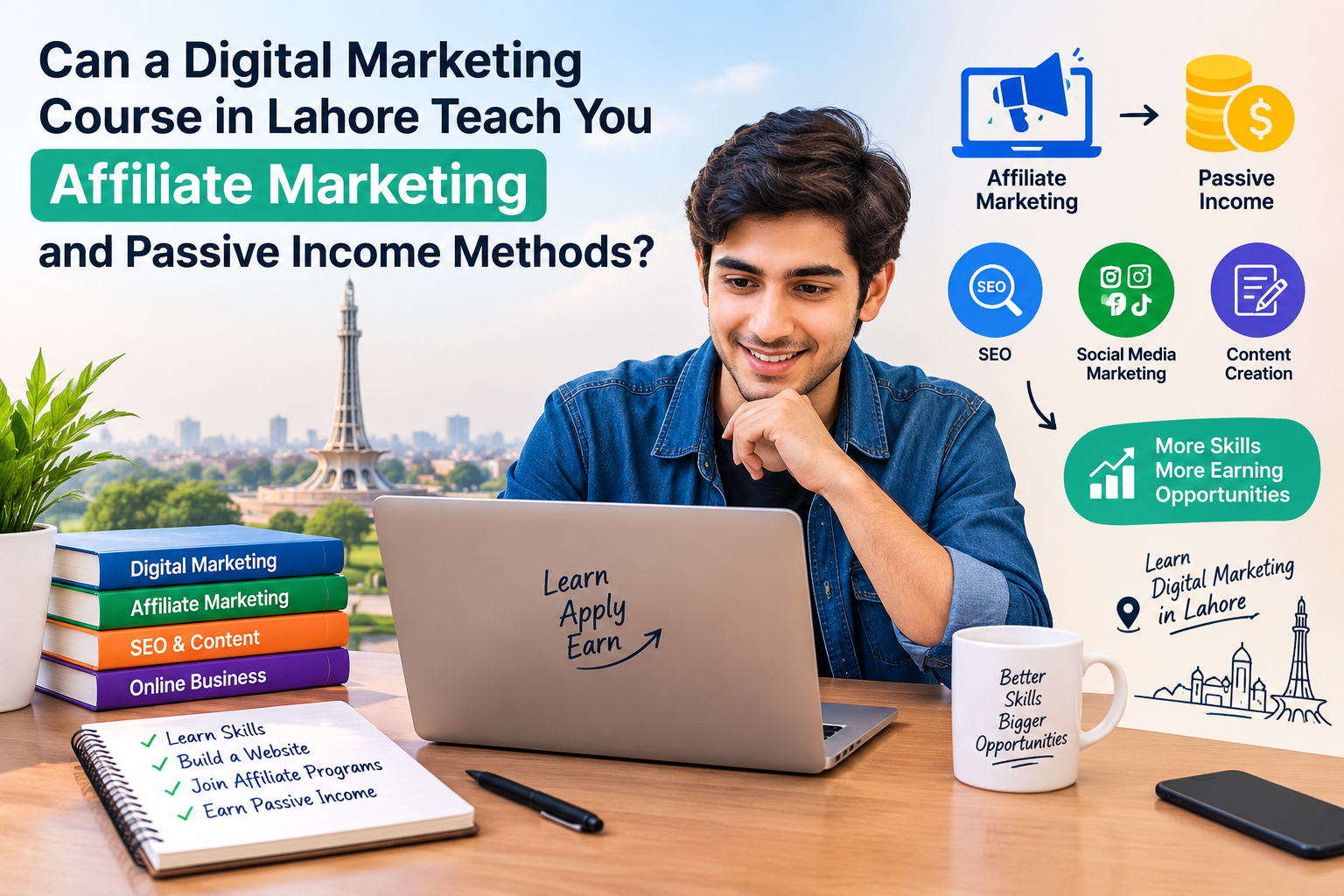
Passive income" is one of the most searched phrases among young people in Pakistan. The idea of earning money while you sleep sounds exciting, and affiliate marketing is often the first method people hear about. So it is no surprise that many students ask the same question before enrolling: can a Digital Marketing Course in Lahore teach you affiliate marketing and passive income methods?
The short answer is yes, a good course can teach you the skills behind them. But the full answer is more honest, and more useful, than the hype you see online. This guide explains what you can learn, what is realistic, and how to avoid disappointment.
What Is Affiliate Marketing?
Affiliate marketing means promoting another company's product or service and earning a commission when someone buys through your special link. You do not create the product, handle delivery, or manage customer support. Your job is to bring the right audience to the right offer.
For example, you might:
- Write a blog review of a web hosting service and earn a commission on each signup
- Create a YouTube video comparing tools and include affiliate links in the description
- Share software recommendations in an email newsletter
- Promote online courses or digital products through social media
The key point is that affiliate marketing is built on traffic and trust. Without an audience that trusts you, there are no sales.
What Is Passive Income, Really?
Passive income is money that keeps coming in after the main work has been done. Examples include a blog that continues to bring visitors from Google, a YouTube video that keeps getting views, or a digital product that sells repeatedly.
But it is rarely truly passive at the start. Most passive income streams need months of active work first: creating content, building traffic, testing, and improving. Once they mature, they may need much less effort, but they usually still need updates and maintenance.
A good course will say this clearly. Be careful with anyone who promises easy, fast, effortless money.
Can a Digital Marketing Course in Lahore Teach Affiliate Marketing?
Yes, but it depends on the course. Affiliate marketing is not a separate magic skill. It is the result of several core digital marketing skills working together:
- SEO: Getting your content to rank on Google so people find it
- Content marketing: Writing useful reviews, guides, and comparisons
- Social media marketing: Building an audience on platforms like YouTube, Instagram, and Facebook
- Email marketing: Keeping in touch with your audience and recommending products
- Analytics: Tracking clicks, conversions, and what actually earns
- Paid advertising: Sending targeted traffic, when done carefully and legally
A strong Digital Marketing Course in Lahore covers these skills. Some courses also include a dedicated module on affiliate marketing, covering networks, niches, link tracking, and compliance. Others only mention it briefly, so you should ask before you enrol.
What You Can Learn About Affiliate Marketing in a Course
Choosing a Niche
A niche is the topic you focus on, such as fitness, personal finance, web hosting, productivity software, or online education. A course helps you pick a niche based on demand, competition, and your own interest. Choosing well saves months of wasted effort.
Finding Affiliate Programs and Networks
You learn where to find programs, how they pay, and what to check before joining, such as commission rates, cookie duration, payment methods, and whether they accept affiliates from Pakistan. This last point matters, because not every program or network is available in every country.
Creating Content That Earns Trust
The most successful affiliates do not just post links. They create honest reviews, comparisons, tutorials, and guides that genuinely help people decide. A course teaches you how to structure this content and optimise it for search.
Building Traffic
Traffic is the heart of affiliate marketing. You learn how to bring visitors through:
- SEO and blogging
- YouTube and short video
- Social media communities
- Email lists
- Carefully managed paid campaigns
Tracking and Optimising
You learn to read your numbers: which pages get clicks, which links convert, and which topics are worth more effort. This is what turns guessing into a real strategy.
Following the Rules
A good course also covers disclosure and platform policies. Honest labelling of affiliate links keeps you compliant and builds trust with your audience.
Other Passive Income Methods a Course May Cover
Affiliate marketing is only one option. Depending on the course, you may also learn about:
- Blogging with ad revenue: Earning from display ads as traffic grows
- YouTube monetisation: Earning from ads, sponsorships, and affiliate links
- Digital products: Selling templates, ebooks, checklists, or mini courses
- Print on demand and online stores: Selling products without holding stock
- Email newsletters: Earning through sponsorships and recommendations
- Selling your own services at scale: Using content to attract steady client enquiries
Most of these rely on the same foundations: SEO, content, audience building, and analytics. That is why learning the core skills first is more valuable than chasing a single trick.
How Long Does It Take to See Results?
This is where realistic expectations matter most.
- Content-based income, such as blogs and YouTube, often takes several months of consistent work before it grows.
- Early earnings may be small, and some people earn nothing in the first few months.
- Results depend on your niche, content quality, consistency, and the competition.
- A course can shorten the learning curve, but it cannot replace time and effort.
If an institute promises quick, guaranteed passive income, treat that as a red flag.
Affiliate Marketing vs Freelancing: Which Should You Start With?
|
|
Freelancing |
Affiliate Marketing |
|---|---|---|
|
How you earn |
Paid by clients for your services |
Commission on sales you generate |
|
Speed of income |
Often faster |
Often slower |
|
Income stability |
Depends on clients |
Depends on traffic and trust |
|
Upfront cost |
Low |
Low to moderate |
|
Scalability |
Limited by your time |
Can grow beyond your time |
Many people combine both. They earn from freelancing while slowly building an affiliate site or channel in the background. A good course will help you see how the two fit together.
Common Mistakes Beginners Make
- Chasing quick money. Affiliate marketing rewards patience.
- Picking a niche only for the commission. Interest and knowledge help you stay consistent.
- Posting links without value. Audiences ignore pure promotion.
- Ignoring SEO. Without search traffic, many affiliate sites struggle.
- Not checking program availability. Make sure your country is accepted and payments are possible.
- Spreading too thin. Focus on one platform and one niche before expanding.
- Hiding affiliate relationships. Always disclose clearly.
- Giving up too early. Many beginners quit just before results begin to show.
A Simple Starter Plan
- Learn the foundations of SEO, content, social media, and analytics through your course.
- Choose one niche you can stay interested in for a year.
- Pick one main platform, such as a blog or a YouTube channel.
- Join two or three reputable affiliate programs that accept Pakistan.
- Create helpful content regularly, such as honest reviews and how-to guides.
- Track your results and improve your best-performing content.
- Be patient, and treat the first six months as a learning and building phase.
Questions to Ask Before Enrolling
- Does the course include a module on affiliate marketing and other income methods?
- Will I learn SEO, content, and analytics, which affiliate marketing depends on?
- Is the instructor an active practitioner with real experience in these methods?
- Will I work on a real project, such as a blog or channel, during the course?
- Does the course explain payment methods and program availability for Pakistan?
- Does it set honest expectations about income and timelines?
Clear, honest answers are a good sign. Big income promises are not.
Final Thoughts
So, can a Digital Marketing Course in Lahore teach you affiliate marketing and passive income methods? Yes, a good one can give you the skills and strategy to begin. It can teach you how to choose a niche, create trusted content, drive traffic, and track results.
What it cannot do is replace consistent effort or guarantee income. Passive income is built, not found. Start with strong fundamentals, stay patient, and treat affiliate marketing as a long-term project. If you do, the skills you build will serve you well, whether you earn through commissions, clients, or your own online business.
Frequently Asked Questions
Does every Digital Marketing Course in Lahore teach affiliate marketing? No. Some include a full module, while others cover it only briefly. Ask for the course outline before you enrol.
Can I earn passive income right after finishing the course? Unlikely. Passive income usually takes months of consistent work before it grows, and results are never guaranteed.
Do I need a website to start affiliate marketing? Not always. You can start with a YouTube channel or social media, but a blog or website gives you more control over traffic and content.
Can people in Pakistan join affiliate programs? Many programs accept Pakistani affiliates, but some do not. Always check the terms and payment options before joining.
Is affiliate marketing better than freelancing? Neither is better for everyone. Freelancing usually pays faster, while affiliate marketing can scale over time. Many people do both.
How much money do I need to start? You can begin with a small budget, mainly for a domain, hosting, or basic tools. Many early steps cost very little.

 English
 Arabic
 French
 Spanish
 Portuguese
 Deutsch
 Dutch
 Italiano
 Russian
 Romaian
 Portuguese (Brazil)
 Greek