


How to Identify a Well-Finished Maheshwari Silk Saree
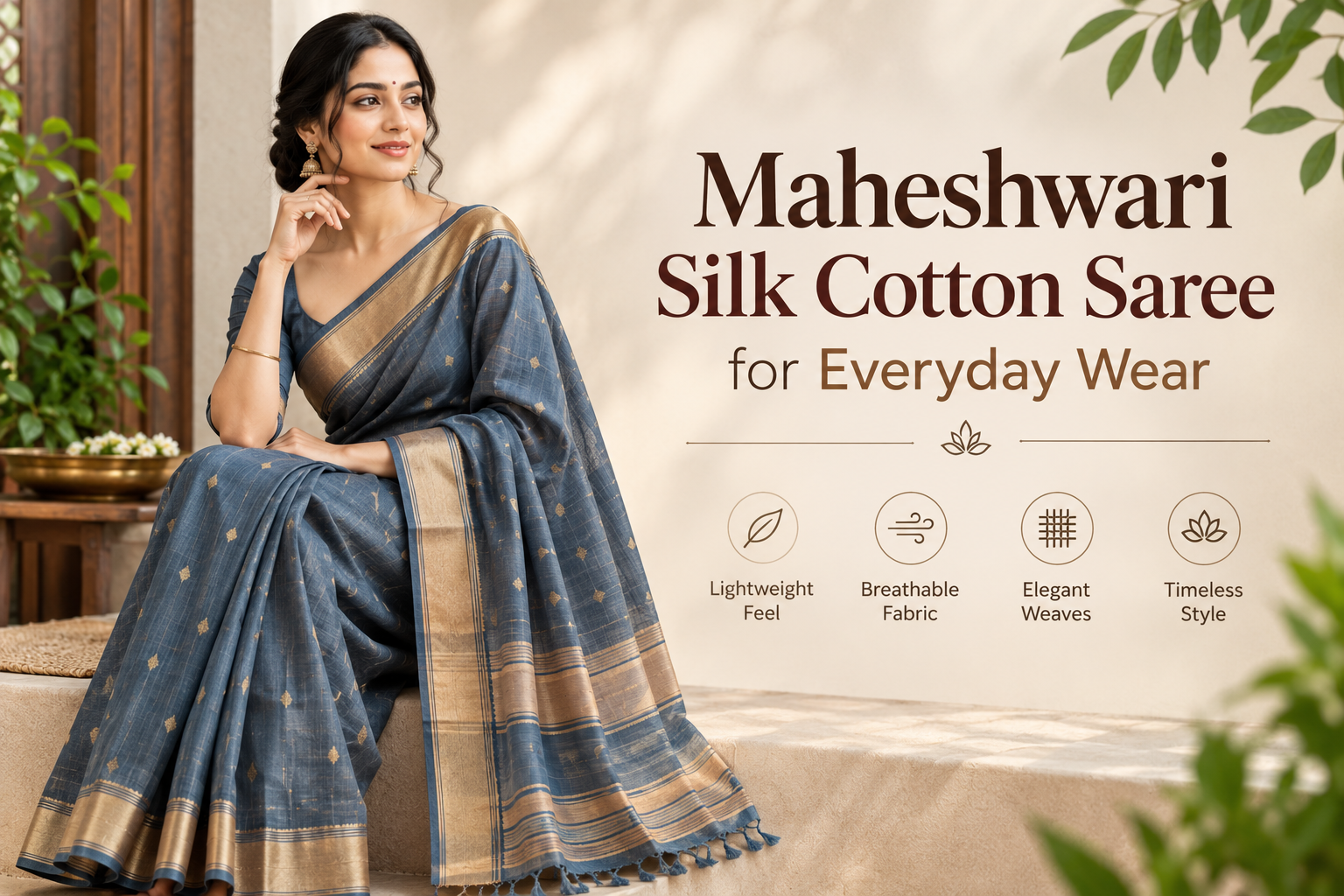
A Maheshwari silk saree can look beautiful in photographs, but its actual quality depends on more than colour and design. The finishing, weaving details, border alignment, fabric texture, and overall construction all influence how the saree looks and feels when worn. If you are planning to buy one, learning how to assess these details can help you make a more confident purchase.
A well finished Maheshwari silk saree should have a neat appearance, carefully constructed edges, a balanced drape, and weaving details that suit its design. Minor variations may occur in handwoven textiles, so quality assessment should focus on overall workmanship rather than expecting every thread to look mechanically identical.
This guide explains how to evaluate saree finishing quality, inspect the fabric, and identify important details before purchasing a Maheshwari silk saree online or in a store.
What Makes a Maheshwari Silk Saree Well-Finished?
Maheshwari sarees are traditionally associated with Maheshwar in Madhya Pradesh. They are known for distinctive borders, geometric motifs, stripes, and decorative pallus. Depending on the product, the fabric may be silk, cotton, or a silk-cotton blend, so checking the exact composition is important.
Finishing refers to the way the saree has been completed after weaving. It includes the condition of the edges, the neatness of the fabric, the treatment of loose threads, and the overall presentation of the garment.
Neat and Secure Edges
Start by examining the saree's edges. They should appear reasonably neat and secure, without obvious unravelling or long, uncontrolled loose threads.
Look closely at the sides and the ends of the saree. Minor irregularities may be present in handwoven textiles, but unfinished areas that could easily unravel deserve attention.
If you are shopping online, request close-up photographs of the edges if the product images do not show them clearly.
Consistent Border Construction
The border is often one of the most recognisable features of a Maheshwari saree. Check whether its pattern follows a reasonably consistent line along the fabric.
The border should not have unexplained gaps, severe distortion, or obvious damage. Small differences in a handwoven pattern are not necessarily defects, but noticeable breaks in the design may indicate a construction or finishing issue.
Also check whether the border sits naturally against the main body of the saree instead of appearing excessively twisted or uneven.
A Neat Pallu
The pallu often contains some of the saree's most prominent design details. Inspect the pattern, edges, and transitions between the pallu and the rest of the fabric.
Look for secure finishing and an overall balanced appearance. If the pallu contains stripes or geometric motifs, check that the pattern looks intentional and that there are no unexplained damaged sections.
How to Check Maheshwari Saree Finishing Quality
A careful inspection can help you distinguish normal textile variation from problems that may affect the saree's appearance or usability.
1. Inspect the Surface for Weaving Problems
Spread the saree on a clean surface and examine the body in good lighting. Look for visible holes, damaged threads, unexplained gaps, or areas where the weave appears noticeably disrupted.
A few slight variations may be expected in handwoven fabric. However, a hole, snag, or loose section that affects the structure should not be ignored.
Do not pull at loose threads to test their strength. This may worsen the damage.
2. Check for Loose Threads
Loose threads can appear around the border, pallu, or other woven sections. Their presence does not automatically mean that the saree is poor quality, especially if they are minor and unrelated to structural damage.
What matters is whether the threads are isolated finishing ends or signs of a larger problem. Several loose threads emerging from a damaged section, for example, deserve closer inspection.
If you are unsure, ask the seller whether the thread ends are part of the normal finishing process and whether the saree has been checked before dispatch.
3. Look for Stains and Marks
Examine the fabric for unexplained stains, discolouration, or marks that may have occurred during handling or storage.
Pay attention to the lighter sections of the saree, the pallu, and the areas near the edges. These marks may be difficult to notice in photographs with poor lighting.
For online purchases, review the product images carefully and ask about any visible marks before placing an order.
4. Evaluate the Overall Shape
A well-finished saree should generally lie in a balanced manner when spread out. Check whether the fabric appears excessively twisted, distorted, or unevenly finished.
The border may show slight variations due to the weaving process, but severe distortion that affects draping is worth discussing with the seller.
Remember that fabric composition, weave, and finishing can all influence how a saree falls. A firmer fabric is not necessarily inferior to a softer one.
Understanding the Weaving Details of a Maheshwari Silk Saree
Weaving details help explain the saree's appearance and may reveal aspects of its construction. They are especially useful when comparing products with similar colours and designs.
Examine the Motifs and Stripes
Maheshwari sarees often feature stripes, geometric motifs, and traditional border patterns. Inspect how these elements appear across the fabric.
Look for patterns that are reasonably clear and coherent. If a design contains repeated geometric shapes, check for obvious breaks or areas where the pattern appears damaged.
However, do not expect every handwoven motif to be perfectly identical. Small variations can occur in handloom textiles and should be considered alongside the saree's overall workmanship.
Check the Transition Between the Body and Border
The point where the main body meets the border can provide useful information about construction and finishing.
Look for a clean transition without obvious holes, severe puckering, or unexplained distortion. The border should not look as though it has been damaged or pulled away from the body.
A close-up photograph of this area can be particularly helpful when buying online.
Understand What the Weave Can and Cannot Tell You
A neat weave is one factor in evaluating a saree, but appearance alone cannot confirm its fibre composition or prove that it was handwoven.
If a seller describes a product as pure silk or handloom Maheshwari silk, check whether the listing provides clear information about the material and production method. Ask for additional details if the description is vague.
Visual inspection should support, rather than replace, reliable product information.
How to Inspect Fabric Texture and Drape
Fabric inspection is not only about finding defects. It also helps you decide whether the saree suits your personal preferences.
Feel the Fabric Carefully
If you are shopping in person, gently handle the fabric to understand its texture. Depending on the fibre composition and finishing, a Maheshwari saree may feel smooth, crisp, slightly textured, or relatively structured.
None of these qualities automatically indicates superior quality. The right texture depends on whether you prefer a defined shape, a softer drape, or a particular feel against the skin.
For online shopping, read the fabric description and ask the seller for details about its texture and composition.
Check How the Saree Falls
If possible, allow part of the saree to fall naturally over your hand or a flat surface. Observe whether the fabric forms folds in a way that matches your preferences.
A saree intended for formal occasions may have a more structured appearance, while another buyer may prefer a softer drape for regular wear.
Do not judge quality by softness alone. A saree's intended design and fabric composition affect how it should behave.
Review the Finishing and Care Requirements
Some sarees may have a crisp finish that helps the pleats retain their shape. Others may feel softer or more fluid.
Ask about washing, ironing, and storage requirements before purchasing. This is particularly important for silk and silk-blend fabrics, which may require specific care.
If the care instructions are unclear, seek clarification rather than assuming that the saree can be washed or ironed like everyday cotton clothing.
Buying a Well-Finished Maheshwari Silk Saree Online
When you cannot inspect the fabric in person, product information and seller transparency become especially important.
Look for Detailed Product Photographs
A useful product listing should ideally show the saree's overall appearance, border, pallu, fabric texture, and any included blouse piece.
Close-up images help you evaluate the weave and finishing more effectively than a single photograph taken from a distance.
Check whether the colours and details appear consistent across the images. Keep in mind that lighting and screen settings can affect how colours look.
Read the Fabric Description Carefully
Confirm whether the saree is described as pure silk, silk-cotton, cotton, or another blend. Do not rely solely on the word "silk" in the product title.
Check the saree's dimensions, included accessories, care instructions, and any details about its weaving technique. These factors help you compare products accurately.
Review the Seller's Policies
Before ordering, read the return and exchange policy. Find out how the seller handles damaged products, incorrect descriptions, or items that differ substantially from their photographs.
Customer reviews may also provide information about packaging, product accuracy, and communication. Detailed reviews are often more useful than ratings alone.
Common Signs That Need a Closer Look
During your inspection, pay particular attention to the following:
· Unravelling edges: These may need repair and could worsen with use.
· Visible holes or damaged threads: Check whether the weave's structure has been affected.
· Severely distorted borders: These may influence the saree's overall appearance when draped.
· Unexplained stains: Ask the seller for clarification before buying.
· Vague fabric claims: Confirm the fibre composition and weaving details.
· Missing close-up photographs: Request additional images if important areas cannot be inspected.
These signs do not all carry the same level of concern. A minor loose thread may be manageable, whereas structural damage or unclear product claims may justify reconsidering the purchase.
Final Thoughts
Identifying a well finished Maheshwari silk saree requires attention to its edges, border, pallu, weaving details, fabric texture, and overall construction. No single feature can guarantee quality, so assess the saree as a whole and compare its workmanship with the product description.
Whether you shop online or in person, careful fabric inspection can help you identify potential problems before purchasing. Ask questions about fibre composition, finishing, and care requirements, and make sure the seller provides enough information to support the product's claims.
By understanding these details, you can choose a Maheshwari silk saree that matches your style preferences and expectations for quality, while making a more informed buying decision.

 English
 Arabic
 French
 Spanish
 Portuguese
 Deutsch
 Turkish
 Dutch
 Russian
 Romaian
 Portuguese (Brazil)
 Greek