


Does a 9 Wood Need a Different Shaft? How Weight, Flex, and Low Torque Affect Performance
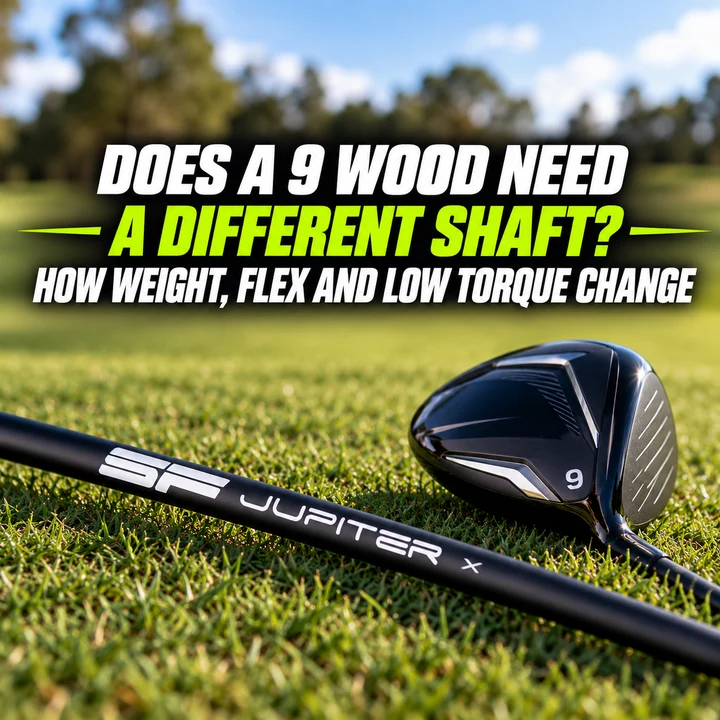
Yes, a 9 wood generally benefits from a shaft designed for its shorter length, higher loft, and different swing characteristics. Compared with a driver shaft, a 9 wood shaft is typically shorter and heavier. The right shaft weight helps maintain a comfortable swing tempo, proper flex supports consistent contact, and low torque can influence how stable the club feels during the swing.
A 9 wood is becoming an appealing option for golfers who want higher ball flight, softer landings, and a more forgiving alternative to difficult long irons. However, choosing the right clubhead is only part of the equation. Your golf shaft also influences how the club feels, how consistently you strike the ball, and how effectively you control your shots.
Whether you're replacing an existing fairway wood shaft or exploring custom golf shafts, understanding weight, flex, torque, and construction can help you make a more informed decision.
What Makes a 9 Wood Shaft Different From a Driver Shaft?
A 9 wood shaft differs from a driver shaft primarily in length, weight, and how it is designed to perform with a higher-lofted clubhead. Drivers prioritize performance from the tee, while 9 woods are commonly used for approach shots, longer shots from the fairway, and situations requiring a higher trajectory.
Most modern 9 woods have approximately 24 degrees of loft and a playing length of around 41 to 41.75 inches. By comparison, a typical driver measures approximately 45 inches or longer, while a 7 wood generally measures around 41.75 to 42.25 inches.
These differences affect several aspects of performance:
-
Swing mechanics: A shorter shaft creates a smaller swing arc and can make the club easier to control.
-
Shaft weight: Fairway wood shafts are often heavier than driver shafts to achieve a preferred balance and feel.
-
Launch characteristics: A 9 wood's higher loft helps golfers launch the ball higher and potentially land it more softly.
-
Shot requirements: Drivers are primarily used for tee shots, while 9 woods need to perform from different lies.
Even the best driver shaft for your swing may not deliver the same results when installed in a 9 wood.
The objective isn't simply to find a shorter driver shaft. It's to select a fairway wood shaft that complements your clubhead, swing speed, tempo, and preferred ball flight.
What Is the Best Shaft Weight for a 9 Wood?
The best 9 wood shaft weight depends on your swing speed, transition, strength, and preferred feel. Many clubfitters recommend starting with a fairway wood shaft approximately 10 grams heavier than your driver shaft, but this is a guideline rather than a universal fitting rule.
A golfer using a 55-gram driver shaft might begin testing fairway wood shafts around 65 grams. Another golfer may prefer something heavier or lighter depending on how the club performs.
How does shaft weight affect performance?
Shaft weight influences how the club feels throughout the swing and how easily you can repeat your preferred tempo.
A lighter shaft may help some golfers swing comfortably, especially those with smoother transitions or lower swing speeds. However, lighter doesn't automatically mean longer.
A heavier shaft may help certain golfers maintain a more controlled tempo and feel the club's position during the swing. Too much weight, however, can cause fatigue or make it difficult to deliver the club consistently.
The most important factors to evaluate are:
-
Clubhead speed: Can you maintain a comfortable speed without forcing the swing?
-
Strike consistency: Are you regularly contacting the center of the clubface?
-
Ball flight: Does the shaft produce a useful launch and trajectory?
-
Dispersion: Are your shots grouping consistently around your target?
-
Comfort: Does the shaft feel natural throughout a full round?
A high performance golf shaft should complement your swing rather than require you to change your technique to accommodate it.
Should You Choose a Lightweight or Heavier 9 Wood Shaft?
A lightweight 9 wood shaft may suit golfers who prefer an easier-to-swing club, while a heavier shaft may appeal to players who want a more substantial feel and controlled tempo. Neither option is universally better; the right choice depends on individual swing characteristics and testing.
Steadfast Golf offers two 9 wood shaft options with different weights.
JUPITER One 9 Wood Shaft: 78 Grams
The JUPITER One 9 Wood Shaft is designed for golfers looking for a heavier fairway wood shaft with an emphasis on low torque and stability.
Its specifications include:
-
Shaft weight: 78 grams
-
Playing length: 41 inches
-
Flex options: Senior, Regular, Stiff, and X-Stiff
-
Low-torque design
-
Adapter and grip installation options
The 78-gram construction may appeal to golfers who prefer more weight in their fairway woods, particularly those who find very lightweight shafts difficult to control.
Jupiter Lite 9 Wood Shaft: 65 Grams
The Jupiter Lite 9 Wood Shaft offers a lighter alternative for golfers who prefer less overall shaft weight.
Its specifications include:
-
Shaft weight: 65 grams
-
Playing length: 41 inches
-
Flex options to match different swing characteristics
-
Lightweight construction for a different swing feel
A 65-gram shaft may be worth testing if you have a smoother swing, prefer a lighter club, or find heavier fairway wood shafts tiring.
The difference between these two options is 13 grams. That can be noticeable during the swing, although the final feel also depends on the clubhead, grip, balance, and completed club specifications.
Rather than selecting a shaft based only on weight, compare how each option performs during normal swings.
Does Low Torque Improve 9 Wood Shaft Performance?
Low torque can influence how stable a 9 wood shaft feels, but it does not automatically produce straighter shots or greater accuracy. Torque measures a shaft's resistance to twisting under an applied force, and its effect depends on the shaft's overall design and how it interacts with the golfer's swing.
A low torque golf shaft generally resists twisting more than a higher-torque design under comparable testing conditions.
However, torque ratings are not standardized across all manufacturers. A number from one brand may not be directly comparable with a number from another.
Is low torque better for accuracy?
Not necessarily.
Golfers searching for a driver shaft for accuracy often focus on low-torque construction because it is associated with a firm, stable feel.
But accuracy also depends on:
-
Clubface angle at impact
-
Swing path
-
Centered contact
-
Shaft weight and flex
-
Clubhead design
-
Consistent swing delivery
The same principles apply when choosing a 9 wood shaft.
Steadfast Golf's JUPITER One lineup emphasizes low-torque construction and balance. This may appeal to golfers who prefer a more stable-feeling shaft, but the design alone cannot guarantee tighter dispersion.
When comparing shafts, use launch monitor measurements and actual shot patterns instead of relying exclusively on torque specifications.
What Shaft Flex Is Best for a 9 Wood?
The best 9 wood shaft flex depends on your swing speed, transition, and preferred feel. Driver swing speed is a useful starting point, but the ideal flex should ultimately be determined by how the shaft performs in your 9 wood.
Steadfast Golf's published fitting guidance in the original article uses the following driver swing speed ranges:
-
Senior Flex: 70–89 mph
-
Regular Flex: 90–99 mph
-
Stiff Flex: 100–109 mph
-
X-Stiff Flex: 110–129 mph
These ranges can help narrow your options, but they should not replace individual testing.
Why does driver shaft flex matter when choosing a 9 wood?
Your driver shaft flex provides a useful reference because it reflects your general swing characteristics. However, a shorter fairway wood may feel and perform differently from your driver.
For example, a golfer who plays a stiff driver shaft may initially consider a stiff 9 wood shaft. But if the golfer has a particularly smooth transition or prefers a softer feel, another flex may produce more comfortable results.
Additionally, flex labels are not standardized across the golf industry. One manufacturer's stiff shaft may feel different from another manufacturer's stiff design.
If you're unsure about your swing speed, read Steadfast Golf's guide on how to find your driver swing speed without a launch monitor.
The goal is to choose a golf shaft that supports repeatable contact and a predictable ball flight, not simply the stiffest option you can swing.
Is a Carbon Fiber Golf Shaft a Good Choice for a 9 Wood?
A carbon fiber golf shaft can be an excellent option for a 9 wood because composite construction allows manufacturers to adjust weight, stiffness, and bending characteristics. These properties help shaft designers create different performance profiles for golfers with varying swing speeds and preferences.
Carbon fiber is widely used in modern graphite golf shafts. Manufacturers can arrange carbon fiber layers and select different materials to influence how a shaft bends and feels.
What are the benefits of carbon fiber construction?
Carbon fiber shaft designs offer several potential advantages:
-
Weight flexibility: Manufacturers can create lightweight or heavier shafts without relying entirely on changes in shaft dimensions.
-
Customized stiffness: Different fiber orientations and construction techniques help control bending characteristics.
-
Swing feel: Shaft designers can develop different response profiles for smooth or aggressive transitions.
-
Performance options: Carbon fiber construction supports a wide range of shaft weights, flexes, and torque characteristics.
Steadfast Golf uses carbon fiber construction in its JUPITER shaft lineup, with an emphasis on weight balance and low-torque design.
However, carbon fiber alone does not determine whether a shaft is right for your game.
The best golf shaft for distance is one that helps you produce efficient launch conditions, consistent contact, and suitable ball speed with your particular clubhead.
For a 9 wood, that means finding a shaft that supports useful carry distance while maintaining enough height and stopping power for approach shots.
Is a 9 Wood a Good Choice for Senior Golfers?
A 9 wood can be a useful option for senior golfers because its higher loft may make it easier to launch the ball and achieve a softer landing than a traditional long iron. Pairing it with a suitable shaft can also help golfers maintain a comfortable swing without sacrificing control.
However, 9 woods are not exclusively designed for seniors.
Golfers of different ages and abilities may benefit from carrying one, especially when they struggle to achieve sufficient height with lower-lofted clubs.
Should senior golfers choose a lighter shaft?
A lighter shaft may help some senior golfers maintain their preferred swing tempo and clubhead speed, particularly if heavier clubs feel difficult to swing.
For example, a golfer using one of the best senior driver shafts for their individual swing may still benefit from a different weight profile in a 9 wood.
A lightweight driver shaft and a lightweight fairway wood shaft serve different purposes because the clubs have different playing lengths, head weights, and intended uses.
The 65-gram Jupiter Lite 9 Wood offers a lighter alternative to the 78-gram JUPITER One.
That difference may be worth testing if you want a more comfortable feel during longer rounds.
Still, senior flex is not automatically the correct choice for every older golfer. Age alone does not determine shaft flex.
A golfer with a faster swing may benefit from Regular or Stiff flex, while another golfer may prefer Senior flex regardless of age.
Choose based on your swing characteristics rather than the label.
How to Choose the Right Steadfast Golf 9 Wood Shaft
Choosing the right 9 wood shaft requires more than selecting a familiar flex. You should consider shaft weight, playing length, torque, clubhead compatibility, and grip preference before ordering.
Here are five important factors to evaluate.
1. Start with your swing speed
Use your driver swing speed as an initial reference when selecting shaft flex.
If you fall between two flex categories, consider your transition and preferred feel. A clubfitter can help determine whether a firmer or softer option better suits your swing.
2. Compare shaft weights
If you prefer a heavier, more substantial feel, the 78-gram JUPITER One may be worth considering.
If you prefer a lighter feel, the 65-gram Jupiter Lite provides another option.
Both are designed for a 41-inch playing length, making them suitable options to evaluate for a compatible 9 wood head.
3. Consider shaft torque and overall feel
Low torque can influence how a shaft feels during the swing, but it should not be the only specification guiding your decision.
Look for a combination of weight, flex, and feel that helps you swing naturally.
4. Confirm clubhead compatibility
Custom golf shafts need to be matched with the correct clubhead connection.
Steadfast Golf offers adapter selections for manufacturers including Callaway, Cobra, Mizuno, Ping, PXG, Srixon, TaylorMade, Titleist, and Tour Edge.
However, not every clubhead uses a removable adapter. Some fairway woods require a professional clubmaker to remove and install a shaft.
Before purchasing, check the exact head model and connection type.
Steadfast Golf's shaft compatibility guide provides additional information about clubhead compatibility.
5. Select your preferred grip
Grip size can affect comfort and how naturally you hold the club.
Steadfast Golf offers Standard and Midsize grip selections on its 9 wood shaft product pages. Adapter and grip installation options are also available.
If you are unsure about flex, Steadfast Golf provides a 60-day flex exchange guarantee, allowing eligible customers to exchange a shaft for another flex rather than receive a refund.
How Can You Test Whether a New 9 Wood Shaft Performs Better?
The most reliable way to evaluate a 9 wood shaft is to compare it with your current setup using consistent swings and measurable results.
Instead of judging performance by one unusually long shot, examine several shots and look for repeatable improvements.
If you have access to a launch monitor, pay attention to:
-
Carry distance: How far the ball travels before landing.
-
Launch angle: How high the ball initially launches.
-
Spin rate: Whether the ball produces suitable spin for its intended use.
-
Ball speed: How efficiently your swing transfers energy to the ball.
-
Shot dispersion: How closely your shots group around the target.
-
Peak height and descent angle: Whether the ball flies high enough and lands at an angle appropriate for holding greens.
Try hitting 10 or more shots with each setup, using the same clubhead when practical.
Compare typical results rather than selecting only your longest shots.
For golfers searching for the best performance golf shafts, this kind of testing is more useful than relying on marketing claims or shaft specifications alone.
A successful 9 wood shaft fitting should help you produce predictable carry distances, consistent contact, and a trajectory that fits your overall club setup.
Frequently Asked Questions About 9 Wood Shafts
Does a 9 wood need a different shaft than a driver?
Yes, a 9 wood generally benefits from a shaft designed for its shorter playing length and different clubhead characteristics. Fairway wood shafts are commonly heavier than driver shafts, although the ideal weight depends on the golfer. Using a purpose-built 9 wood shaft can help you achieve a preferred balance and feel.
What is the ideal shaft weight for a 9 wood?
There is no universal ideal weight. Many golfers begin by testing fairway wood shafts approximately 10 grams heavier than their driver shafts. Steadfast Golf offers a 78-gram JUPITER One 9 Wood Shaft and a 65-gram Jupiter Lite 9 Wood. The better option depends on your swing speed, tempo, and comfort.
Should a 9 wood shaft be heavier than a driver shaft?
In many cases, yes. Fairway wood shafts are commonly heavier than driver shafts because the clubs have different lengths, head weights, and balance requirements. However, this is not a strict rule. Some golfers prefer similar shaft weights across multiple clubs, while others benefit from a more noticeable difference.
What flex should I use in a 9 wood?
Start with your driver swing speed and the shaft manufacturer's fitting recommendations. Steadfast Golf suggests Senior flex for 70–89 mph, Regular for 90–99 mph, Stiff for 100–109 mph, and X-Stiff for 110–129 mph. Because shaft flex is not standardized across manufacturers, testing is recommended before making a final decision.
Does low torque help with golf accuracy?
Low torque may create a firmer or more stable feel for certain golfers, but it does not automatically improve accuracy. Shot direction depends on clubface control, swing path, impact location, and overall equipment fit. A low torque golf shaft should be evaluated alongside weight, flex, and launch characteristics rather than treated as a guaranteed accuracy upgrade.
Is a 9 wood easier to hit than a hybrid?
A 9 wood may be easier for some golfers to launch because of its higher loft and fairway wood design. It can also help produce a higher trajectory and softer landing. However, hybrids are often shorter and may offer better control for certain players or lies. Testing both clubs is the best way to determine which suits your game.
What is the best 9 wood shaft for senior golfers?
The best 9 wood shaft for senior golfers depends on swing speed, strength, and preferred feel. A lighter option such as the 65-gram Jupiter Lite may suit golfers who prefer less shaft weight, while others may prefer the 78-gram JUPITER One. Senior flex is not mandatory simply because a golfer is older.
Can I replace the shaft in my existing 9 wood?
Yes, many 9 wood shafts can be replaced, but the process depends on the clubhead. Some models use removable adapters, while others require professional shaft installation. Before purchasing a replacement, confirm the clubhead model, shaft tip requirements, playing length, and compatibility with the selected adapter.
Final Thoughts: Finding the Right 9 Wood Shaft for Your Swing
A 9 wood can be a valuable addition to your golf bag, especially when you need higher ball flight, reliable carry distance, and softer landings on approach shots.
But the right shaft plays an important role in how comfortably and consistently you can use the club.
When choosing a 9 wood shaft, focus on the characteristics that matter most to your swing:
-
Select a weight that supports your preferred tempo.
-
Match shaft flex to your swing characteristics.
-
Consider low torque as one part of overall shaft feel.
-
Confirm compatibility with your clubhead.
-
Compare actual shot performance before making a final decision.
Steadfast Golf offers two options worth considering: the JUPITER One 9 Wood Shaft at 78 grams and the Jupiter Lite 9 Wood at 65 grams.
Both provide different weight profiles for golfers looking to customize their fairway wood setup.
Whether your priority is comfortable swing feel, improved consistency, or a more suitable approach-shot trajectory, the right golf shaft should help you get the most from your existing clubhead.
Explore Steadfast Golf's 9 wood shaft options and choose the weight and flex that best complement your swing.

 English
 Arabic
 French
 Spanish
 Portuguese
 Deutsch
 Dutch
 Italiano
 Russian
 Romaian
 Portuguese (Brazil)
 Greek