


How Can Real World Asset Tokenization Help Modernize Legacy Asset Markets?
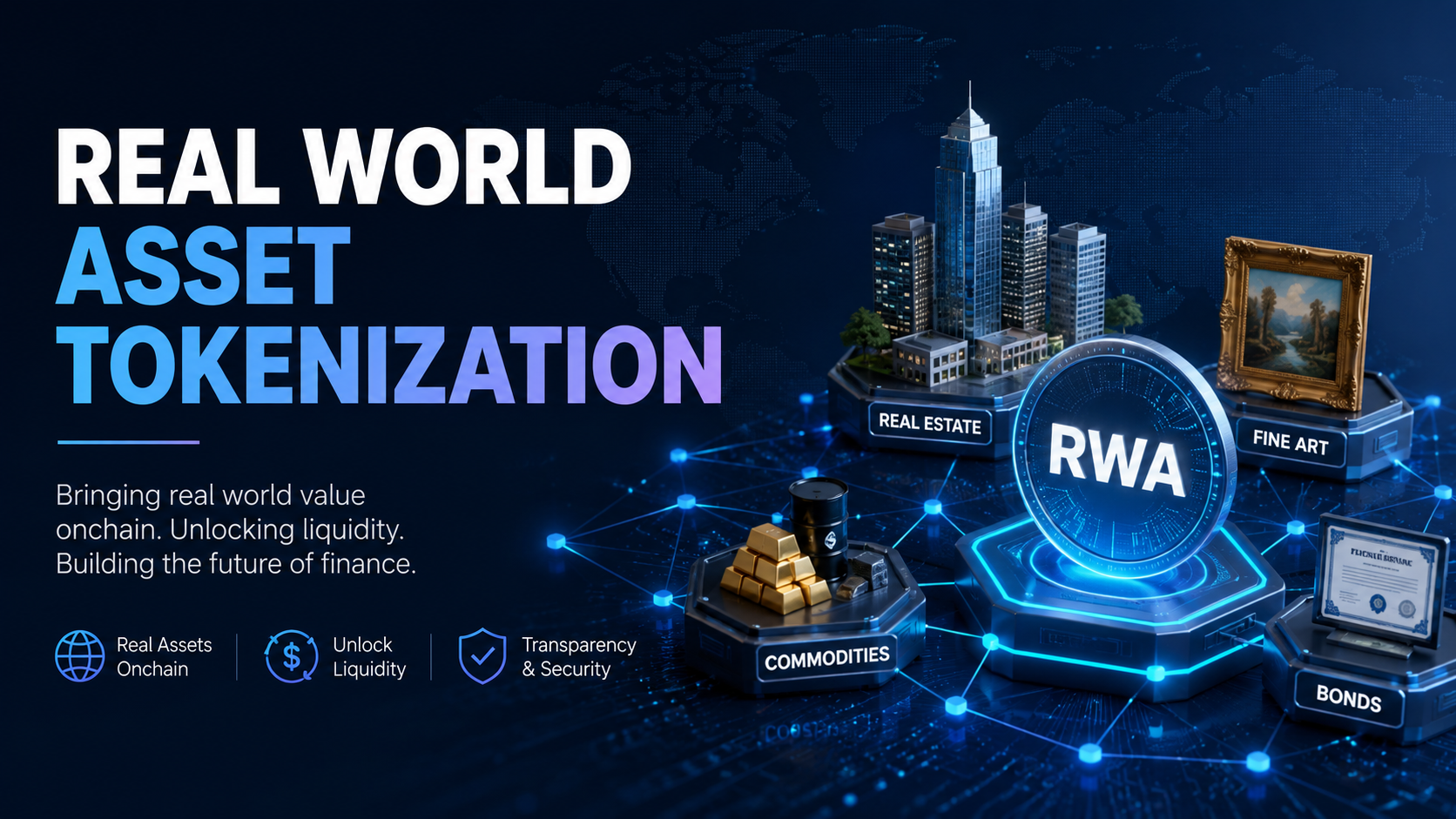
Traditional asset markets have long served as the foundation of global economic activity. Real estate, commodities, private equity, infrastructure, art, invoices, and other tangible assets represent trillions of dollars in value worldwide. Despite their importance, many of these markets still operate through outdated processes that depend heavily on paperwork, intermediaries, fragmented databases, delayed settlements, and limited investor access.
As digital transformation accelerates across industries, asset markets are also evolving. One of the emerging developments driving this change is Real World Asset (RWA) tokenization. By converting ownership rights of physical or traditional financial assets into blockchain-based digital tokens, tokenization introduces a new infrastructure layer designed to improve accessibility, transparency, efficiency, and liquidity.
Modernizing legacy asset markets is not simply about digitizing records it is about redesigning how ownership, trading, settlement, and asset participation function in an increasingly connected economy.
Understanding Real World Asset Tokenization
Real World Asset tokenization refers to the process of representing ownership or economic rights of physical or traditional assets through digital tokens recorded on a blockchain network.
These assets may include:
- Real estate properties
- Commercial buildings
- Infrastructure projects
- Precious metals
- Debt instruments
- Bonds
- Equity holdings
- Agricultural assets
- Luxury collectibles
- Intellectual property
Each token represents a defined portion of ownership or value connected to the underlying asset. Unlike conventional asset management systems, blockchain introduces programmable ownership structures through smart contracts, allowing transactions and asset administration to operate with greater automation and transparency.
The Limitations of Legacy Asset Markets
Before understanding modernization benefits, it is important to recognize the challenges within traditional asset environments.
Limited Liquidity
Many traditional assets are difficult to buy or sell quickly. Large capital requirements and lengthy transaction cycles often reduce market participation.
High Entry Barriers
Premium assets frequently remain accessible only to institutional investors or high-net-worth individuals.
Complex Administrative Processes
Ownership transfers often require multiple intermediaries including brokers, custodians, legal teams, registries, and financial institutions.
Fragmented Record Systems
Data across asset classes is commonly stored in disconnected databases, creating inefficiencies and increasing reconciliation costs.
Slow Settlement Cycles
Cross-border and institutional transactions can take days or weeks to complete. These limitations create inefficiencies that reduce market growth and restrict broader participation.
How Real World Asset Tokenization Modernizes Legacy Markets
1. Improving Asset Liquidity
One of the most immediate advantages of real world asset tokenization is improved liquidity. Traditional assets are typically sold as entire units, making transactions expensive and time-intensive. Tokenization enables assets to be divided into smaller digital units that can be transferred more efficiently. Fractional ownership allows broader market participation while increasing transaction opportunities.
For example, instead of purchasing an entire commercial property, investors may participate through smaller ownership allocations represented digitally. Greater liquidity improves capital circulation and creates more dynamic market conditions.
2. Expanding Market Accessibility
Legacy markets have historically excluded smaller investors due to large investment minimums. Tokenization lowers participation thresholds by enabling fractional ownership structures.
This expanded accessibility allows:
- Retail investor participation
- Global investor reach
- Portfolio diversification
- Inclusion across different income segments
As participation grows, businesses gain access to wider capital sources while investors gain exposure to asset categories previously out of reach.
3. Increasing Transparency and Trust
Traditional asset markets often involve multiple systems and limited visibility into ownership records. Blockchain-based tokenization creates immutable transaction histories that provide transparent ownership tracking.
Benefits include:
- Permanent transaction records
- Reduced information asymmetry
- Simplified audit processes
- Improved investor confidence
Transparency becomes especially valuable in markets where ownership verification has historically been expensive or difficult.
4. Automating Asset Operations Through Smart Contracts
Smart contracts replace many manual administrative functions with automated execution. These programmable agreements can perform actions such as:
- Ownership transfers
- Revenue distributions
- Compliance checks
- Settlement execution
- Investor onboarding
Automation reduces operational friction and lowers dependency on intermediaries. For asset managers, this creates opportunities to improve scalability and reduce administrative overhead.

 English
 Arabic
 French
 Spanish
 Deutsch
 Turkish
 Dutch
Dutch
 Italiano
 Russian
 Romaian
 Portuguese (Brazil)
 Greek
Greek