


From Concept to Launch: The Real Process Behind Crypto Token Development
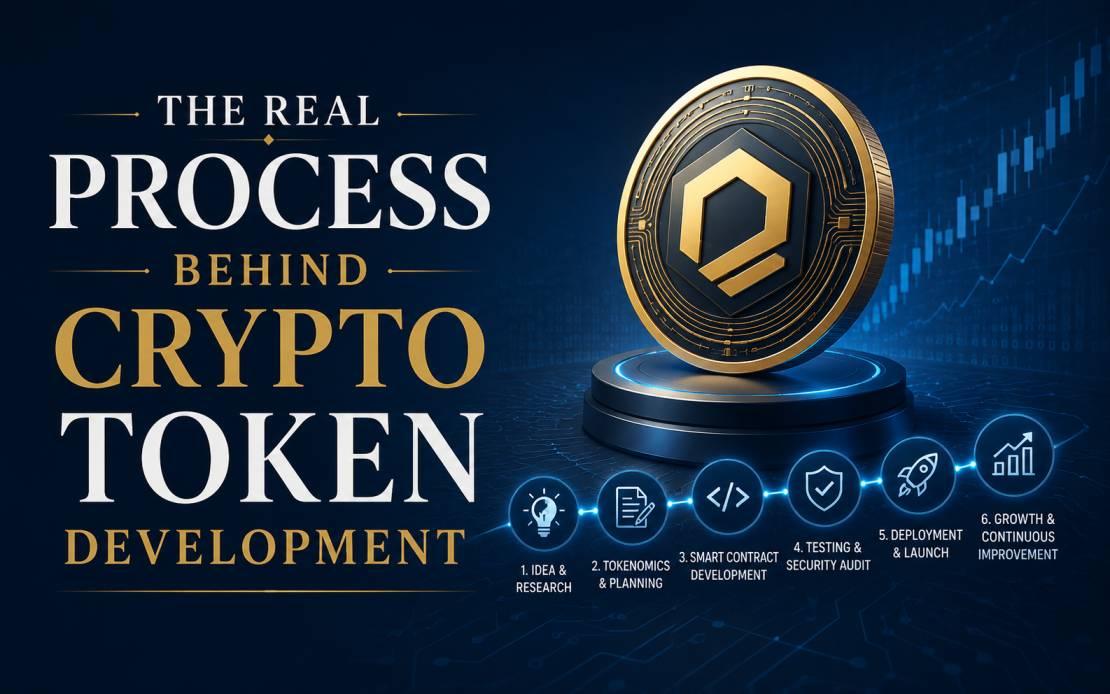
The blockchain industry has evolved far beyond the early days of cryptocurrency experimentation. Today, tokens serve as the backbone of decentralized finance (DeFi), gaming ecosystems, real-world asset tokenization, governance frameworks, loyalty programs, and countless Web3 applications. As blockchain adoption accelerates, businesses and entrepreneurs are increasingly exploring crypto token development as a strategic tool for building scalable digital ecosystems and unlocking new economic opportunities.
However, launching a successful crypto token involves much more than writing a smart contract and deploying it on a blockchain network. Behind every successful token lies a carefully structured development process that combines business strategy, technical architecture, security engineering, compliance considerations, and ecosystem planning.
Many projects fail because they focus solely on token creation while overlooking critical factors such as utility, tokenomics, governance, scalability, and community adoption. In contrast, successful projects treat token development as a comprehensive business and technology initiative rather than a simple technical exercise.
This article explores the real process behind crypto token development, from the initial concept to a successful launch, highlighting the essential steps, challenges, and best practices that organizations should consider when building a blockchain-based token ecosystem.
Understanding the Purpose Before Building the Token
Every successful token begins with a clear purpose.
One of the most common mistakes made by blockchain startups is creating a token before defining why it needs to exist. A token should solve a specific problem or create measurable value within an ecosystem. Without a compelling use case, even technically sound projects struggle to attract users and investors.
Before initiating development, organizations must identify the token's primary function. Common token categories include:
- Utility tokens that provide access to products or services
- Governance tokens that enable decentralized decision-making
- Security tokens representing investment interests
- Asset-backed tokens linked to real-world assets
- Reward tokens designed to incentivize user behavior
- Payment tokens facilitating transactions within an ecosystem
The token's intended role influences every subsequent decision, including blockchain selection, tokenomics design, compliance requirements, and smart contract functionality.
Successful crypto token development starts with understanding how the token contributes to the overall business model and long-term ecosystem growth.
Defining the Tokenomics Framework
Once the purpose is established, the next step is designing tokenomics.
Tokenomics refers to the economic structure governing how a token functions within its ecosystem. It determines supply mechanisms, distribution models, incentives, governance rights, and long-term sustainability.
A poorly designed token economy can undermine even the most innovative projects. Conversely, strong tokenomics can drive adoption, encourage participation, and create lasting value.
Several critical questions must be addressed during this stage:
What will be the total token supply?
Will the supply be fixed or inflationary?
How will tokens be distributed among founders, investors, developers, partners, and community members?
What incentives will encourage user participation?
How will the project prevent excessive concentration of tokens among a small group of holders?
Leading blockchain projects devote significant time and resources to tokenomics planning because economic design often determines the success or failure of the ecosystem.
Professional token development services typically include tokenomics consulting to ensure that incentives remain aligned across all stakeholders.
Selecting the Right Blockchain Infrastructure
The choice of blockchain network is one of the most important technical decisions during development.
Different blockchain ecosystems offer varying levels of scalability, security, transaction speed, interoperability, and development flexibility. The selected network should align with the project's objectives, target audience, and operational requirements.
Ethereum remains a dominant choice due to its extensive developer ecosystem and smart contract capabilities. However, alternative networks such as BNB Chain, Polygon, Solana, Avalanche, Arbitrum, and Base have gained popularity by offering lower transaction fees and improved scalability.
Factors influencing blockchain selection include:
- Network security
- Transaction costs
- Developer ecosystem
- Smart contract functionality
- Community adoption
- Cross-chain compatibility
- Regulatory considerations
For example, a high-frequency gaming application may prioritize low-cost transactions and scalability, while a tokenized securities platform may prioritize security and compliance.
An experienced crypto token development company evaluates these factors carefully before recommending a blockchain infrastructure.
Smart Contract Development: The Core of Token Functionality
After establishing tokenomics and selecting the blockchain, development moves to smart contract creation.
Smart contracts are self-executing programs deployed on blockchain networks that define how tokens operate. They automate processes such as token issuance, transfers, staking rewards, governance voting, and distribution mechanisms.
Developers typically use established token standards such as:
- ERC-20 for fungible tokens on Ethereum
- ERC-721 for NFTs
- ERC-1155 for hybrid asset structures
- BEP-20 for BNB Chain tokens
While standard templates provide a foundation, most projects require custom modifications to support unique functionalities and ecosystem requirements.
Advanced smart contracts may include features such as:
- Vesting schedules
- Automated staking mechanisms
- Governance voting systems
- Token burning functionality
- Liquidity management
- Revenue-sharing models
This stage demands extensive technical expertise because vulnerabilities within smart contracts can expose projects to significant security risks.
Security Auditing and Risk Mitigation
Security remains one of the most critical aspects of crypto token development.
Blockchain transactions are immutable, meaning vulnerabilities cannot be easily reversed once exploited. Over the years, the industry has witnessed numerous incidents involving smart contract bugs, coding errors, and security breaches resulting in substantial financial losses.
To mitigate these risks, comprehensive security audits are essential before launch.
Professional audits evaluate:
- Smart contract vulnerabilities
- Access control mechanisms
- Logic flaws
- Reentrancy risks
- Overflow and underflow issues
- Governance security
- Economic attack vectors
Independent security firms often conduct multiple audit rounds to identify and address weaknesses before deployment.
Projects that prioritize security not only reduce technical risks but also build greater trust among investors, users, and ecosystem participants.
This is why leading crypto token development services typically integrate security auditing as a mandatory component of the development lifecycle.
Regulatory and Compliance Considerations
As blockchain technology matures, regulatory compliance has become increasingly important.
The legal classification of a token depends on its functionality, distribution model, and jurisdiction. Some tokens may qualify as utility assets, while others may fall under securities regulations.
Organizations must evaluate several compliance factors, including:
- Securities laws
- Anti-money laundering requirements
- Know Your Customer procedures
- Data privacy regulations
- Tax obligations
- Jurisdiction-specific digital asset regulations
Ignoring regulatory requirements can expose projects to legal challenges and operational restrictions.
Many successful blockchain projects engage legal advisors early in the development process to ensure compliance while maintaining ecosystem flexibility.
A knowledgeable crypto token development company often collaborates with legal experts to help clients navigate complex regulatory environments.
Building the Supporting Ecosystem
Launching a token without an ecosystem rarely leads to long-term success.
The token must exist within an environment that provides meaningful utility and ongoing engagement opportunities.
Depending on the project, ecosystem components may include:
- Decentralized applications
- NFT marketplaces
- Staking platforms
- Governance portals
- Payment infrastructure
- Community platforms
- Gaming environments
- DeFi protocols
The stronger the ecosystem, the greater the demand for the token.
For example, governance tokens derive value from participation rights within active communities. Utility tokens gain relevance through products and services that require token-based interactions.
The ecosystem should be designed to create continuous value generation rather than short-term speculation.
Community Building and Pre-Launch Strategy
Technical development alone does not guarantee adoption.
Many projects underestimate the importance of community engagement before launch. Successful blockchain ecosystems often begin cultivating audiences months before token deployment.
Community-building efforts typically include:
- Educational content creation
- Social media engagement
- Ambassador programs
- Developer outreach
- Strategic partnerships
- Influencer collaborations
- Early access initiatives
Transparency plays a crucial role during this phase. Users and investors increasingly evaluate project credibility based on communication quality, roadmap clarity, and leadership visibility.
Projects that establish trust early often experience stronger adoption and ecosystem participation after launch.
Community development should therefore be viewed as an integral part of crypto token development rather than a separate marketing activity.
Token Launch and Distribution
The launch phase represents the culmination of months of planning and development.
Token distribution methods vary depending on project objectives and regulatory considerations. Common launch models include:
- Public token sales
- Private fundraising rounds
- Community airdrops
- Liquidity mining programs
- Exchange listings
- Strategic partnerships
A successful launch requires careful coordination between technical teams, marketing departments, legal advisors, and community managers.
Key objectives during launch include:
- Ensuring network stability
- Managing token distribution fairly
- Monitoring smart contract performance
- Supporting users and investors
- Maintaining transparent communication
The launch itself is not the endpoint but rather the beginning of the ecosystem's operational lifecycle.
Post-Launch Growth and Ecosystem Management
The most successful blockchain projects treat launch as the starting point rather than the final milestone.
After deployment, teams must continuously monitor ecosystem performance, user adoption, governance participation, and token economics.
Post-launch activities often include:
- Feature expansion
- Governance implementation
- Community incentives
- Strategic partnerships
- Cross-chain integrations
- Performance optimization
- Security updates
Data analytics play an increasingly important role during this stage. Teams track wallet activity, transaction volumes, staking participation, and user engagement metrics to refine strategies and improve ecosystem sustainability.
Long-term success depends on the project's ability to evolve alongside changing market conditions and user expectations.
Why Businesses Partner with Professional Token Development Providers
Building a token ecosystem requires expertise across multiple disciplines, including blockchain engineering, economics, cybersecurity, compliance, and product development.
Professional token development services streamline this process by providing specialized knowledge and proven methodologies.
An experienced crypto token development company can assist with:
- Token strategy development
- Blockchain selection
- Tokenomics design
- Smart contract engineering
- Security auditing
- Regulatory guidance
- Deployment support
- Ecosystem integration
By leveraging professional expertise, businesses can reduce development risks, accelerate time-to-market, and improve the likelihood of long-term success.
Conclusion
The journey from concept to launch in crypto token development involves far more than creating a digital asset. It requires careful planning, robust tokenomics, secure smart contract development, regulatory awareness, ecosystem design, community engagement, and ongoing optimization. Every stage plays a critical role in determining whether a token becomes a sustainable component of a thriving blockchain ecosystem or fades into obscurity.
As blockchain adoption continues to expand across industries, the demand for professional token development services and specialized crypto token development services is growing rapidly. Organizations that partner with an experienced crypto token development company gain access to the technical expertise, strategic guidance, and industry knowledge necessary to navigate the complexities of token creation and deployment. Companies like Blockchain App Factory help startups and enterprises transform innovative ideas into secure, scalable, and successful token ecosystems that are built for long-term growth in the evolving Web3 economy.

 English
 Arabic
 Spanish
 Portuguese
 Deutsch
 Turkish
 Dutch
Dutch
 Italiano
 Russian
 Romaian
 Portuguese (Brazil)
 Greek
Greek