


Best Japanese Hair Care Products: Shampoo, Conditioner and Treatments Compared
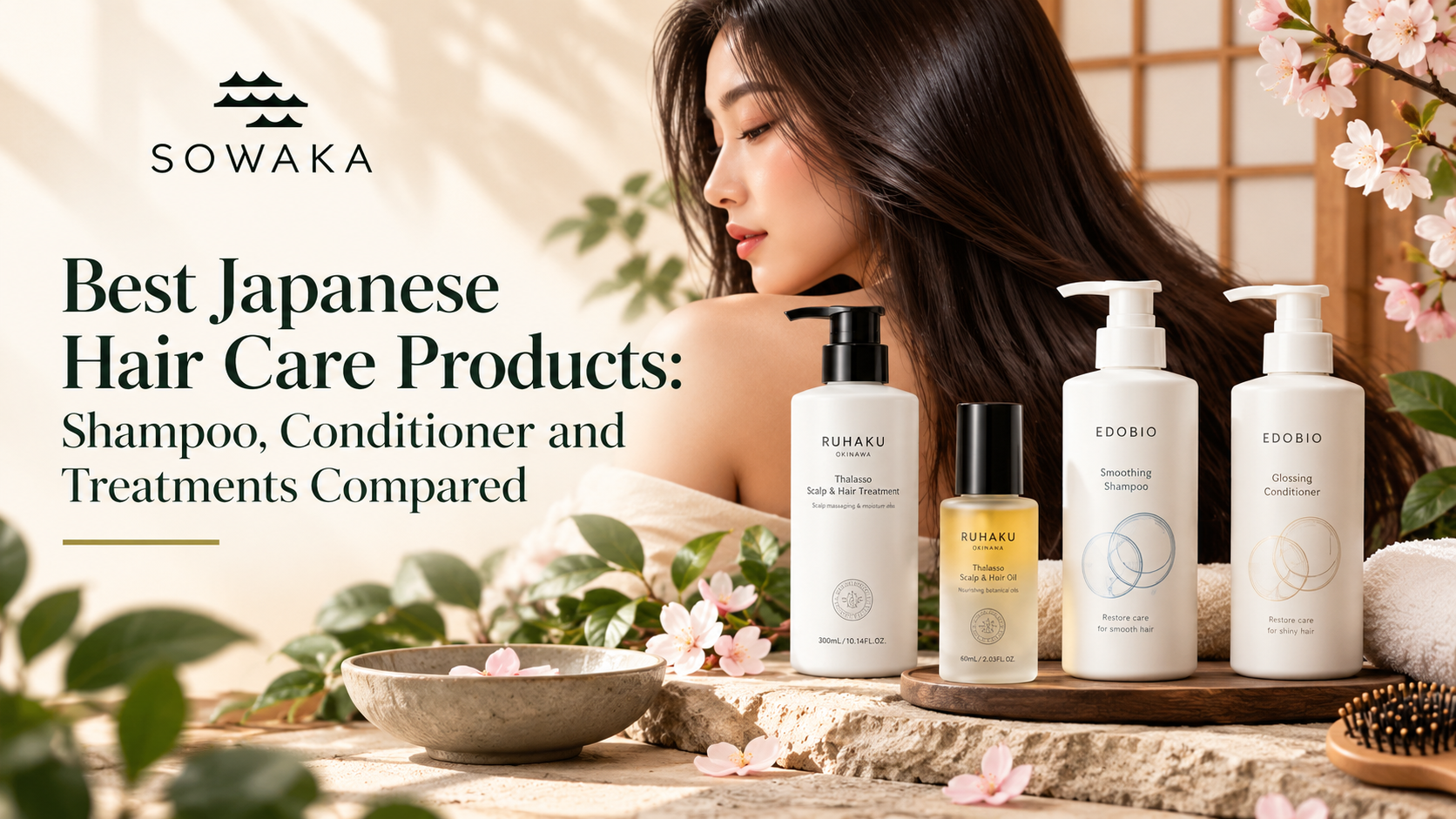
A scalp that turns greasy by afternoon while the ends feel dry, hair that frizzes right after washing, or strands that turn rough after heat styling can all lead to the same question: which product is actually doing the work? The best japanese hair care routine separates three jobs. Shampoo cleanses, conditioner softens and detangles, and targeted treatments add extra conditioning where hair needs it. Choosing products that match your scalp and hair condition matters more than buying an entire matching range.
Shampoo vs. Conditioner vs. Hair Treatment: What Is the Difference?
Shampoo’s main job is removing oil, sweat, dirt, and product buildup from the scalp. It is a cleanser, not a conditioner, and the cleansing agent determines how gentle or stripping it feels.
Conditioner works on the hair itself. Its conditioning agents coat the surface to reduce friction, which makes strands easier to detangle and leaves them softer and more manageable. Hair masks and leave-in treatments go further, depending on the formula. A rinse-out mask usually delivers a heavier dose of conditioning agents and emollients, while a leave-in conditioner stays on the hair to smooth the surface and cushion it against styling. These roles overlap only slightly, so one product rarely replaces the others.
How to Choose the Right Japanese Hair Care Products for Your Hair Type
For Dry or Frizzy Hair
Dry, frizzy hair generally responds to a moisturizing conditioner with emollients, plus a lightweight oil or leave-in conditioner to smooth the cuticle. These products can improve smoothness and reduce flyaways, but they do not eliminate frizz permanently. Humidity, hair porosity, and texture all influence the result, and highly porous hair often absorbs moisture quickly and loses it just as fast.
For Damaged or Color-Treated Hair
Bleaching, coloring, and frequent heat styling roughen the hair cuticle. Conditioning masks and products formulated for damaged hair can reduce friction and make strands look and feel healthier, and a heat protectant adds a buffer before blow-drying or flat ironing. These are cosmetic benefits, however. No treatment permanently reverses significant damage, and trimming split ends remains the only way to remove them.
For Fine Hair or an Oily Scalp
An oily scalp calls for a cleanser matched to its oil production, used consistently enough to prevent buildup. Fine hair is easily weighed down, so a lightweight conditioner applied mainly to the mid-lengths and ends usually works better than a rich cream applied near the roots.
Comparing Japanese Shampoo, Conditioner and Treatment Formulas
Formulas differ more by purpose than by country of origin. Some Japanese shampoos use amino-acid-based cleansing agents, which are generally considered milder than harsher surfactants, though cleansing strength still depends on the full formula. Conditioners rely on conditioning agents that cling to the hair surface. Treatments may add emollients such as camellia oil, a traditional ingredient prized for its softening feel, or rice-derived ingredients, which are commonly used to condition and smooth.
Not every Japanese product contains these ingredients, and none is a guaranteed fix. Concentration and the overall formulation matter more than a single headline ingredient. Treat the ingredient list as a clue to the product’s purpose, not a promise of results.
How to Build a Simple Japanese Hair-Care Routine
A routine does not need to be complicated, and you do not need every treatment at once. Start by cleansing the scalp with a shampoo suited to its oiliness or dryness. Apply conditioner to the lengths and ends rather than the scalp, and rinse thoroughly. If hair needs extra conditioning, use a mask once or twice a week, following the label instructions, since overuse can leave fine hair limp.
When you choose a japanese shampoo and conditioner, look for a pairing that suits your scalp first and your hair texture second. Matching sets can be convenient, but mixing a scalp-focused shampoo with a conditioner chosen for dryness is perfectly reasonable. Before styling, apply a leave-in conditioner or heat protectant if you use hot tools. Finally, reduce rough towel drying and excessive heat, both of which strain the cuticle and undo much of the conditioning you have just applied.
Finding Products That Fit Your Routine
Readers who want to explore Japanese beauty and hair-care options can browse Sowaka Nyc as one place to compare formulas and ingredient lists.
Final Thoughts
The most useful way to approach the best japanese hair care is to match each product to its job. Choose shampoo according to your scalp’s needs, conditioner according to your hair’s texture and dryness, and specialized treatments according to the condition of the hair. Consistency beats complexity, and realistic expectations help: cosmetic products improve softness, manageability, and appearance, but they work best alongside gentle handling. Introduce new products one at a time, give each a few weeks, and adjust based on how your hair and scalp respond.

 English
 Arabic
 French
 Portuguese
 Deutsch
 Turkish
 Dutch
 Italiano
 Russian
 Romaian
 Portuguese (Brazil)
 Greek