


Hormone Therapy for Women: Is It Right for You?
Menopause brings significant changes to a woman's body, often affecting sleep, mood, energy, and overall quality of life. For some women, these changes are manageable. For others, persistent hot flashes, night sweats, and vaginal discomfort can interfere with everyday activities. Hormone therapy for women is an evidence-based treatment option that may help relieve many of these symptoms. If you're unsure whether treatment is appropriate for your needs, a virtual menopause appointment can provide an opportunity to discuss your symptoms, review your medical history, and explore personalized treatment options with a qualified healthcare provider.
Understanding how hormone therapy works, its potential benefits, and the possible risks can help you make an informed decision about your menopause care.
What Is Hormone Therapy for Women and How Does It Work?
Hormone therapy, sometimes called hormone replacement therapy (HRT) or menopausal hormone therapy (MHT), is a medical treatment used to relieve symptoms associated with declining estrogen levels during menopause.
As women approach menopause, the ovaries gradually produce less estrogen and progesterone. These hormonal fluctuations can affect multiple physiological systems, including thermoregulation, sleep, vaginal tissue integrity, and bone metabolism.
Hormone therapy works by providing estrogen, sometimes combined with a progestogen, to address symptoms caused by these changes.
Estrogen is especially important for regulating body temperature and maintaining the health of vaginal and urinary tissues. When estrogen levels decline, some women experience vasomotor symptoms, the medical term for hot flashes and night sweats.
Treatment may help stabilize the body's temperature regulation and reduce the frequency and severity of these symptoms.
However, hormone therapy is not a universal solution. The appropriate treatment depends on a woman's age, symptoms, medical history, reproductive anatomy, and individual risk factors.
Why Do Women Consider Hormone Therapy?
Women consider hormone therapy for several reasons, but symptom relief is usually the primary motivation.
Menopause is a natural biological transition. Yet the symptoms associated with declining hormone levels can significantly affect physical comfort, emotional well-being, and daily productivity.
Understanding Hormonal Changes During Perimenopause and Menopause
Perimenopause is the transitional period leading up to menopause, during which ovarian hormone production becomes increasingly unpredictable.
Estrogen levels can fluctuate considerably, sometimes rising before eventually declining. These variations may cause irregular menstrual cycles, sleep disturbances, hot flashes, and changes in mood.
Menopause is clinically identified after 12 consecutive months without a menstrual period when no other medical or physiological explanation is present.
Following menopause, estrogen levels generally remain lower than during the reproductive years.
These hormonal changes can affect more than reproductive function. They also influence skeletal health, vaginal tissue, and the neurological pathways responsible for temperature regulation.
Understanding these changes helps explain why certain symptoms respond to hormone therapy.
Common Symptoms That May Benefit From Treatment
Hot flashes and night sweats are among the most common reasons women seek menopausal hormone therapy.
Hot flashes often involve sudden sensations of heat, flushing, and sweating. Night sweats can interrupt sleep repeatedly, leaving women feeling exhausted the following day.
Other symptoms include vaginal dryness, discomfort during intercourse, and sleep disruption associated with nighttime hot flashes.
Some women also report difficulty concentrating, mood changes, or reduced energy. However, these symptoms can have multiple causes, and hormone therapy does not reliably resolve every menopause-related concern.
A thorough medical evaluation is important to determine which symptoms are likely to improve with treatment and which may require a different approach.
What Are the Different Types of Hormone Therapy for Women?
Hormone therapy is available in several formulations, allowing healthcare professionals to tailor treatment according to individual needs.
The most appropriate option depends on whether the woman has a uterus, the symptoms being treated, and her personal medical risk profile.
Estrogen Therapy
Estrogen therapy is frequently prescribed to women who have undergone a hysterectomy and no longer have a uterus.
It can be administered through oral tablets, transdermal patches, gels, or sprays.
Systemic estrogen circulates throughout the body and is particularly effective for treating moderate to severe hot flashes and night sweats.
Transdermal estrogen delivers medication through the skin, bypassing first-pass metabolism in the liver. This route may have a lower risk of blood clots than oral estrogen for some women, although the overall treatment decision still requires individualized assessment.
Women who retain their uterus generally need additional endometrial protection when taking systemic estrogen.
Combined Estrogen and Progesterone Therapy
Combined hormone therapy includes estrogen and a progestogen, such as progesterone or a synthetic progestin.
This combination is generally recommended for women who have a uterus.
Estrogen stimulates the uterine lining, also known as the endometrium. Without sufficient protection, prolonged stimulation can increase the risk of endometrial hyperplasia and endometrial cancer.
Adding an appropriate progestogen helps reduce this risk.
Combined therapy can effectively manage hot flashes, night sweats, and certain menopause-related sleep disturbances.
However, the specific medication, dosage, and treatment schedule should be selected according to individual health factors.
Local Vaginal Estrogen Therapy
Some women experience vaginal dryness, irritation, or painful intercourse without significant hot flashes or night sweats.
For these symptoms, local vaginal estrogen may be a suitable treatment.
Available formulations include vaginal creams, tablets, and rings that deliver low doses of estrogen directly to affected tissues.
These treatments are commonly used for genitourinary syndrome of menopause, a condition associated with declining estrogen levels that can affect vaginal and urinary comfort.
Low-dose vaginal estrogen generally produces minimal systemic absorption and usually does not require additional progesterone for endometrial protection.
Nevertheless, unexplained vaginal bleeding or a history of certain hormone-sensitive cancers warrants individualized medical assessment.
What Are the Benefits of Hormone Therapy for Women?
The strongest evidence supporting menopausal hormone therapy relates to the treatment of vasomotor symptoms.
Systemic hormone therapy is considered the most effective treatment for bothersome hot flashes and night sweats. By reducing these symptoms, treatment may also improve sleep continuity and everyday comfort.
Women whose sleep is repeatedly interrupted by night sweats may notice improvements in daytime functioning when those episodes become less frequent.
Hormone therapy can also help relieve vaginal dryness and discomfort during sexual activity. However, women experiencing only vaginal symptoms may benefit from localized treatment rather than systemic therapy.
Another established benefit involves skeletal health.
Estrogen plays a central role in maintaining bone density. As estrogen levels decline after menopause, bone resorption can accelerate, increasing the risk of osteoporosis.
Systemic hormone therapy helps prevent bone loss and can reduce fracture risk in appropriately selected women.
These benefits should be considered alongside individual risks. Hormone therapy is not recommended solely to prevent cardiovascular disease, dementia, or normal aging.
What Are the Risks and Side Effects of Hormone Therapy?
Like any medical treatment, hormone therapy carries potential risks and side effects.
Some women experience temporary breast tenderness, bloating, headaches, nausea, or irregular vaginal spotting after beginning treatment.
These effects may improve with time or changes to the prescribed formulation.
More significant risks depend on multiple factors, including the type of hormone therapy, route of administration, age at treatment initiation, and existing medical conditions.
For example, oral systemic estrogen may increase the risk of venous thromboembolism, which includes blood clots in the legs or lungs.
Combined estrogen-progestogen therapy can also increase breast cancer risk with certain formulations and durations of use.
Systemic estrogen without adequate endometrial protection increases the risk of endometrial cancer in women who have a uterus.
Timing matters as well.
For many healthy women who begin treatment before age 60 or within 10 years of menopause onset, the benefits of systemic hormone therapy for significant symptoms generally outweigh the risks.
Starting treatment later may carry a less favorable risk-benefit profile.
In 2025 and 2026, the U.S. Food and Drug Administration introduced changes to certain menopausal hormone therapy labeling, including revisions to boxed warnings. These changes did not eliminate potential cardiovascular or cancer risks, which still require careful medical consideration.
The most important principle is individualized treatment. A qualified healthcare provider should evaluate the potential benefits and risks before prescribing hormone therapy.
Who Is a Good Candidate for Hormone Therapy?
Hormone therapy may be appropriate for women experiencing moderate to severe menopausal symptoms that affect daily comfort, sleep, or quality of life.
Women who are younger than 60 or within approximately 10 years of menopause onset often have a more favorable benefit-risk balance when they do not have relevant contraindications.
However, age alone does not determine treatment eligibility.
Medical history, family history, cardiovascular health, and personal preferences all influence the decision.
Hormone therapy is generally not recommended for women with certain medical conditions, including hormone-sensitive cancers, unexplained vaginal bleeding, active or recent blood clots, stroke, heart attack, or significant liver disease.
Women with a history of these conditions may need alternative treatments or specialist consultation.
For those who cannot or prefer not to use hormone therapy, nonhormonal prescription medications, vaginal moisturizers, and targeted lifestyle interventions may provide relief.
The right approach is not necessarily the same for every woman.
A comprehensive evaluation helps identify treatments that address specific symptoms while minimizing avoidable risks.
How Can a Virtual Menopause Appointment Help You?
Finding specialized menopause care can be challenging, especially when symptoms overlap with other medical concerns.
A virtual menopause appointment offers a convenient way to discuss symptoms and treatment options with a qualified healthcare professional without traveling to a clinic.
During an appointment, the provider may review menstrual history, hot flashes, sleep disturbances, vaginal symptoms, medications, and existing health conditions.
The discussion may also include family history, cardiovascular risk factors, and previous experiences with hormonal medications.
Importantly, hormone testing is not always necessary to diagnose menopause in women over 45 who have a typical clinical history. Laboratory testing may be appropriate when symptoms are atypical or another condition is suspected.
Following the evaluation, the provider can discuss whether systemic hormone therapy, localized treatment, or nonhormonal care is most appropriate.
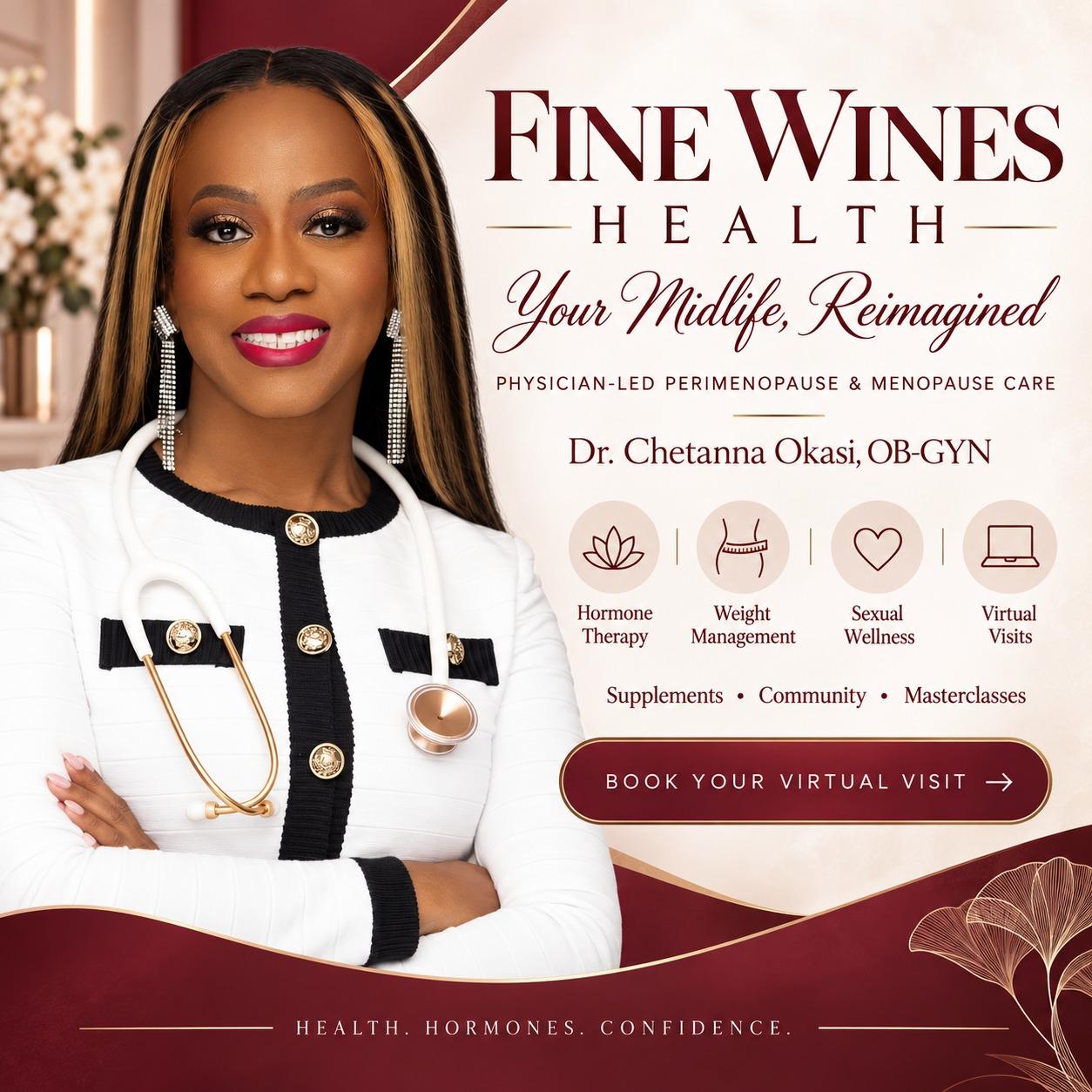
At Fine Wines Health, women can access physician-led perimenopause and menopause care under the guidance of board-certified OB-GYN Dr. Chetanna Okasi.
The practice focuses on personalized evaluations, hormonal and nonhormonal treatment planning, and ongoing care for women navigating midlife changes.
A virtual consultation can be a valuable starting point for understanding symptoms, although certain concerns may require an in-person examination or additional testing.
How Long Should Women Stay on Hormone Therapy?
There is no single treatment duration that applies to every woman.
Some women use systemic hormone therapy for a few years while managing troublesome menopausal symptoms. Others may require longer treatment because their symptoms persist.
The decision depends on symptom severity, treatment response, evolving health risks, and individual preferences.
Regular follow-up appointments allow healthcare providers to assess whether the treatment remains beneficial.
These reviews may include discussions about symptom control, side effects, dosage adjustments, and changes in medical history.
For women who continue experiencing significant symptoms, longer treatment may be reasonable when the expected benefits outweigh the risks.
However, hormone therapy should not continue indefinitely without reassessment.
Stopping treatment may cause hot flashes or other symptoms to return. Some women discontinue therapy gradually, while others stop more directly under medical guidance.
Evidence does not clearly establish that tapering prevents symptom recurrence, so the discontinuation strategy should be individualized.
The goal is to provide effective symptom relief while maintaining an appropriate balance between benefits and potential risks throughout treatment.
Final Thoughts: Making the Right Decision for Your Health
Menopause is a natural transition, but that does not mean women must tolerate persistent discomfort without exploring treatment.
Hormone therapy for women can provide meaningful relief from hot flashes, night sweats, vaginal dryness, and other symptoms associated with menopause. It may also help preserve bone density in appropriately selected patients.
However, treatment decisions should be based on more than symptoms alone. Age, medical history, individual risk factors, and personal preferences all play important roles.
Understanding your options is the first step toward making a confident, informed decision.
If menopause symptoms are affecting your everyday life, consider scheduling a virtual menopause appointment with Fine Wine Health. Physician-led care can help you explore appropriate hormone therapy and nonhormonal treatment options tailored to your needs.
Your midlife deserves thoughtful care, informed decisions, and a treatment plan designed around your well-being.

 English
 Arabic
 French
 Spanish
 Deutsch
 Turkish
 Dutch
 Italiano
 Russian
 Romaian
 Portuguese (Brazil)
 Greek