


Advanced Ceramics from ZFCera for Engineering Solutions
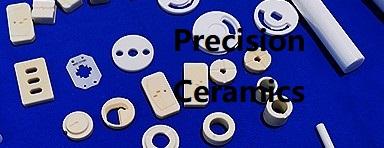
As industrial technology evolves, Advanced Ceramics are becoming important material options for components that must meet specialized mechanical, thermal, and electrical requirements. Engineers exploring Advanced Ceramics often evaluate material composition, structural design, and production methods to identify solutions for demanding applications. Unlike conventional materials, technical ceramic formulations can provide combinations of hardness, insulation, wear resistance, and thermal stability suited to particular operating environments. These characteristics make them relevant to automation equipment, electronic assemblies, chemical processing systems, and precision machinery. By matching material properties with practical engineering needs, manufacturers can develop components that support equipment functionality, manufacturing consistency, and more efficient product design.
Understanding the Properties of Technical Ceramic Materials
Advanced ceramic materials are engineered to deliver specific performance characteristics rather than serving as general-purpose construction materials. Alumina is frequently selected for electrical insulation and hardness, while zirconia can offer a useful combination of toughness and mechanical strength. Silicon carbide may be appropriate for applications requiring high-temperature capability, abrasion resistance, or performance in challenging chemical environments.
Each material has distinct advantages and limitations. Engineers should examine factors such as thermal expansion, fracture behavior, chemical compatibility, electrical properties, and resistance to mechanical wear. The importance of each factor depends on how the finished component will function within the larger assembly.
Material selection should therefore begin with a clear definition of operating conditions. Understanding temperature ranges, contact surfaces, applied forces, and environmental exposure helps designers compare ceramic options more effectively. This process can also prevent the selection of a material whose characteristics do not match the actual application.
Designing Components Around Application Requirements
Ceramic components often need to meet detailed dimensional and structural requirements. Small variations in geometry can affect assembly alignment, sealing performance, electrical spacing, or movement within precision equipment. For this reason, product design and manufacturing feasibility should be considered together.
Engineers can improve project planning by preparing technical drawings that identify critical dimensions, tolerances, surface finishes, and connection features. They should also communicate the intended installation method and any limitations imposed by surrounding components. These details help manufacturers determine suitable forming, sintering, and finishing approaches.
Complex shapes may require additional processing, while thin sections and sharp corners can introduce design challenges because many ceramics are relatively brittle. Adjusting component geometry where practical may improve manufacturability without compromising the intended function. Collaboration between design teams and ceramic specialists can help identify these opportunities before production begins.
Supporting Performance in Specialized Industries
Advanced ceramics are used in different industrial sectors because their properties can address requirements that conventional materials may struggle to satisfy. In electronics, selected ceramic materials can provide insulation or serve as substrates and protective components. In machinery, wear-resistant ceramics may be used in parts exposed to friction or abrasive conditions.
Chemical processing equipment may benefit from ceramic materials with suitable resistance to particular substances, although compatibility must be verified for each formulation and environment. High-temperature systems may also use specialized ceramics where thermal stability is an important design consideration.
The final performance of a ceramic component depends on more than the material name. Composition, density, manufacturing quality, geometry, and operating conditions all influence its behavior. Prototype testing and application-specific evaluation can help confirm whether a proposed design meets the required performance criteria.
ZFCera and Customized Ceramic Manufacturing
Customized ceramic projects frequently require close coordination between buyers, engineers, and manufacturing suppliers. Product developers may need special shapes, defined dimensional tolerances, particular material grades, or components designed for integration into existing equipment.
When requesting a quotation, buyers should provide drawings, estimated order quantities, operating conditions, and relevant inspection requirements. Clear information allows suppliers to evaluate manufacturing feasibility and identify questions that need clarification. For new designs, sample production may help confirm dimensions, surface quality, and compatibility with the intended assembly.
Manufacturing consistency is another important consideration. Appropriate inspection procedures can help verify critical dimensions and material characteristics against agreed specifications. Buyers should also discuss packaging, documentation, and delivery arrangements to ensure that the supply process supports their production schedule.
Building a Practical Strategy for Ceramic Selection
Choosing a suitable ceramic component requires balancing performance, design complexity, manufacturing feasibility, and total project cost. A material with excellent properties in one area may not provide the best overall solution if it introduces unnecessary processing requirements or does not suit the operating environment.
Engineering teams can make better decisions by ranking their most important requirements before comparing suppliers. These may include wear behavior, thermal performance, insulation, dimensional accuracy, or chemical compatibility. Reviewing the expected service conditions also helps establish meaningful testing and inspection criteria.
For manufacturers investigating specialized material options and customized components, exploring available product categories can help identify potential solutions. Visit https://www.zfcera.com/ to review advanced ceramic products and obtain further information for industrial engineering projects.

 English
 Arabic
 French
 Spanish
 Portuguese
 Deutsch
 Turkish
 Dutch
 Italiano
 Russian
 Portuguese (Brazil)
 Greek