


Can Fireproof Door Limit Smoke Spread?
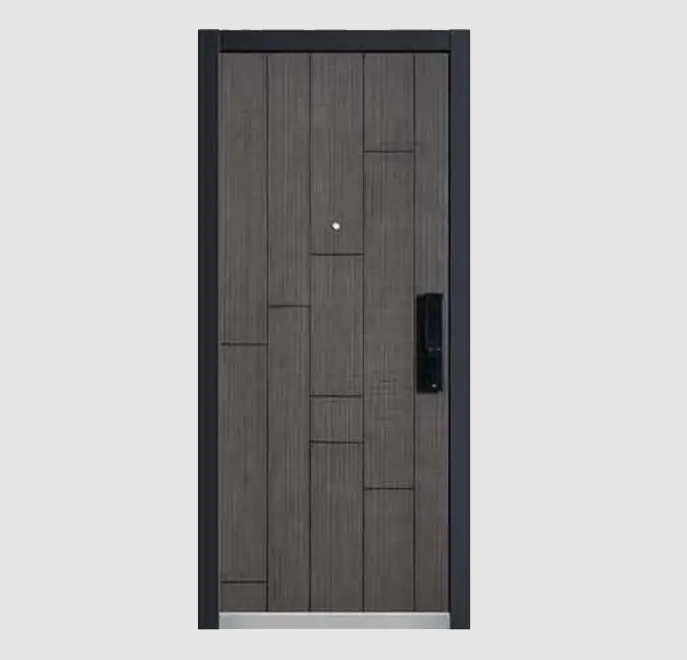
Effective building design creates separate zones that contain fire long enough for people to leave and for responders to act. A fireproof door serves as a movable part of that zoning strategy. When closed, it restores the continuity of a fire-resisting wall; when opened, it allows passage without permanently breaking the barrier.
The construction of a fireproof door centers on a core that withstands high temperatures without rapid structural failure. Mineral cores or multi-layer boards slow the passage of heat from one face to the other. Steel or composite skins protect the core and give the door sufficient rigidity to stay flat and true in its frame. Around the perimeter, intumescent seals remain dormant until heat causes them to swell and close the gaps that normally allow smooth operation.
Vision panels, where provided, use glass that has been tested as part of the complete door set. The glass remains clear under normal conditions yet holds together when exposed to heat, giving occupants a view of the space beyond. The frames around these panels are detailed so that they do not create weak points in the overall resistance of the fireproof door.
Installation quality determines whether the door can deliver its intended performance. The frame must be fixed firmly to the surrounding construction, and any gaps filled with materials that share the same fire resistance. Hinges are selected to carry the weight of the leaf and to maintain alignment even when temperatures rise. Once the assembly is complete, the fireproof door becomes an integral part of the wall rather than an afterthought.
Daily traffic passes through without special procedures. The door opens with normal effort, closes quietly under the action of its closer, and remains available for the next person. Only the hidden layers of core and seal distinguish it from an ordinary door. That hidden capacity becomes active when heat reaches the edges and the seals begin to expand, tightening the fit between leaf and frame.
Location decisions follow the building’s compartmentation plan. Doors appear at the entrances to stair enclosures, at the ends of protected corridors, and at the boundaries of higher-risk rooms. Each fireproof door is chosen to match the resistance period required for that particular wall. Consistency across all such openings helps maintain the integrity of the overall strategy.
By combining a heat-resistant core, reactive seals, and reliable closing hardware, a fireproof door provides a practical means of keeping fire and smoke within defined areas. It stands in place during ordinary use and becomes an active barrier when conditions demand, supporting the safe movement of people and the control of fire within the building.

 English
 Arabic
 Spanish
 Portuguese
 Deutsch
 Turkish
 Dutch
 Italiano
 Russian
 Romaian
 Portuguese (Brazil)
 Greek