


Why Consider Luxin Custom Gear Materials for OEM Projects
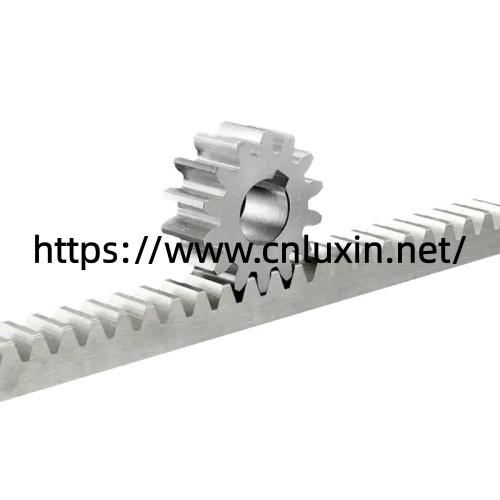
Custom Gear material selection begins with a clear understanding of the loads, speed, and working environment involved in an application. For manufacturers, choosing a suitable material is not simply a matter of comparing strength figures. The decision also affects machining methods, surface treatment, production costs, maintenance intervals, and how the finished component interacts with other parts. A thoughtful evaluation helps buyers specify products that fit the actual requirements of their equipment rather than paying for properties they may not need.
Steel is widely used in industrial transmission systems because it offers useful strength and can be processed in different ways to suit specific operating conditions. Carbon steel may suit general machinery where the load remains within defined limits and the surrounding environment is manageable. Alloy steel can be considered for applications involving greater torque, repeated stress, or impact. The final specification should account for the material grade, component dimensions, tooth geometry, and any required heat treatment. These details work together, so selecting a material without considering the complete design may lead to unnecessary wear or deformation.
For equipment operating in damp areas or environments where cleaning chemicals are present, corrosion resistance deserves careful attention. Stainless steel can be considered when protection against rust is an important requirement. However, buyers should compare the properties of individual grades rather than treating all stainless materials as interchangeable. Mechanical strength, machinability, surface finish, and operating conditions still need to be reviewed. In some applications, a suitable coating or protective treatment may offer another route, provided it meets the environmental and dimensional requirements.
Bronze and brass are useful options for certain applications where friction, sliding contact, or smooth movement matters. Bronze is commonly considered for worm drive arrangements, where the interaction between contacting surfaces can influence heat generation and wear. Brass may suit lighter mechanisms and selected instrument applications. Neither material should be chosen solely because it is easy to machine or has a particular appearance. Buyers need to evaluate transmitted torque, contact pressure, rotation speed, lubrication, and the expected operating cycle before confirming the specification.
Engineering plastics provide a different set of possibilities. Materials such as nylon and acetal can help reduce component weight and operating noise in applications with moderate or light loads. They may also reduce the need for lubrication in suitable designs. These benefits can be useful in household equipment, compact mechanisms, and selected automation systems. Yet plastic performance changes with temperature, moisture absorption, and sustained loading. A component that works well during a short test may behave differently during continuous operation. Reviewing the service environment and checking material data helps establish realistic expectations.
Load conditions should be examined beyond a single rated figure. Equipment that runs steadily may place different demands on its transmission parts than machinery that starts and stops frequently. Sudden impacts, reversing motion, vibration, and changing torque can all influence material fatigue and surface damage. Buyers should explain whether the application involves continuous duty, occasional use, shock loading, or frequent changes in direction. This information gives the manufacturer a more useful basis for reviewing the proposed material, dimensions, and processing requirements.
Manufacturing details also deserve attention during the selection process. Heat treatment can change the hardness and wear behavior of certain steels, while machining and finishing processes influence dimensional accuracy and surface condition. The treatment needs to match the intended design because excessive hardness or an unsuitable process may introduce other concerns, including brittleness or dimensional changes. For assemblies that require precise meshing, tolerances, tooth finish, shaft alignment, and lubrication arrangements should be considered together. Material selection is only one part of achieving stable operation.
Cost should be assessed across the product lifecycle rather than through raw material price alone. A lower initial cost may be attractive for a simple, light duty mechanism, while a more carefully specified material may make sense where replacement requires substantial labor or equipment downtime. Buyers can compare purchase cost, machining complexity, maintenance access, expected service conditions, and order quantity. Sharing these priorities early can help manufacturers discuss practical alternatives without changing essential operating requirements.
A clear request for quotation makes this process easier. Prepare drawings or sample dimensions, expected torque and speed, installation details, environmental conditions, required quantities, and any surface treatment preferences. If the design is still under development, explain which requirements are fixed and where alternatives may be considered. Luxin supports buyers looking for component solutions tailored to their project specifications, making clear communication an important starting point for evaluating suitable options. To review product information and discuss application requirements, visit https://www.cnluxin.net/product/ and provide the details needed for a more focused manufacturing discussion.

 English
 Arabic
 French
 Spanish
 Portuguese
 Deutsch
 Turkish
 Dutch
 Russian
 Romaian
 Portuguese (Brazil)
 Greek