


Develop Reformer Pilates Expertise: Professional Training and Home Equipment Guide
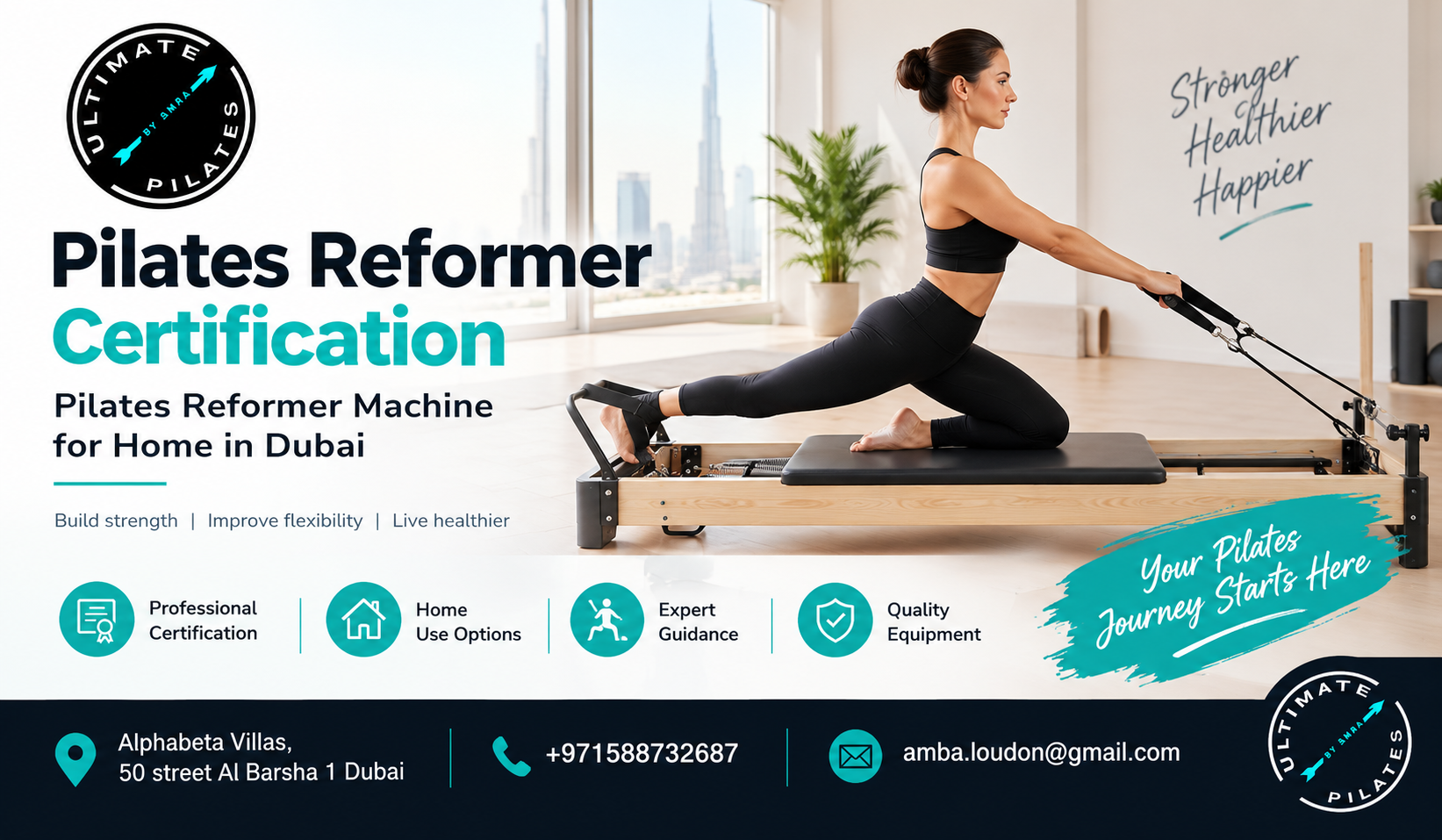
Developing Professional Skills Through Pilates Reformer Training
Pilates reformer training offers more than a way to improve personal fitness. For aspiring instructors, it provides an opportunity to understand movement mechanics, develop coaching skills, and build a foundation for teaching others. A professional pathway requires practical experience, structured learning, and a clear understanding of exercise safety.
At the same time, people who want to practise at home must consider equipment quality, available space, and the guidance they need to exercise correctly. Understanding both aspects can help individuals make better choices about their Pilates journey.
Understanding the Reformer Equipment System
A Pilates reformer features a sliding carriage, adjustable springs, straps, pulleys, and a footbar. These components allow users to perform exercises against different levels of resistance while maintaining control over their movements.
Instructors must understand how each component affects an exercise. They also need to recognise when a movement requires adjustment to suit a participant's experience, mobility, or physical limitations.
Exploring Professional Pilates Education Pathways
Pilates reformer certification programmes teach aspiring instructors how to operate equipment, demonstrate exercises, and guide participants through structured sessions. Comprehensive programmes may also cover anatomy, movement principles, class planning, and teaching methodology.
Course requirements vary between providers. Some programmes focus specifically on reformer exercises, while others combine mat Pilates with training on additional apparatus. Candidates should examine the curriculum and assessment requirements before enrolling.
Building a Strong Foundation in Anatomy
Anatomy helps instructors understand how muscles, joints, and connective tissues contribute to movement. This knowledge supports better exercise selection and helps teachers explain the purpose of individual movements.
A strong foundation should cover:
- Core muscle function and spinal stability
- Hip and shoulder movement
- Joint alignment and range of motion
- Common movement limitations and modifications
Instructors should also understand when a participant needs medical assessment rather than an exercise modification.
Developing Practical Skills Through Observation
Reading course materials provides useful background, but teaching requires practical experience. Observation allows trainees to see how experienced instructors demonstrate movements, communicate instructions, and respond to different participant needs.
During observation, trainees can pay attention to spring selection, equipment setup, verbal cues, and exercise transitions. These details help connect theoretical knowledge with real teaching situations.
Practising Clear and Effective Instruction
Good instructors communicate in simple, precise language. They explain where participants should position their bodies, how they should control movement, and when they should adjust their effort.
Practical teaching sessions help trainees refine their communication. They can practise demonstrating exercises, offering alternatives, and correcting technique without overwhelming participants with unnecessary information.
Understanding Safe Exercise Modifications
Participants arrive with different fitness levels, movement histories, and physical capabilities. Instructors must adapt exercises instead of expecting everyone to perform the same sequence.
For example, a beginner may need a simpler movement pattern or lighter resistance. Someone with a known injury may require guidance from an appropriate healthcare professional before participating in certain exercises.
Comparing Certification Courses Carefully
Before selecting a training provider, review its curriculum, practical requirements, assessment methods, and instructor qualifications. Check whether the programme includes supervised teaching and observation hours.
Also consider the certificate's recognition within your intended employment market. A course completion certificate does not automatically guarantee professional registration or satisfy every employer's requirements.
Planning a Suitable Home Training Environment
People who prefer independent practice need an environment that supports comfortable and controlled movement. A dedicated room is not essential, but the available area must accommodate the equipment and the user's full range of motion.
A practical setup should include:
- A stable, level floor
- Sufficient clearance around the machine
- Good lighting and ventilation
- Space to store accessories safely
Measure the area before purchasing equipment, and follow the manufacturer's installation recommendations.
Selecting Reformer Equipment for Home Use
A Pilates reformer machine for home in Dubai can support regular practice without requiring a studio visit for every workout. However, buyers should compare frame construction, resistance settings, carriage movement, weight capacity, and maintenance requirements.
Consider how frequently you intend to train. Occasional personal practice may require different features from a machine used daily by several household members.
Evaluating Equipment Quality and Durability
Equipment quality affects both the training experience and long-term ownership costs. Look for secure fittings, smooth carriage movement, durable upholstery, and springs that operate consistently.
Ask suppliers about warranty coverage, spare parts, delivery, assembly, and after-sales support. These details help you assess the value instead of relying solely on the purchase price.
Establishing a Consistent Personal Practice
Aspiring instructors benefit from practising the exercises they intend to teach. Personal sessions help them understand movement sensations, resistance changes, and the challenges participants may experience.
Create a manageable schedule that allows time for practice, observation, coursework, and recovery. Consistency supports skill development without requiring unnecessarily demanding sessions.
Exploring Training and Equipment Options
Ultimate Pilates provides a starting point for exploring reformer-based training and Pilates equipment options. When reviewing available services, distinguish between fitness classes, equipment purchases, and professional instructor education.
These options serve different purposes. A participant seeking personal workouts may need guided sessions, while an aspiring instructor requires a structured programme that covers teaching skills and practical assessment.
Preparing for Long-Term Teaching Development
Professional development continues after initial training. Instructors can expand their knowledge through additional coursework, supervised practice, and continued study of movement science.
They should also maintain clear professional boundaries. Pilates instruction supports fitness and movement education, but it does not replace medical diagnosis, rehabilitation, or treatment from qualified healthcare professionals.
Maintaining Equipment through Regular Inspections
Routine maintenance helps keep a reformer in suitable working condition. Follow the manufacturer's cleaning instructions and inspect straps, springs, pulleys, and moving components for visible wear.
Stop using equipment if a component appears damaged or operates abnormally. Arrange appropriate servicing before resuming demanding exercises.
Building a Sustainable Pilates Career or Practice
A successful Pilates journey depends on informed preparation, practical experience, and realistic expectations. Aspiring instructors should choose education that develops both technical understanding and teaching ability. Home users should prioritise equipment that suits their space and training needs.
With careful planning and consistent practice, Pilates can become a meaningful part of personal fitness or a foundation for continued professional development.

 English
 Arabic
 French
 Spanish
 Portuguese
 Deutsch
 Turkish
 Dutch
 Russian
 Romaian
 Portuguese (Brazil)
 Greek