


Medical Representative Job Opportunities After Graduation?
Graduation is an important step towards building a professional career, but choosing the right job after completing your studies can sometimes be confusing. While many graduates consider careers in banking, sales, marketing or government services, the pharmaceutical industry is another option worth exploring. It offers opportunities for people who enjoy communication, meeting new people and learning about medicines and healthcare products.
A Medical Representative Job can be a suitable career option for graduates who want to enter the pharmaceutical industry and develop practical business skills. Medical representatives, often called MRs, work with pharmaceutical companies to share information about their products with doctors, pharmacists and other healthcare professionals. The role combines product knowledge, communication, relationship building and sales activities.
For fresh graduates who want to understand this profession before applying, learning about the responsibilities, eligibility requirements and benefits of a medical representative training course can make the career path easier to navigate.
1. What Is a Medical Representative Job?
A medical representative is a professional who represents a pharmaceutical company and communicates information about its medicines and healthcare products to relevant healthcare professionals. The main objective is to explain product information accurately, build professional relationships and support the company's sales activities.
A typical Medical Representative Job may involve visiting doctors, meeting chemists, explaining approved product information, monitoring market demand and maintaining regular communication with healthcare professionals.
Medical representatives also work towards sales targets assigned by their companies. This means the job requires both product knowledge and the ability to manage professional relationships.
For graduates who prefer an active role rather than sitting at a desk throughout the day, this profession may offer an interesting working environment. However, it also requires planning, regular travel in many positions, consistent follow-ups and the ability to work towards targets.
2. Who Can Apply for a Medical Representative Job After Graduation?
The eligibility criteria for a medical representative position vary depending on the pharmaceutical company, product category and job responsibilities. Many employers consider candidates with a bachelor's degree, while some positions may have specific educational requirements.
Graduates from the following backgrounds may find relevant opportunities:
-
B.Pharm and other pharmacy graduates: Their pharmaceutical education can help them understand medicines, formulations and product information.
-
B.Sc. graduates: Candidates with a science background may find it easier to understand basic medical and scientific concepts.
-
Life science graduates: Students from subjects such as biotechnology, microbiology and related disciplines may be suited to roles requiring scientific product knowledge.
-
B.Com and BBA graduates: Their understanding of business, communication and sales may be useful in commercial pharmaceutical roles.
-
BA and other graduates: Candidates from other streams may also be considered when they meet the employer's eligibility requirements and demonstrate suitable communication and learning skills.
A science or pharmacy background can be helpful, but eligibility should always be checked in the specific job advertisement. Some employers may prefer particular qualifications or previous sales experience.
3. What Does a Medical Representative Do Every Day?
Understanding the daily responsibilities can help you decide whether this career matches your interests and working style.
Doctor visits and product discussions: Medical representatives meet healthcare professionals to share approved information about their company's products. They need to communicate clearly, answer appropriate questions and respect professional schedules.
Product knowledge: Representatives learn about product uses, composition, indications, dosage information and relevant precautions as described in approved product materials. They must communicate this information accurately and avoid making unsupported medical claims.
Sales and target management: Pharmaceutical companies may assign monthly or quarterly sales targets. Representatives monitor their progress, plan visits and work with their managers to improve performance.
Market and competitor awareness: The role may involve observing product availability, understanding local market conditions and reporting relevant information to the company.
Relationship building: Regular, professional communication helps representatives maintain productive working relationships with healthcare professionals and channel partners.
Reporting and planning: Representatives often maintain visit records, submit reports and organise their schedules to use their working time effectively.
These responsibilities show why the role requires more than speaking confidently. Organisation, product knowledge, professionalism and consistent effort are equally important.
4. Important Skills Required for a Medical Representative Job
Graduates do not need to know everything about pharmaceutical sales before applying. Many skills can be developed through practice, workplace experience and suitable training.
The following abilities are particularly useful:
-
Communication skills: Explaining information in a clear, respectful and easy-to-understand manner.
-
Product learning: Understanding pharmaceutical products and remembering relevant information accurately.
-
Confidence: Speaking professionally with doctors, pharmacists and company colleagues.
-
Time management: Planning daily visits and completing assigned responsibilities on schedule.
-
Sales ability: Understanding customer needs, responding to appropriate questions and working towards targets ethically.
-
Relationship management: Maintaining professional contacts through regular communication and reliable follow-up.
-
Adaptability: Learning new products, adjusting to market changes and responding constructively to feedback.
-
Basic digital skills: Using mobile applications, spreadsheets, reporting tools and other systems required by the employer.
Freshers can begin improving these skills before applying. Practising a short product explanation, improving spoken communication and learning basic pharmaceutical terminology can help build confidence.
5. How a Medical Representative Training Course Can Help Freshers
Graduates who have limited knowledge of pharmaceutical sales may benefit from structured preparation before entering the job market. A medical representative training course can introduce learners to the practical aspects of the profession and help them understand what employers may expect from entry-level candidates.
Depending on the institute and course syllabus, training may cover:
-
Introduction to the pharmaceutical industry.
-
Basic pharmaceutical terminology and product knowledge.
-
Medical representative roles and responsibilities.
-
Communication and presentation skills.
-
Doctor-call preparation and professional interaction.
-
Sales techniques and territory planning.
-
Interview preparation and common recruitment questions.
-
Reporting practices and workplace professionalism.
The exact curriculum, duration and practical components vary between institutes. Before enrolling, review the syllabus and ask whether the course includes role-play activities, mock interviews or opportunities to practise product presentations.
Training does not guarantee employment, but relevant preparation can help candidates identify skill gaps and approach interviews with a clearer understanding of the role.
6. Medical Representative Job MR Job: What Career Opportunities Are Available?
The phrase Medical Representative Job MR Job is commonly used by people searching for entry-level pharmaceutical sales positions. However, job titles and responsibilities can differ between companies, so candidates should read each vacancy carefully.
After gaining the required qualifications and skills, graduates may explore opportunities such as:
Medical Representative: This is a common entry-level role involving product promotion, professional visits, sales activities and territory management.
Trainee Medical Representative: Some companies recruit candidates into trainee positions, where they learn company procedures, product details and field responsibilities under supervision.
Pharmaceutical Sales Executive: Depending on the employer, this title may involve selling or promoting pharmaceutical products and managing customer relationships.
Senior Medical Representative: With relevant experience and consistent performance, professionals may become eligible for senior positions with greater responsibility.
Area or Territory Sales Manager: Experienced representatives may progress into roles involving territory performance, team coordination, sales planning and staff development.
Product or Sales Management Roles: Some professionals eventually move into product-related or broader sales management positions, depending on their experience, qualifications and additional skills.
Career progression is not automatic. It depends on individual performance, vacancies, company policies, experience and the requirements of each role.
7. How to Find Medical Representative Job Vacancies After Graduation
A practical job search begins with identifying employers and understanding their requirements. Pharmaceutical companies may advertise vacancies on their official career pages, job portals, professional networking platforms and through recruitment agencies.
Use relevant search terms such as “Medical Representative Fresher,” “Trainee Medical Representative,” “Pharmaceutical Sales Executive” and “Medical Representative Job MR Job” when looking for suitable openings.
Before applying, follow these steps:
-
Prepare your resume: Include your education, communication skills, relevant training, internships and any customer-facing experience.
-
Read the eligibility criteria: Check the required degree, location, travel expectations and experience level.
-
Learn about the company: Understand its product categories and business activities using reliable sources.
-
Practise interview questions: Prepare to explain why you want to enter pharmaceutical sales and how you would manage field responsibilities.
-
Develop basic product knowledge: Learn general pharmaceutical terminology and practise presenting information clearly.
-
Verify the employer: Check the company's identity and be cautious if a recruiter demands money in exchange for a guaranteed job.
A well-prepared application and a clear understanding of the role can help you approach the recruitment process more confidently.
8. What Should Freshers Expect From This Career?
A Medical Representative Job can provide exposure to pharmaceutical products, sales operations and professional communication. It may also help graduates build confidence, learn territory management and develop a better understanding of how pharmaceutical businesses operate.
At the same time, candidates should understand the practical challenges. Field visits can involve travel, daily planning and changing schedules. Sales targets may create pressure, and representatives need to remain organised even when appointments are postponed or business results take time to improve.
Salary, incentives, travel allowances and other benefits differ by employer, location, qualifications and experience. Review the offer letter carefully and ask about fixed pay, variable incentives, travel reimbursement, working hours and performance expectations before accepting a position.
This career may suit people who enjoy interacting with others, learning product information and working towards clear goals. Those who strongly prefer fixed-location desk work may want to compare the role with other pharmaceutical career options.
9. Why Choose Pharma M.R Center for Career Preparation?
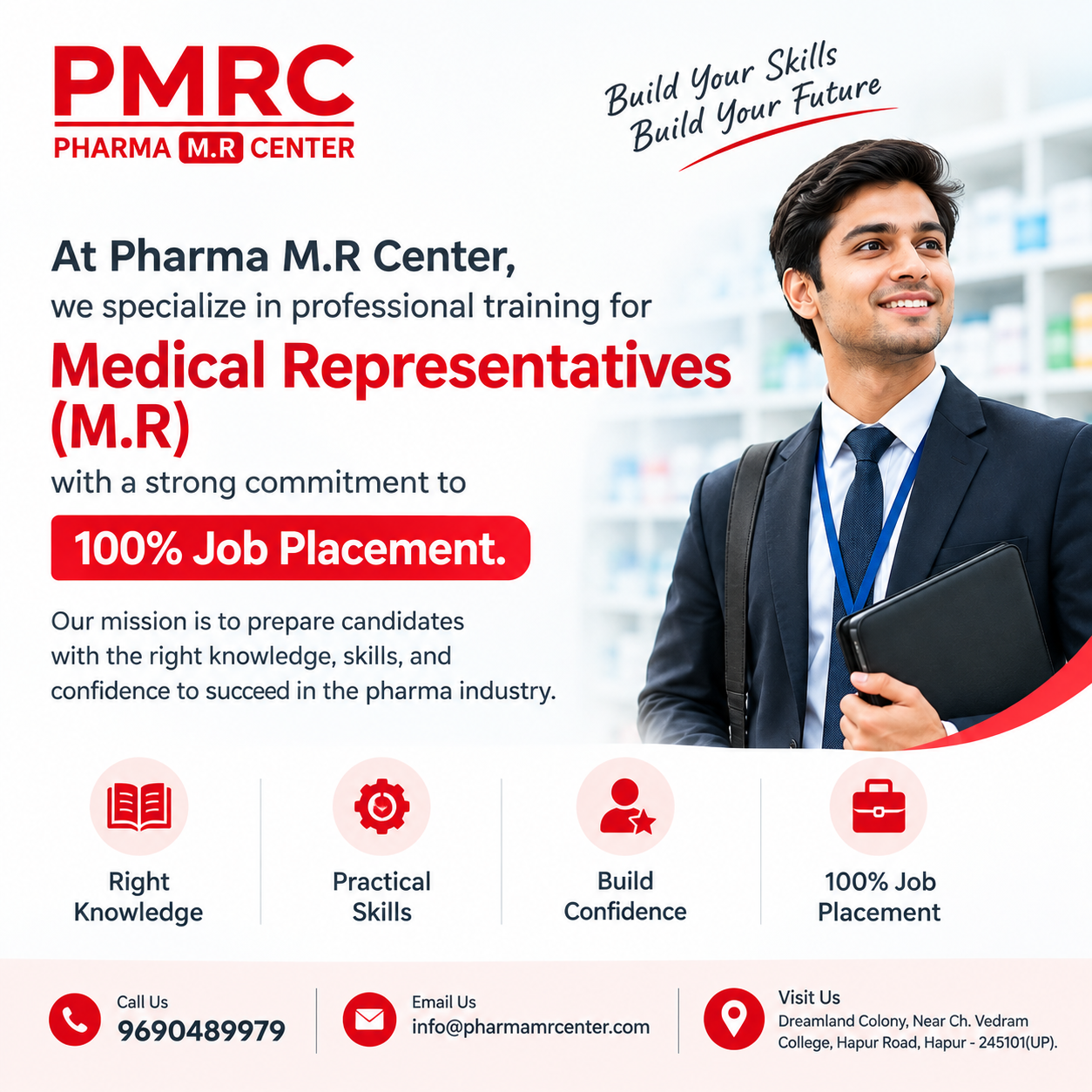
For graduates who want to understand the medical representative profession before applying, career-focused training can provide a structured starting point. Pharma M.R Center offers training focused on preparing aspiring candidates for work as medical representatives in the pharmaceutical industry.
When evaluating a training institute, look for a clear course syllabus, practical learning activities, communication development and interview preparation. Ask how the institute supports students during their job search and whether its placement assistance is explained transparently.
You can visit the Pharma M.R Center website to learn more about its training and course information.
Before enrolling, confirm the course duration, fees, teaching approach and any placement-related terms directly with the institute. Choosing a course based on its actual curriculum and support can help you make a more informed decision about your career preparation.
Conclusion
Graduation can open several career paths, and pharmaceutical sales is one option worth considering if you enjoy communication, learning and professional interaction. A Medical Representative Job allows graduates to develop product knowledge, sales skills, relationship management and practical experience in the pharmaceutical industry.
If you are exploring a Medical Representative Job MR Job as a fresher, start by checking eligibility requirements, understanding the responsibilities and preparing a focused resume. A suitable medical representative training course may also help you build confidence and become more familiar with the expectations of pharmaceutical employers.
Take time to research vacancies, compare training options and understand the working conditions before making a decision. With realistic expectations, relevant preparation and consistent effort, you can take informed steps towards building a career as a medical representative.

 English
 Arabic
 French
 Spanish
 Portuguese
 Deutsch
 Turkish
 Dutch
 Italiano
 Russian
 Portuguese (Brazil)
 Greek