


How Unicode Text Styling Works: A Practical Guide to Fancy Fonts in Social Media Bios
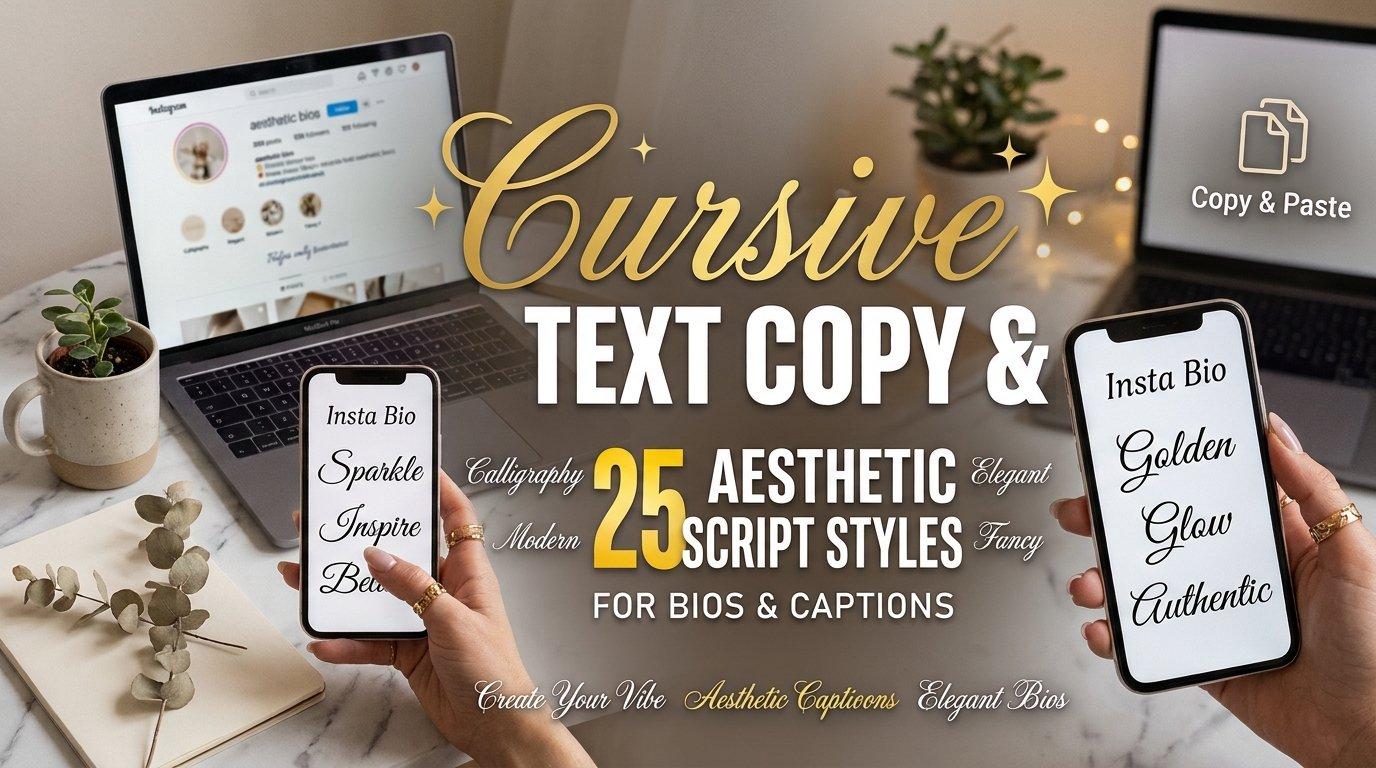
Scroll through any Instagram profile, TikTok bio, or Discord server name and you’ll notice something: not every piece of text looks the same. Some bios are written in elegant script, others in bold gothic letters, and some seem to float in rounded bubbles. Most people assume these are special fonts, but that isn’t quite what’s happening.
This guide explains how stylized text actually works, why it displays on platforms that don’t offer font options, and how to use it without hurting readability or accessibility.
Why Social Platforms Don’t Let You Change Fonts
Nearly every major social platform locks text to a single typeface. The reason is consistency: a uniform font keeps feeds predictable, loads quickly, and renders reliably across thousands of device and browser combinations.
That leaves users with limited room for personal expression. A bio is only a few lines long, so every visual detail matters. This constraint is what pushed people toward an alternative: using characters rather than fonts.
Fonts vs. Characters: The Key Distinction
A font is a design file that tells your device how to draw a letter. A character is the underlying symbol itself. When you type the letter “A,” your device stores a character code and then uses a font to render it.
Stylized text works by swapping standard letters for different characters that happen to look like decorative versions of those letters. These characters come from Unicode, the universal encoding system that assigns a unique number to every symbol across the world’s writing systems. The Unicode Consortium maintains this standard, and it includes a large block of mathematical alphanumeric symbols, such as bold, italic, script, fraktur, and double-struck letterforms originally designed for mathematical notation.
Because these are real characters rather than font styles, they travel anywhere plain text can go. Paste them into a bio, a username field, or a comment, and they appear as intended on most modern devices.
Common Styles You’ll Encounter
Once you start looking, you’ll see a handful of recurring styles:
- Script and cursive: Flowing, handwritten-looking letters, popular for personal brands and aesthetic profiles.
- Bold and italic variants: Mathematical bold or italic characters that add emphasis without formatting tools.
- Gothic (Fraktur): Medieval-inspired blackletter, often used for edgy or vintage aesthetics.
- Double-struck: Outlined, hollow-looking letters borrowed from math notation.
- Bubble and circled: Letters enclosed in circles, giving a playful feel.
- Small caps and subscript-style text: Compact forms useful for subtle visual variety.
A Fancy Text Generator converts ordinary typed text into these Unicode alternatives, letting you preview several styles side by side and copy the one that fits your profile.
A Closer Look at Cursive Styling
Of all the styles, script lettering is probably the most requested. It suggests handwriting, warmth, and elegance, which is why it appears so often in lifestyle, beauty, wedding, and creative profiles.
There are two main script variants in Unicode: a formal, calligraphic script and a bolder, heavier version. Each has a slightly different personality, and a Cursive Text Generator can show both forms so you can compare how they look at small sizes before committing to one.
One practical note: script characters can become hard to read at very small sizes, especially on lower-resolution screens. If your bio is short and meant to be admired, cursive works well. If it carries important information like a booking link or contact detail, keep that in plain text.
Accessibility: The Part Most Guides Skip
Stylized text looks great, but it comes with real trade-offs that every creator should understand.
Screen readers may struggle. Assistive technology often reads Unicode math characters as their literal names, such as “mathematical script capital A,” rather than as the letter. A single decorative word may be tolerable, but a full paragraph can become unintelligible for someone using a screen reader.
Search and discoverability can suffer. Search engines and in-app search typically match standard letters. If your name or keyword appears only in a decorative style, people may not find you by searching for it.
Rendering isn’t universal. Older devices or unusual fonts may display unsupported characters as empty boxes, sometimes called “tofu.”
Best Practices for Using Stylized Text
To get the visual benefit without the downsides, keep these guidelines in mind:
- Style sparingly. Apply decorative text to a name, a heading line, or a single phrase rather than your entire bio.
- Keep essential information in plain text. Handles, links, locations, and keywords should remain standard characters.
- Test on multiple devices. Check how your profile looks on both iOS and Android, and on desktop.
- Prioritize contrast and size. Thin script styles need enough visual weight to stay legible.
- Stay consistent. Pick one or two styles that match your brand or personality rather than mixing six.
- Consider your audience. If many of your followers rely on assistive tools, lean toward more restrained styling.
Where Typography Is Heading
As platforms evolve, text customization may eventually become a native feature. Some apps already offer limited built-in styling for captions and stories. Until that becomes standard, Unicode-based styling remains the most portable way to add typographic personality to plain-text fields.
Understanding how it works helps you use it thoughtfully. Treat decorative characters as seasoning rather than the main ingredient: a little goes a long way, and clarity should always come first.
Final Thoughts
Stylized text is a small but meaningful part of how people express identity online. It isn’t magic and it isn’t a font hack. It’s an intelligent use of a global character standard that happens to contain a rich variety of letterforms. Whether you’re refining a personal profile or designing a brand presence, knowing the mechanics behind it lets you make better, more accessible choices.

 English
 Arabic
 French
 Spanish
 Portuguese
 Deutsch
 Turkish
 Dutch
 Italiano
 Russian
 Romaian
 Greek