


Why Do Equipment Specifications Matter Before Ordering Air Compressor?
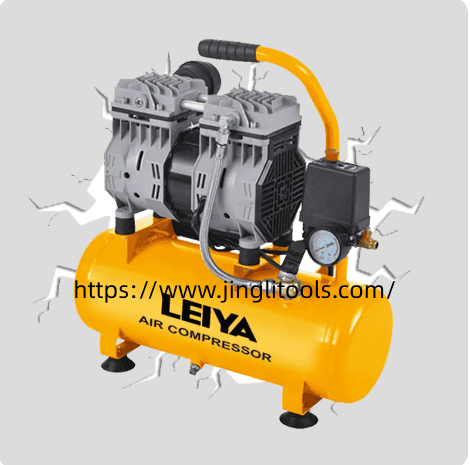
Air Compressor selection begins with understanding the intended application, daily workload, and compressed gas requirements. For workshops, repair facilities, and industrial users, reviewing these factors before purchasing can help prevent equipment mismatches. Buyers should assess technical specifications, installation conditions, maintenance arrangements, and supplier communication to determine whether a model suits their operational needs.
Calculate the Required Flow Rate
Consumption requirements should be one of the first points to review. Different tools and production processes use different volumes of compressed gas, and a machine that cannot meet demand may struggle during continuous operation. Buyers should list the tools that will run simultaneously and estimate their combined consumption.
It is also helpful to determine whether usage is occasional, intermittent, or continuous. A small repair workshop may have different needs from a production facility running several pneumatic tools at the same time. Allowing reasonable capacity for future changes can help buyers avoid selecting equipment that quickly becomes unsuitable.
Match Pressure to the Application
Pressure requirements vary according to the tools and processes being supplied. Before ordering, buyers should identify the operating pressure required by their equipment and compare it with the model specifications.
The rated pressure should match the intended application rather than being selected simply because the number appears higher. A suitable match can support stable operation and help avoid unnecessary energy consumption. Buyers should also ask whether additional regulators or connecting components are needed for the installation.
When reviewing technical information, distinguish between the machine's rated pressure and the pressure required at the point of use. Pipe length, fittings, and other system components may affect the pressure available to connected tools.
Identify the Required Gas Quality
The required gas quality depends on how the compressed supply will be used. Some applications have specific requirements concerning oil contamination, moisture, or particles, while others may allow different conditions.
Buyers should identify any cleanliness requirements before choosing a machine. If an application calls for oil-free output, they should confirm the product design and determine whether additional filtration or moisture-control equipment is necessary. These details matter when the supply comes into contact with sensitive processes or products.
The working environment should also be discussed with the supplier. Temperature, humidity, dust, and ventilation can affect equipment selection and the maintenance arrangements needed over time.
Evaluate Tank Capacity and Usage Frequency
Tank capacity can influence how a compressed gas system responds to changing demand. Buyers should consider how often tools operate, how long each cycle lasts, and how much supply is needed during peak periods.
A larger tank does not automatically solve every capacity problem. The machine itself must also provide enough output for the intended workload. Evaluating both factors together gives buyers a clearer picture of how the complete system may perform.
Physical dimensions should be checked before ordering. Available floor space, servicing access, ventilation, and transportation arrangements can all affect installation. In compact workshops, overall size and placement requirements may be just as important as rated output.
Review Maintenance and Operating Costs
The purchase price is only one part of equipment ownership. Buyers should also consider electricity consumption, routine servicing, replacement components, and the time required for maintenance. These factors may influence the total cost throughout the equipment's service life.
Before placing an order, ask which components require regular inspection and what maintenance procedures the manufacturer recommends. Clear documentation helps operators establish a service schedule and reduces the chance of overlooking routine checks.
Noise levels and ease of access also deserve attention where relevant. Equipment installed near workers or in a shared workspace may require additional planning to suit the facility.
Check Product Details and Supplier Communication
Reliable purchasing decisions depend on clear technical information. Buyers should review model specifications, rated power, operating pressure, output capacity, tank volume, voltage, and included accessories. If any information is unclear, request clarification before confirming the order.
It is equally important to discuss order quantity, packaging, delivery arrangements, warranty terms, spare parts, and after-sales communication. Importers may also need product photographs, manuals, or other documents to support their sales and distribution activities.
As a manufacturer of power tools and related equipment, jinglitools gives buyers a starting point for reviewing product options and discussing intended applications. Sharing the working environment and purchasing requirements can make these conversations more productive.
Prepare a Purchasing Checklist
Before making a purchase, prepare a checklist covering flow rate, pressure requirements, gas quality, tank capacity, installation space, power supply, maintenance, and order terms. Comparing these factors across available models creates a more structured evaluation process.Buyers should confirm that the selected configuration matches actual workplace conditions instead of relying on a single specification. If operating requirements may change in the future, discussing those plans before ordering can help identify suitable options.For further information about available equipment and product categories, visit https://www.jinglitools.com/ to review the company's offerings and contact the manufacturer with specific purchasing requirements.

 English
 Arabic
 French
 Spanish
 Portuguese
 Deutsch
 Turkish
 Dutch
 Russian
 Romaian
 Portuguese (Brazil)
 Greek