


Custom DBB Ball Valves for Industrial Isolation Systems
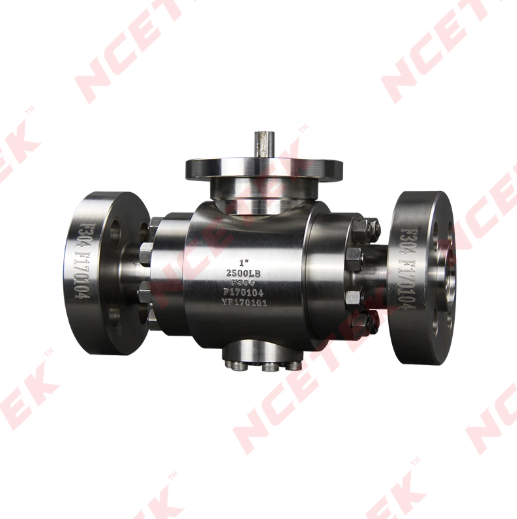
Industrial systems often require reliable isolation to support equipment maintenance, process changes, and operational safety. For projects involving specialized isolation arrangements, Double Block and Bleed Ball Valves OEM/ODM solutions may be considered when buyers need a coordinated valve configuration tailored to their pipeline layout, operating medium, and engineering requirements. The design must be assessed carefully because the term double block and bleed can refer to different arrangements with distinct functional characteristics.
A double block and bleed arrangement is generally intended to provide two isolation barriers with a means of venting or draining the space between them. This allows the intermediate cavity to be checked for pressure or leakage under a defined procedure. The exact performance depends on the valve design, the number and arrangement of sealing elements, the bleed connection, and the conditions under which the valve is operated. Buyers should confirm the required isolation function rather than relying on the product name alone.
Ball valves are frequently considered for such arrangements because quarter-turn operation supports straightforward opening and closing. Depending on the design, a DBB solution may use two separate valves connected with a bleed line or a specially engineered integrated valve assembly. Integrated designs can reduce installation space and simplify piping in suitable applications, while separate valves may provide greater flexibility for maintenance or system configuration. The appropriate option depends on the project requirements.
For OEM and ODM projects, the initial engineering review should establish the operating pressure, temperature range, fluid properties, nominal size, connection standard, and required isolation procedure. The specification should also identify whether the valve must provide bidirectional shut-off, which leakage criteria apply, and whether the intermediate cavity must be vented, drained, or monitored. These requirements influence the valve structure, seat arrangement, and accessory selection.
Material selection is another important consideration. Carbon steel may be suitable for compatible general industrial services, while stainless steel or other alloy materials may be required for corrosive media or specialized operating conditions. Seat and seal materials must be compatible with the fluid, temperature, and pressure. If the service involves hazardous chemicals, flammable gases, or other demanding media, material compatibility and the applicable safety requirements should be evaluated by qualified engineering personnel.
A well-defined Double Block and Bleed Ball Valves OEM/ODM project also requires clear decisions about the bleed connection. Its size, location, connection type, and intended use should match the operating procedure and the system's pressure-management requirements. The design must account for the possibility that trapped fluid can remain pressurized. A bleed port does not by itself guarantee that a cavity is completely depressurized or that the valve is safe to dismantle.
The valve operating arrangement should be considered as part of the whole system. Manual handles or gear operators may be appropriate for local operation, while pneumatic or electric actuation can be specified for remote control. Where multiple valves or actuators are involved, the project may require an operating sequence, position indication, or interlocking logic. These details should be established during design review to prevent conflicting operation and support consistent procedures.
OEM and ODM customization can cover several areas, including body construction, material grades, end connections, face-to-face dimensions, actuator mounting, accessory interfaces, identification plates, and documentation. However, customization must remain consistent with the required design code, pressure rating, testing procedure, and intended isolation function. Buyers should provide drawings and technical specifications early so that design changes can be reviewed before production begins.
Quality assurance should be agreed upon before order confirmation. Depending on the project, inspection may include material verification, dimensional checks, assembly inspection, pressure testing, seat-leakage testing, and functional testing of the bleed arrangement. The acceptance criteria and testing method should be stated clearly. For critical applications, buyers may also specify witness inspections, third-party inspection, material traceability, and additional documentation.
Manufacturing communication plays a major role in custom valve projects. Approved drawings, revision control, production milestones, and technical clarifications help prevent errors caused by incomplete or outdated information. Buyers should also agree on packaging, marking, spare parts, operating manuals, and any special shipping requirements. These details can be particularly important for equipment destined for international projects or integrated skids.
Installation and operation must follow the approved procedure. Personnel should verify valve position, isolate the system appropriately, and use the designated method to check the intermediate cavity. The presence of a DBB valve should not replace the project's lockout, depressurization, verification, or other safety procedures. Actual isolation performance must be confirmed against the relevant design standard and application requirements.
For distributors, EPC contractors, and equipment manufacturers, a successful OEM/ODM project depends on aligning the design with the actual service conditions. Buyers can review available valve products at https://www.ncevalve.com/product/ and submit their drawings, operating conditions, isolation requirements, and documentation expectations for technical evaluation.

 English
 Arabic
 French
 Spanish
 Deutsch
 Turkish
 Dutch
 Italiano
 Russian
 Romaian
 Portuguese (Brazil)
 Greek