


Industrial Equipment for Controlled Fluid Delivery
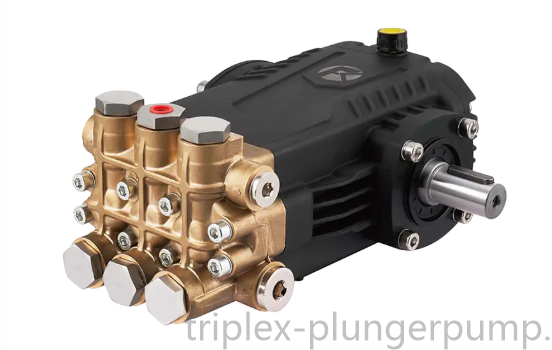
A Piston Pump uses the reciprocating movement of a piston inside a cylinder to move fluid through a controlled pumping cycle. Depending on its design, it can serve applications involving fluid transfer, pressure testing, industrial machinery, and other processes requiring defined delivery conditions. For B2B buyers, choosing appropriate equipment involves evaluating the required pressure, flow rate, fluid properties, operating frequency, and installation environment. Understanding these factors before procurement helps ensure that the selected model is suitable for the intended workload and long-term operating requirements.
The operating principle involves changes in the volume of a pumping chamber as the piston moves. During one part of the cycle, fluid enters through an inlet valve; during another, it is discharged through an outlet valve. The exact arrangement varies by design, and performance depends on piston dimensions, stroke length, operating speed, valve configuration, and sealing characteristics. Buyers should consult model-specific technical documentation to understand the equipment's capabilities and determine whether its operating characteristics match the application.
Pressure and flow rate are two essential selection criteria. Pressure describes the resistance the pump must overcome, while flow rate indicates the volume of fluid delivered over time. These values should be considered together with the intended duty cycle. Some applications require relatively high pressure at a controlled flow rate, whereas others prioritize greater fluid delivery for continuous operation. Buyers should establish the normal working range and anticipated demand before selecting a model instead of relying solely on maximum ratings.
Fluid characteristics can influence component selection and service life. Viscosity, temperature, chemical composition, and suspended particles may affect the piston, cylinder, seals, valves, and other wetted components. The materials must be compatible with the medium and the surrounding operating environment. Applications involving corrosive substances or abrasive particles may require specific materials or protective arrangements. Providing the supplier with accurate information about the fluid helps reduce compatibility risks and supports more appropriate equipment recommendations.
The drive system must also meet the demands of the installation. Electric motor-driven configurations may suit fixed industrial facilities, provided the electrical supply matches the motor's requirements. Buyers should confirm rated power, voltage, frequency, operating speed, mounting dimensions, and connection arrangements before ordering. Space for installation, ventilation where required, and access to service points should also be considered. Reviewing these details in advance can reduce commissioning delays and simplify integration with existing production equipment.
The inlet and discharge systems affect overall operating stability. The inlet supply must meet the manufacturer's requirements, while the discharge piping, hoses, valves, and fittings must be suitable for the intended pressure. Restricted inlet flow, air entering the system, unsuitable pipework, or operation outside approved conditions can cause inconsistent performance and unnecessary wear. Appropriate pressure-control devices and system protection should be included where required by the application. Correct installation helps the pump operate within its intended range.
Preventive maintenance is essential for dependable operation. Operators should inspect connections, monitor pressure and flow, and investigate unusual noise, vibration, or leakage. Seals and valves may require periodic inspection or replacement depending on operating hours and fluid conditions. Following the manufacturer's startup, shutdown, and servicing instructions can reduce avoidable stress on internal components. Maintenance records also help identify recurring issues, forecast spare-parts requirements, and plan servicing before a problem interrupts production.
Safety measures should be established before operation begins. All pressure-bearing components must be rated for the system's intended conditions, and operators should avoid exceeding approved limits. Before inspection or repair, the drive should be isolated and any trapped pressure safely released according to the manufacturer's procedures. Suitable protective equipment, clear instructions, and appropriate operator training help reduce risks during normal operation and maintenance.
For industrial procurement teams, a complete quotation should identify the model, rated pressure, flow capacity, drive specifications, wetted materials, connection dimensions, and included accessories. Buyers should also clarify spare-parts availability, technical support, warranty conditions, and delivery schedules. When evaluating a Piston Pump, businesses should prioritize verified specifications, fluid compatibility, maintenance accessibility, and suitability for the actual operating cycle. To explore FEIKE's available pumping solutions and product information, visit https://www.triplex-plungerpump.com/product/pumps/.

 English
 Arabic
 French
 Spanish
 Portuguese
 Deutsch
 Turkish
 Dutch
 Italiano
 Romaian
 Portuguese (Brazil)
 Greek