


Baby Bottle Market 2036 Forecast: USD 6.42 Billion, USA Leads China in CAGR Comparison
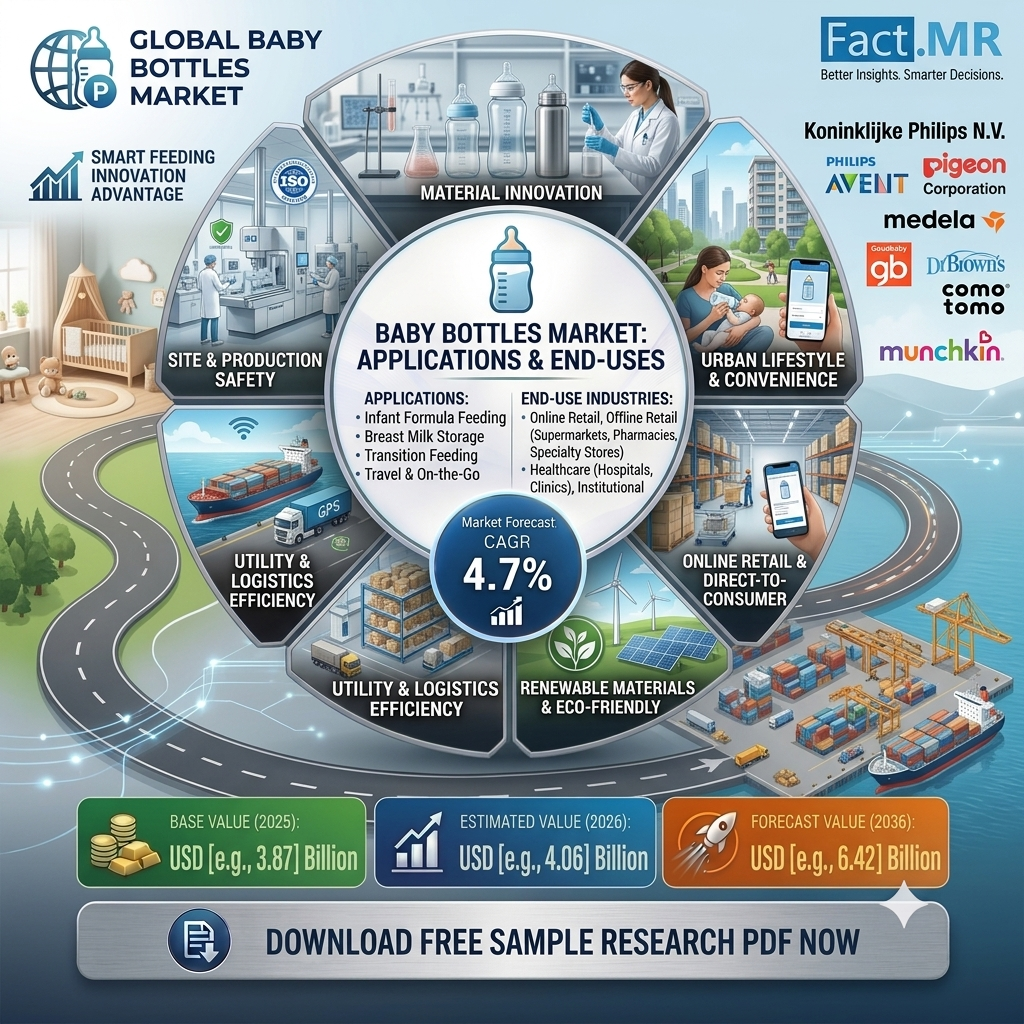
The baby bottle market is forecast to expand from USD 4.06 billion in 2026 to USD 6.42 billion by 2036, registering a 4.7% CAGR over the forecast period. Fact.MR attributes this expansion to sustained birth rates across South and Southeast Asia, increasing consumer spending on infant feeding products, and growing parental preference for safer and more convenient feeding solutions. The market was valued at USD 3.87 billion in 2025 and is expected to generate an absolute dollar opportunity of approximately USD 2.36 billion between 2026 and 2036.
Growing awareness of infant nutrition and material safety is influencing purchasing decisions. Parents are increasingly considering BPA-free materials, anti-colic bottle designs, and products that support the transition between breastfeeding and bottle feeding. Manufacturers are responding by developing bottles with improved nipple geometry, ventilation systems, and ergonomic features. Premium glass and silicone bottles are also attracting attention among consumers seeking alternatives to conventional plastic products.
Get detailed market forecasts, competitive benchmarking, and pricing trends:
https://www.factmr.com/connectus/sample?flag=S&rep_id=166
Plastic Baby Bottles Retain a Strong Market Position
By material, plastic baby bottles are expected to account for 28.9% of the global baby bottle market in 2026. Their lightweight construction, affordability, and availability across different sizes support continued demand. Plastic bottles remain accessible to consumers across multiple income groups, particularly in markets where product cost influences purchasing decisions.
Manufacturers are introducing BPA-free and phthalate-free plastic formulations to address concerns about conventional materials. Glass bottles are gaining attention in premium categories because of their chemical inertness, while silicone products offer flexibility and heat resistance. These developments are encouraging manufacturers to differentiate products through material performance and safety compliance.
The 6 to 9 ounces category is projected to represent 34.0% of market demand by size in 2026. This capacity aligns with feeding requirements during important stages of infant development. Its suitability for regular feeding supports adoption among parents seeking bottles that balance capacity with convenient handling.
By age group, the 6 to 18 months segment is expected to account for 42.7% of demand in 2026. This period represents a major stage of bottle-feeding activity before children transition toward alternative drinking products. Demand is supported by recurring bottle use and the need for feeding products suited to changing infant requirements.
United States and China Show Continued Growth Potential
The United States baby bottle market is projected to expand at a 5.1% CAGR from 2026 to 2036, increasing from USD 400 million to USD 660 million. Working parents, demanding schedules, and consumer interest in convenient infant feeding products are supporting demand. Premium anti-colic bottles and BPA-free materials are gaining importance as parents place greater emphasis on product safety and feeding comfort.
The United States is expected to represent 45.6% of North American baby bottle market revenue by 2036. Specialty baby retailers and e-commerce platforms remain important distribution channels. Consumer interest in bottles that support expressed breast milk and formula feeding is also influencing product development.
China is forecast to record a 4.7% CAGR through 2036, with market revenue rising from USD 400 million in 2026 to USD 635 million by the end of the forecast period. Increasing acceptance of infant formula, wider availability of branded feeding products, and convenient online purchasing are contributing to market expansion.
China is projected to account for 47.5% of the East Asian market by 2036. Expanding urban middle-class populations and increasing awareness of dedicated infant feeding products are supporting sales. Manufacturers are also addressing demand for products with improved hygiene, material safety, and practical feeding features.
Germany remains an important European market, supported by strict food-contact material requirements and consumer attention to product safety. European regulations governing plastic and silicone materials influence product development and compliance strategies. The United Kingdom is also characterized by interest in convenient feeding products, including self-sterilizing bottles and modular feeding systems. Fact.MR does not publish individual growth rates for these two countries on the report page.
Competitive Landscape
Competition in the baby bottle market includes established infant care manufacturers with broad product portfolios, retail distribution networks, and specialized feeding technologies. Key companies profiled by Fact.MR include Koninklijke Philips N.V., Pigeon Corporation, Munchkin, Inc., Mayborn Group Limited, Handi-Craft Company, Comotomo, Inc., Nanobebe US Ltd., and Artsana S.p.A.
Product innovation remains an important competitive strategy. Manufacturers are focusing on anti-colic ventilation systems, nipple design, material quality, and ease of cleaning. Hospital-channel partnerships also influence brand recognition, as early exposure to feeding products can shape subsequent purchasing preferences.
Online distribution is creating additional opportunities for manufacturers. E-commerce platforms allow consumers to compare bottle materials, feeding features, and product specifications before purchasing. Product bundles and personalized designs are also contributing to differentiation across infant care categories.
Material Safety and Product Innovation Shape the Market
The baby bottle market is undergoing a gradual transition toward products designed around safety, comfort, and feeding performance. Concerns surrounding BPA and other substances used in conventional plastics are encouraging manufacturers to develop alternative formulations and expand glass and silicone product offerings.
Regulatory requirements remain a major consideration. Manufacturers operating across international markets must comply with different food-contact material standards. These requirements influence material selection, product testing, and manufacturing processes, particularly for companies distributing products in Europe, Japan, and North America.
Anti-colic technology is another area of development. Bottle ventilation systems and specialized nipple designs aim to reduce air ingestion during feeding. Fact.MR identifies product validation and performance claims as increasingly important factors in purchasing decisions influenced by pediatric recommendations.
As consumers continue to prioritize infant feeding safety and convenience, manufacturers are expected to invest in material innovation, ergonomic product designs, and differentiated feeding technologies. The market's expansion through 2036 will depend on changing consumer preferences, product affordability, regulatory compliance, and distribution capabilities.
Top Reports:
https://adamaamresearch.blogspot.com/2026/10/nitrogen-oxide-control-systems-market.html
https://net-pals.com/blogs/59702/Nitrogen-Oxide-Control-Systems-Market-2036-Outlook-USD-13-7
https://acmingle.com/blogs/33023/Nitrogen-Oxide-Control-Systems-Market-2036-Projection-Stands-at-USD
About Fact.MR
Fact.MR is a market research and consulting company providing market intelligence, competitive analysis, and forecasting across global industries. Its research supports businesses with data-driven insights into emerging markets, technology trends, competitive dynamics, regional opportunities, and changing demand patterns.

 English
 Arabic
 French
 Spanish
 Portuguese
 Deutsch
 Turkish
 Italiano
 Russian
 Romaian
 Portuguese (Brazil)
 Greek