


Commercial Fire Alarm Systems Installation UK | Intraguard
Introduction
Fire safety is an essential responsibility for businesses operating commercial properties. Whether you manage an office, warehouse, retail store, or industrial facility, protecting employees, visitors, and valuable assets from fire hazards should always be a priority.
Commercial fire alarm systems help detect potential fires and provide early warnings so people can evacuate safely. A properly designed and installed system can reduce emergency response delays and support overall workplace safety.
However, choosing the right fire alarm system requires understanding different detection technologies, building requirements, installation procedures, and maintenance responsibilities.
Professional fire alarm installation helps ensure that detection equipment, control panels, and warning devices are positioned appropriately for the premises. This guide explains the different types of commercial fire alarm systems, their features, installation considerations, and benefits for UK businesses.
What Are Commercial Fire Alarm Systems?
Commercial fire alarm systems are safety systems designed to detect signs of fire and warn people inside business premises.
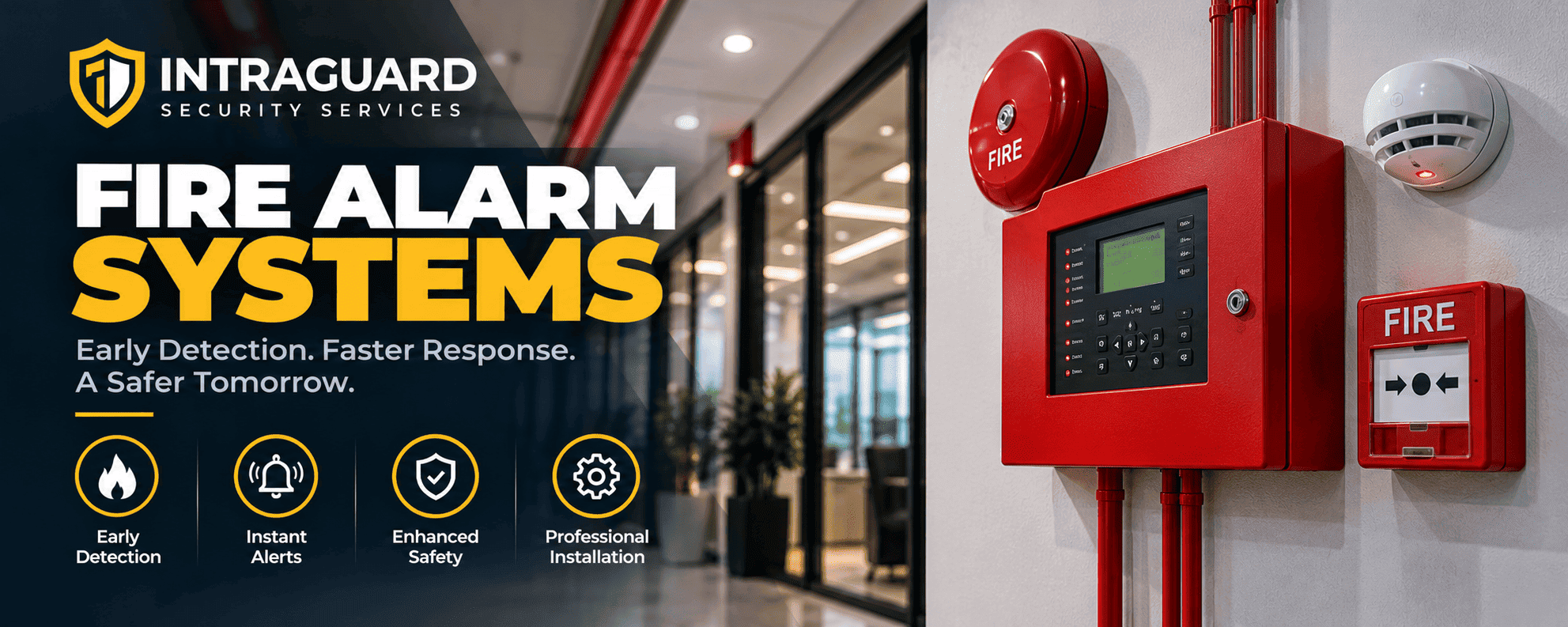
These systems use devices such as smoke detectors, heat detectors, manual call points, alarm sounders, and control panels to identify and communicate potential fire emergencies.
When a detector identifies conditions that indicate a possible fire, the system activates the appropriate warning devices. Occupants can then follow established evacuation procedures.
Fire alarm systems are used in offices, warehouses, factories, retail premises, educational buildings, and other commercial environments.
The appropriate system depends on the building's size, layout, occupancy, and fire risk assessment.
Unlike basic domestic smoke alarms, commercial systems often require coordinated detection, warning, and control arrangements across multiple areas of a building.
Why Are Fire Alarm Systems Important for Businesses?
Fire incidents can threaten human life, damage valuable equipment, destroy stock, and interrupt business operations.
Early fire detection provides occupants with an opportunity to respond and evacuate before conditions become more dangerous.
A properly designed commercial fire alarm system helps communicate warnings throughout the relevant areas of a building.
For example, a warehouse may require detectors positioned around storage areas, loading zones, and other locations identified through a fire risk assessment.
Similarly, an office building may need coordinated warning devices across multiple floors.
Fire alarm systems also support workplace fire safety responsibilities. In England and Wales, the Regulatory Reform (Fire Safety) Order 2005 requires responsible persons to assess fire risks and provide appropriate safety precautions.
GOV.UK+1
Different Types of Commercial Fire Alarm Systems
Different businesses require different fire alarm configurations. Understanding the available systems helps property managers choose equipment suitable for their premises.
Conventional Fire Alarm Systems
Conventional fire alarm systems divide a building into detection zones.
When a detector or manual call point activates, the control panel identifies the relevant zone rather than the exact device.
These systems may be suitable for smaller commercial premises with relatively simple layouts.
They can offer a practical solution where detailed individual device identification is not necessary.
However, locating the source of an alarm may require checking the affected zone.
Addressable Fire Alarm Systems
Addressable fire alarm systems assign individual identification addresses to compatible detection devices.
When an alarm activates, the control panel can identify the specific device reporting the event.
This provides more detailed information about the location of a potential fire.
Addressable systems are often suitable for larger offices, warehouses, hotels, and multi-storey commercial buildings.
Their enhanced identification capabilities can support efficient investigation and maintenance.
Wireless Fire Alarm Systems
Wireless fire alarm systems use radio communication between compatible system components.
These systems can reduce the amount of cabling needed during installation.
They may be particularly useful in existing commercial properties where extensive wiring would be difficult or disruptive.
However, wireless systems require careful planning to ensure reliable signal communication, suitable battery management, and appropriate coverage.
Hybrid Fire Alarm Systems
Hybrid fire alarm systems combine compatible wired and wireless devices within an integrated configuration.
They can provide flexibility when extending existing fire alarm infrastructure.
For example, a business renovating part of an occupied building may need additional detection coverage without replacing every existing cable.
The suitability of a hybrid installation depends on system compatibility, design requirements, and the building's fire safety strategy.
Key Components of Commercial Fire Alarm Systems
A reliable fire alarm installation depends on several components working together.
Smoke and Heat Detectors
Smoke detectors identify smoke associated with a potential fire, while heat detectors respond to specified temperature conditions.
The correct detector type depends on the environment and expected fire hazards.
For example, heat detectors may be appropriate in certain areas where ordinary activities could cause unwanted smoke alarms.
Detector selection and positioning should follow the building's assessed risks and applicable design guidance.
Fire Alarm Control Panels
The control panel acts as the central point for managing the fire alarm system.
It receives signals from connected devices and displays information about alarms, faults, and system conditions.
Depending on the system, the panel may also control warning devices and approved connections to other building systems.
Manual Call Points
Manual call points allow occupants to activate a fire warning when they discover a fire.
They are generally positioned at suitable locations along escape routes and near exits, according to the system design.
These devices provide an important way to raise the alarm when a fire is noticed before automatic detection occurs.
Alarm Sounders and Visual Indicators
Alarm sounders provide audible warnings, while visual alarm devices use flashing lights to alert occupants.
Visual warnings may be necessary in noisy environments or where audible alarms alone would not adequately warn everyone.
Suitable warning arrangements should reflect building use and occupant needs.
Professional Fire Alarm Installation for Commercial Properties
Professional fire alarm installation begins with understanding the building and its fire safety requirements.
Installing equipment without reviewing the premises can result in inadequate detection coverage, unsuitable device positioning, or difficult system operation.
Initial Site Assessment
Before installation, the building layout, access arrangements, occupancy, and relevant risk areas should be reviewed.
This helps determine the appropriate equipment locations and installation requirements.
The fire risk assessment and fire safety strategy should inform the system design.
System Design and Equipment Selection
The installation plan should identify suitable detection devices, warning equipment, control panel locations, and required connections.
The design should consider the relevant requirements of BS 5839-1 for non-domestic fire detection and alarm systems.
Competent professionals should be involved in the design and installation process to help ensure appropriate safety arrangements.
Installation and Testing
Once the design and scope have been agreed, installers can position the equipment and complete the necessary connections.
The system should then undergo appropriate commissioning and testing before handover.
Testing helps confirm that the installed devices communicate and operate as intended.
Documentation and Handover
Following installation, the responsible person or facilities team should receive appropriate system information.
Documentation may include operating instructions, test records, installation details, and agreed maintenance requirements.
Clear handover information helps the business manage its fire alarm system effectively.
Fire Alarm Installation for Different Commercial Properties
Different workplaces present different fire detection challenges.
Offices and Corporate Buildings
Office buildings often contain meeting rooms, corridors, reception areas, and multiple working spaces.
Fire alarm installation should consider occupancy levels, escape routes, and the need to warn people throughout the premises.
Warehouses and Industrial Facilities
Warehouses may contain high storage racks, machinery, loading areas, and valuable inventory.
These environments require careful consideration of detector suitability, building height, and potential fire hazards.
Installation planning should reflect the specific activities and conditions within the facility.
Retail Stores and Shopping Premises
Retail environments regularly accommodate staff, customers, and deliveries.
Fire alarm systems should support clear warning arrangements and established evacuation procedures.
Suitable detection and warning coverage is particularly important in public-facing areas.
How Much Does Commercial Fire Alarm Installation Cost?
Commercial fire alarm installation costs depend on the building size, system type, equipment requirements, and installation complexity.
Smaller properties with straightforward layouts may require fewer devices than larger industrial buildings.
Addressable systems may involve greater initial expenditure than simpler conventional configurations, depending on the design.
Additional costs may arise from cabling, control panels, wireless components, access equipment, and installation scheduling.
Businesses should obtain a site-specific quotation that clearly explains the proposed scope, testing, and handover requirements.
Fire Alarm Testing and Maintenance Requirements
Fire alarm systems must remain operational after installation.
Regular testing and appropriate maintenance help identify faults, damaged equipment, and communication problems.
UK fire safety guidance recommends routine weekly alarm testing and specialist servicing, generally at six-month intervals, for relevant systems. The exact arrangements should reflect the system and applicable requirements.
GOV.UK+1
Businesses should maintain records of tests, identified faults, repairs, and servicing activities.
A properly maintained system provides greater confidence that warning equipment will function when required.
Why Choose Intraguard for Commercial Fire Alarm Installation?
Intraguard provides commercial fire alarm installation services for businesses across the UK, subject to site requirements and installer availability.
The installation process begins with reviewing the premises, understanding the proposed installation areas, and agreeing on the scope of work.
Intraguard's fire alarm installations are carried out by externally trained, CTC-cleared installers.
Services can include fire alarm equipment installation, detector and sounder positioning, control panel setup, agreed testing, and handover documentation.
Installation arrangements can also be discussed around business operating hours and site access requirements.
This practical approach helps organizations plan fire alarm installation around their premises and everyday operations.
Conclusion
Commercial fire alarm systems are essential for protecting people and supporting fire safety across business premises.
From conventional and addressable systems to wireless and hybrid solutions, different technologies provide options for offices, warehouses, retail properties, and industrial facilities.
Professional fire alarm installation helps ensure detection devices, warning equipment, and control panels are selected and positioned according to building requirements.
Businesses should also prioritize regular testing, maintenance, and clear fire safety procedures.
Choosing a suitable system and maintaining it properly can strengthen workplace safety and support long-term business protection.
Frequently Asked Questions (FAQs)
What is a commercial fire alarm system?
A commercial fire alarm system detects signs of fire and warns occupants within business premises. It may include smoke detectors, heat detectors, manual call points, sounders, and control panels.
How much does commercial fire alarm installation cost in the UK?
Installation costs depend on the size of the premises, number of devices, system type, wiring requirements, and installation complexity. A site assessment is usually needed to provide an accurate quotation.
Are fire alarm systems legally required in UK businesses?
UK fire safety legislation requires responsible persons to assess risks and provide appropriate fire detection and warning arrangements where necessary. Specific requirements depend on the premises, its occupants, and the applicable legal jurisdiction.
What is the difference between conventional and addressable fire alarm systems?
Conventional systems identify the zone where an alarm has activated. Addressable systems can identify the individual device reporting an alarm, providing more detailed location information.
How often should commercial fire alarms be tested?
Weekly routine testing is generally recommended for commercial fire alarm systems. Specialist inspection and servicing are also required at suitable intervals, commonly every six months, depending on the system and applicable guidance.
Can fire alarm systems be installed in occupied buildings?
Yes. Installation can often be planned around business operations, access restrictions, and working hours. Appropriate temporary fire safety arrangements may be necessary if existing protection must be interrupted.
Can an existing fire alarm system be upgraded?
Yes. Existing systems may be upgraded or replaced when building layouts change, equipment becomes outdated, or fire safety requirements change. A competent assessment should determine whether an upgrade is technically suitable.
Do commercial fire alarms automatically contact the fire brigade?
Not necessarily. Some systems connect to alarm receiving centres or monitoring services, but this does not always mean an automatic emergency service response. The monitoring and response arrangements must be confirmed.
What information is needed for a fire alarm installation quotation?
Installers generally need the premises location, building type, layout, existing fire alarm details, required installation areas, access arrangements, and preferred working hours. These details help establish the scope and cost of the proposed installation.

 English
 Arabic
 French
 Spanish
 Portuguese
 Deutsch
 Turkish
 Dutch
 Italiano
 Russian
 Romaian
 Portuguese (Brazil)