


Driveway Paver Installation: Step-by-Step Process Guide
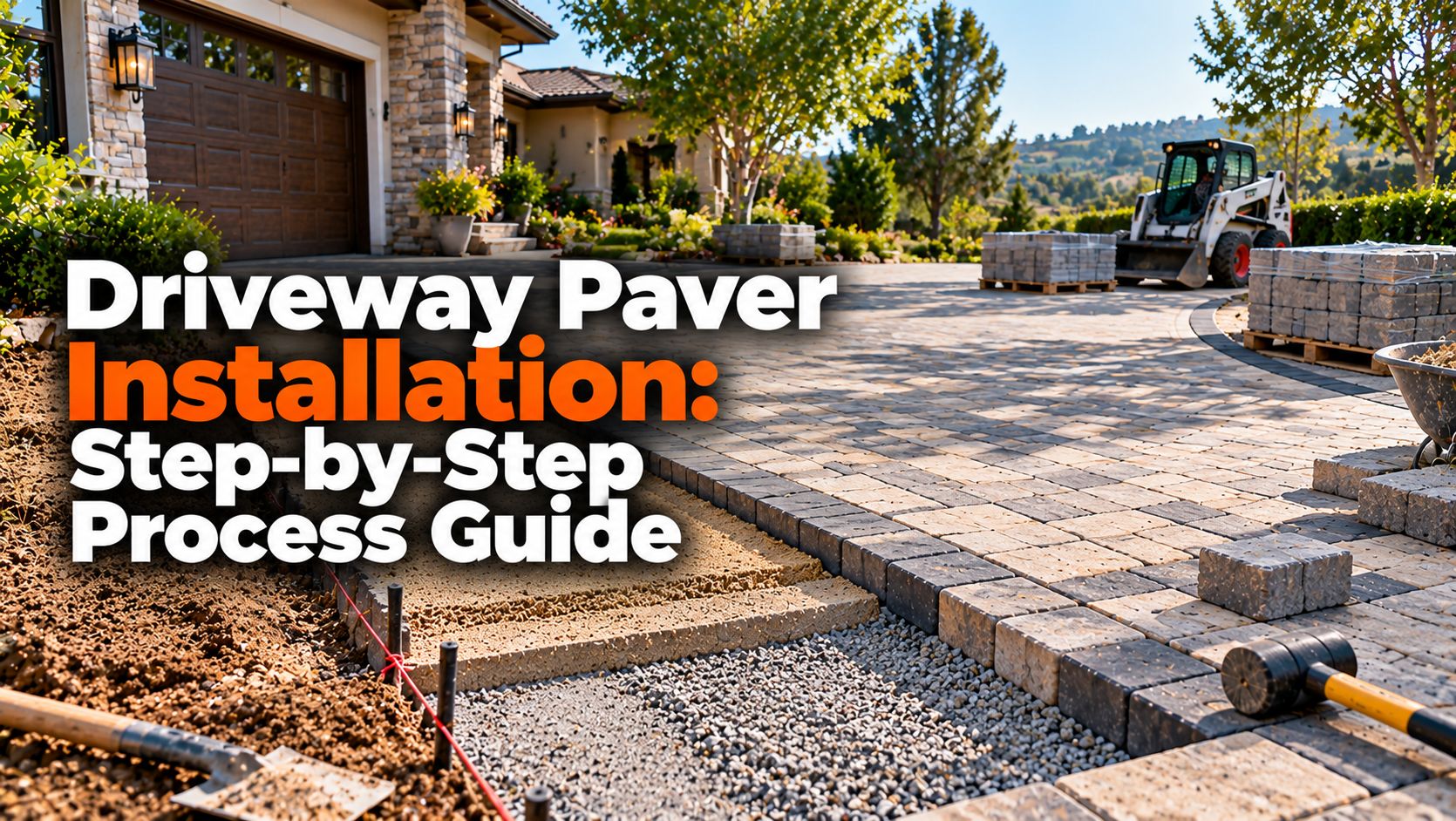
Your driveway is cracked, stained, or simply too narrow, and you want to know what replacing it with pavers really involves. Driveway paver installation depends far more on what sits underneath the surface than on the pavers themselves. Below, we explain how to install driveway pavers from start to finish so you know what a well-built job looks like. If you're weighing driveway pavers in Los Angeles, these steps will help you ask better questions before anyone breaks ground.
What Does Driveway Paver Installation Involve?
A paver driveway is built in layers. Compacted soil sits at the bottom, followed by a crushed stone base, a thin bed of leveling sand, the pavers, and joint sand that locks everything together. Most residential projects take several days to a week or more, depending on size, access, and site conditions.
How to Lay Pavers for a Driveway, Step by Step
-
Plan the layout and drainage. Mark the edges and set a slope so water runs away from the garage and house. The exact grade depends on your lot.
-
Excavate. The old surface and soil are removed to make room for the base, sand, and pavers. Total depth often lands around 10 to 14 inches, though it varies with soil and paver thickness.
-
Compact the subgrade. Soft or uneven spots are corrected, then the soil is compacted with a plate compactor.
-
Install the base. Crushed aggregate goes in thin layers, and each layer is compacted. A driveway carries vehicle weight, so its base is thicker than a patio's.
-
Screw the bedding sand. A layer about one inch thick is leveled with screed rails and left undisturbed.
-
Set the pavers. They go down tight in the chosen pattern. Herringbone is a common driveway choice because it interlocks and resists shifting under turning tires.
-
Cut, restrain, and finish. Edge pieces are cut to fit, edge restraints are secured, the surface is compacted, and joint sand is swept in. Sealing is optional and depends on the paver type.
Rushing any of these stages is where most failures in driveway paver installation begin.
Choosing Stone Pavers for a Driveway
A stone pavers driveway can use concrete pavers, clay brick, or natural stone such as granite or travertine. Concrete pavers are the most common choice because they come in many shapes and are made for vehicle loads. Natural stone looks distinctive but usually costs more and needs careful selection for thickness and slip resistance. Lighter colors tend to stay cooler under Southern California sun.
A stone pavers driveway only lasts if the base beneath it is built for vehicle loads, no matter how good the surface looks.
Planning a Driveway Extension With Pavers
Widening a driveway or adding a parking pad sounds simple, but the new section has to tie into the old one. A driveway extension with pavers works best when the new base matches the depth and drainage of the existing driveway and the seam between old and new is well supported.
Check local rules first. Width limits, setbacks, and work near the curb or sidewalk may require a permit in the City of Los Angeles. A driveway extension with pavers can also change where water flows, so confirm runoff won't head toward a neighbor's property.
Los Angeles Factors That Change the Plan
-
Sun and heat: Surface color and material affect how hot the driveway gets.
-
Soil: Some neighborhoods have clay that swells and shrinks with moisture, and hillside lots need extra attention to drainage.
-
Rain: Storms are infrequent but can be heavy, so runoff has to go somewhere sensible.
These factors shape every driveway paver installation here, which is why a site visit matters more than a generic quote.
At My Outdoor Builder, we handle this kind of planning as part of our Paver Installation Services in Los Angeles.
Can You Do It Yourself?
Yes, if you have the equipment and patience. Learning how to install a stone driveway yourself mostly comes down to compaction gear, heavy materials, and precise leveling. Most DIY problems trace back to a thin or poorly compacted base, which shows up later as ruts and dips. If you're researching how to install a stone driveway on your own, a small walkway is a sensible first project.
Mistakes That Cause Problems Later
-
A shallow or under-compacted base
-
Too little slope for drainage
-
Missing edge restraints, which lets pavers drift apart
-
Too little joint sand
Each is easy to prevent during driveway paver installation and costly to fix afterward.
Next Step for Los Angeles Homeowners
A paver driveway holds up because of what you can't see after the job is done. Before hiring anyone, ask how deep they plan to excavate, what base material they use, and how water will drain. Clear answers to those three questions tell you most of what you need to know.
If you'd like a second opinion on your site, we can walk through layout, drainage, and materials with you. For driveway paver installation at your property, we'll look at the lot and explain what the work would involve. Ready to take the next step?
Request a Free Same-Day Estimate, and we'll talk through your options.
Frequently Asked Questions
How long does a driveway paver installation take?
A typical residential driveway takes several days to a week or more. Size, access, weather, and soil conditions all affect the schedule.
How do I install driveway pavers so they don't sink?
Focus on the base. Proper depth, compacted aggregate in layers, and good drainage prevent most settling.
Can pavers go over my existing driveway?
Usually the old surface is removed so the base, height, and drainage can be built correctly. A stable slab is sometimes kept, but it changes the finished height.
Do I need a permit?
It depends on the scope. New or widened curb access, width limits, and work in the public right-of-way may require approval, so check with the city first.
How do I maintain a paver driveway?
Sweep regularly, refill joint sand when it thins out, clean stains promptly, and reseal if your pavers call for it.

 English
 Arabic
 French
 Spanish
 Portuguese
 Deutsch
 Turkish
 Dutch
 Italiano
 Russian
 Romaian
 Greek