


Swarm Drones: Autonomous Coordination Reshapes Modern Defense Systems
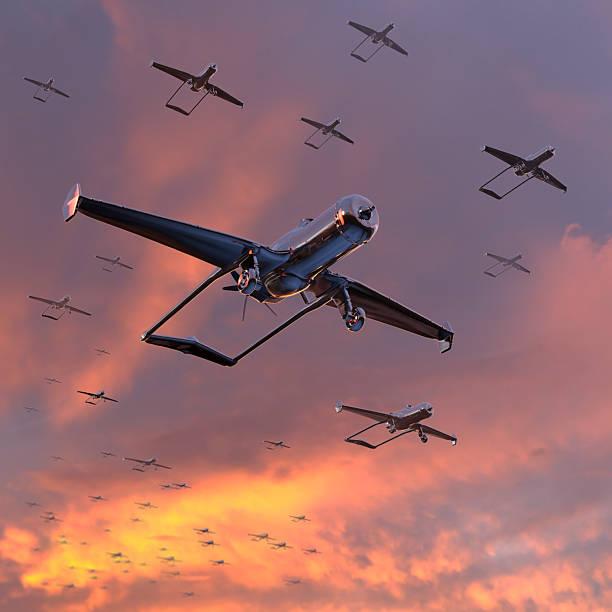
Swarm drones are emerging as an important component of autonomous defense technology, combining multiple unmanned aerial systems with coordinated communication, sensing, and decision-making capabilities. Unlike conventional single-drone operations, swarm architectures allow groups of platforms to work collaboratively toward shared objectives. Developments in artificial intelligence, edge computing, secure communications, and autonomous navigation are expanding the potential applications of these systems across modern defense operations.
A comprehensive market assessment by Markntel Advisor reveals that the Global Swarm Drones Market was valued at USD 950 million in 2025 and is projected to grow from USD 1.128 billion in 2026 to USD 2.8592 billion by 2032, registering a CAGR of 16.77% during 2026–2032. The swarm drones market analysis indicates that North America is expected to account for approximately 36% of the global market in 2026, while autonomous technology is projected to represent about 68% and the military & defense segment approximately 82%.
Defense Modernization Accelerates Autonomous Adoption
Rising defense procurement and military modernization programs are among the primary factors supporting the adoption of swarm drones. Defense organizations are increasingly examining autonomous systems for distributed sensing, intelligence, surveillance, reconnaissance, electronic warfare, and other coordinated missions.
The U.S. Department of Defense's Replicator initiative illustrates this broader shift toward scalable autonomous capabilities. The program was established to accelerate the fielding of thousands of attritable autonomous systems across multiple domains. The initiative also emphasizes scalable production and software capabilities that enable autonomous systems to operate collaboratively.
Such programs are contributing to a wider defense technology environment in which autonomy, software-defined architectures, and distributed systems are becoming increasingly important. The emphasis is moving from individual unmanned platforms toward connected systems capable of coordinating information and activities across multiple assets.
Autonomous Technology Leads the Transition
Autonomous systems are projected to account for approximately 68% of the global swarm drones market in 2026, making this the leading technology segment. The adoption of autonomy is being supported by advances in artificial intelligence, decentralized decision-making, edge computing, and collaborative mission planning.
Autonomous swarm architectures can allow multiple drones to share information and coordinate activities with reduced dependence on continuous operator input. This capability can be particularly relevant to large-scale operations where managing individual platforms separately would place greater demands on human operators.
The development of autonomous technologies is also linked to improvements in navigation, sensing, communication, and mission-management software. These supporting technologies are important because effective coordination requires individual platforms to maintain awareness of their operating environment while remaining connected to the wider swarm.
Collaborative Autonomy Is Reshaping System Design
Collaborative autonomous operations are becoming a defining trend in the development of swarm drones. Instead of relying on centralized control alone, newer architectures increasingly emphasize distributed intelligence, secure mesh communications, and coordinated decision-making.
The U.S. Department of Defense's autonomous systems initiatives have highlighted the importance of software enablers capable of coordinating hundreds or thousands of unmanned assets within secure environments. These developments demonstrate how software infrastructure is becoming as important as the physical drone platforms themselves.
Open and interoperable architectures can also allow aerial, maritime, and ground-based autonomous systems to exchange information. This creates opportunities for multi-domain operations in which different types of unmanned platforms contribute data or capabilities to a broader autonomous network.
Military and Defense Remain the Dominant End User
The military and defense segment is projected to account for approximately 82% of the global swarm drones market in 2026. Defense organizations are investing in autonomous systems to strengthen distributed sensing, surveillance, electronic warfare capabilities, and force protection while reducing exposure of personnel to certain operational risks.
The dominance of this segment is also supported by government-backed modernization programs. The U.S. Department of Defense's FY2026 budget request includes significant funding for counter-unmanned systems, while its broader autonomy initiatives continue to address production capacity, technology development, system integration, and open architectures.
This investment environment is encouraging manufacturers and technology companies to develop systems that can operate across different platforms and environments. It is also increasing demand for supporting technologies such as AI processors, secure communications, sensors, propulsion systems, and autonomous mission-management software.
North America Maintains a Leading Position
North America is projected to dominate the global swarm drones market in 2026, accounting for approximately 36% of total market share. The region's position is supported by substantial defense spending, government investment in autonomous technologies, and the presence of established aerospace and defense companies.
The United States has been particularly active in developing scalable autonomous systems. The Replicator initiative was designed to accelerate the fielding of all-domain attritable autonomous systems, while subsequent efforts have expanded attention toward counter-unmanned systems and resilient autonomy.
The region also benefits from an ecosystem involving defense agencies, technology companies, research organizations, and software developers. Continued investment in AI-enabled coordination, autonomous mission planning, and multi-platform integration is expected to support regional development.
Production Bottlenecks Create a Major Challenge
Despite strong technological development, scaling swarm drones from prototypes to large-volume production remains challenging. Manufacturing requires access to semiconductors, secure communication modules, AI processors, electro-optical sensors, propulsion systems, and other specialized components.
Supply-chain constraints and military qualification requirements can increase production timelines and costs. These challenges become more significant when defense organizations seek large numbers of interoperable systems rather than limited quantities of individually operated platforms.
The U.S. defense industrial base is responding through programs focused on increasing manufacturing capacity and strengthening supply-chain resilience. The Department of Defense has identified production scalability and resilient supply chains as important components of its broader approach to autonomous and unmanned systems.
AI and Edge Computing Expand Capabilities
Artificial intelligence is becoming central to swarm coordination because autonomous systems must process information quickly and respond to changing conditions. Edge computing can allow data processing closer to the platform, reducing dependence on centralized processing and potentially improving responsiveness.
Future developments are expected to focus on trusted AI, resilient navigation, modular payload integration, and secure communications. These capabilities can improve the ability of autonomous systems to operate in environments where connectivity may be disrupted or where centralized control is less practical.
The technology is also moving toward greater interoperability. Swarm architectures that can integrate multiple types of unmanned systems may support broader applications across air, land, and maritime environments.
The Technology Is Expanding Beyond Individual UAVs
Recent developments indicate that swarm autonomy is no longer limited to aerial platforms. The market assessment highlights growing interest in coordinated unmanned systems across multiple domains, including maritime applications.
In May 2026, ASELSAN unveiled the TUFAN unmanned surface vehicle, designed to support autonomous maritime operations and coordinated swarm missions. The development illustrates how swarm concepts are extending into naval environments and contributing to a broader multi-domain autonomy ecosystem.
This expansion increases the importance of common communication protocols, autonomous mission management, and interoperable architectures. It also creates opportunities for technology providers involved in software, sensors, communications, navigation, and autonomous control systems.
Outlook for Swarm Drone Development
The global swarm drones market is projected to reach USD 2.8592 billion by 2032 as defense organizations continue investing in autonomous and collaborative unmanned technologies. Autonomous systems are expected to remain central to this expansion, supported by advances in artificial intelligence, edge computing, secure communications, and distributed decision-making.
At the same time, commercialization and large-scale deployment will depend on overcoming manufacturing bottlenecks, supply-chain constraints, cybersecurity risks, and system-integration challenges. The evolution of open architectures and scalable production processes could help address some of these barriers.
Overall, swarm drones are becoming part of a broader transition toward distributed autonomous systems. Their development reflects the convergence of unmanned platforms, AI, software, communications, and defense modernization, with future applications increasingly shaped by the ability to coordinate multiple systems reliably across complex operating environments.

 English
 Arabic
 French
 Spanish
 Portuguese
 Deutsch
 Turkish
 Dutch
 Italiano
 Russian
 Romaian
 Portuguese (Brazil)