


How the Right Marine Lubricant Helps Reduce Engine Maintenance
Marine engines and industrial turbine systems operate under demanding conditions. High temperatures, heavy loads, continuous operation, and contamination can increase wear and lead to costly maintenance. Choosing the right lubricant helps protect critical components, maintain reliable performance, and reduce avoidable downtime.
The right marine lubricant reduces engine maintenance by minimizing friction, controlling wear, supporting heat management, and helping prevent harmful deposits. When combined with regular inspections and oil analysis, proper lubrication can extend equipment service life and help businesses manage maintenance costs.
For marine operators and industrial businesses in the UAE, selecting a suitable product and working with a reliable lubricant supplier in UAE are important steps towards maintaining equipment efficiently.
Why Is the Right Marine Lubricant Important?
Marine engines operate in challenging environments where lubrication plays a vital role in protecting moving components. Without an appropriate lubricant, friction can increase, operating temperatures may rise, and internal parts can experience accelerated wear.
A suitable lubricant creates a protective film between moving surfaces, helping them operate smoothly while reducing direct metal-to-metal contact. Depending on its formulation and intended application, it can also help control deposits and protect equipment against premature deterioration.
However, not all lubricants are interchangeable. Marine diesel engines, auxiliary machinery, and gas turbines have different lubrication requirements. Choosing the correct product depends on the equipment design, operating conditions, viscosity requirements, and manufacturer recommendations.
5 Ways the Right Lubricant Helps Reduce Engine Maintenance
1. Reduces Friction and Wear
Friction is a major contributor to mechanical wear. When moving components are not adequately lubricated, their surfaces can deteriorate over time, increasing the risk of equipment damage.
The correct lubricant forms a protective layer between moving parts, helping reduce friction and maintain smooth operation. This can support longer component life and reduce the frequency of wear related repairs.
For vessels and industrial facilities operating on tight schedules, preventing unnecessary repairs can also help avoid operational delays.
2. Supports Temperature Control
Marine engines and turbine systems generate heat during operation. Excessive heat can accelerate lubricant degradation and place additional stress on equipment components.
A lubricant with the correct viscosity and thermal stability helps maintain an effective protective film under the intended operating conditions. This supports reliable operation and helps protect components from excessive wear.
Lubrication alone, however, cannot control all temperature-related problems. Cooling systems, proper oil circulation, and regular equipment inspections remain essential.
3. Helps Prevent Deposits and Contamination
Dust, wear particles, oxidation products, and other contaminants can affect lubricant performance. If left unmanaged, contamination may contribute to deposits, restricted oil flow, and increased component wear.
Regular oil-condition checks help maintenance teams identify changes before they develop into more serious problems. Where appropriate, laboratory oil analysis can assess viscosity, oxidation, contamination, and wear metals.
These findings help operators make informed maintenance decisions rather than relying only on fixed schedules or visual inspections.
4. Extends Equipment Service Life
Replacing damaged engine components can be expensive, particularly when spare parts, labor, and vessel downtime are considered.
Using a lubricant that meets the equipment manufacturer's specifications helps protect internal surfaces and maintain reliable operation. Following recommended oil-change intervals and keeping the lubrication system clean further supports equipment longevity.
The result depends on several factors, including operating conditions, lubricant quality, equipment design, and maintenance practices. No lubricant can eliminate wear entirely, but the right choice can help manage it.
5. Reduces Unplanned Downtime
Unexpected equipment failures can disrupt vessel schedules, increase repair expenses, and affect business operations.
A well-planned lubrication program helps reduce these risks through correct product selection, routine inspections, and timely oil-condition monitoring. Identifying abnormal wear or contamination early can give maintenance teams an opportunity to investigate problems before a major breakdown occurs.
For UAE businesses involved in marine operations and industrial maintenance, better equipment reliability can support more predictable maintenance planning.
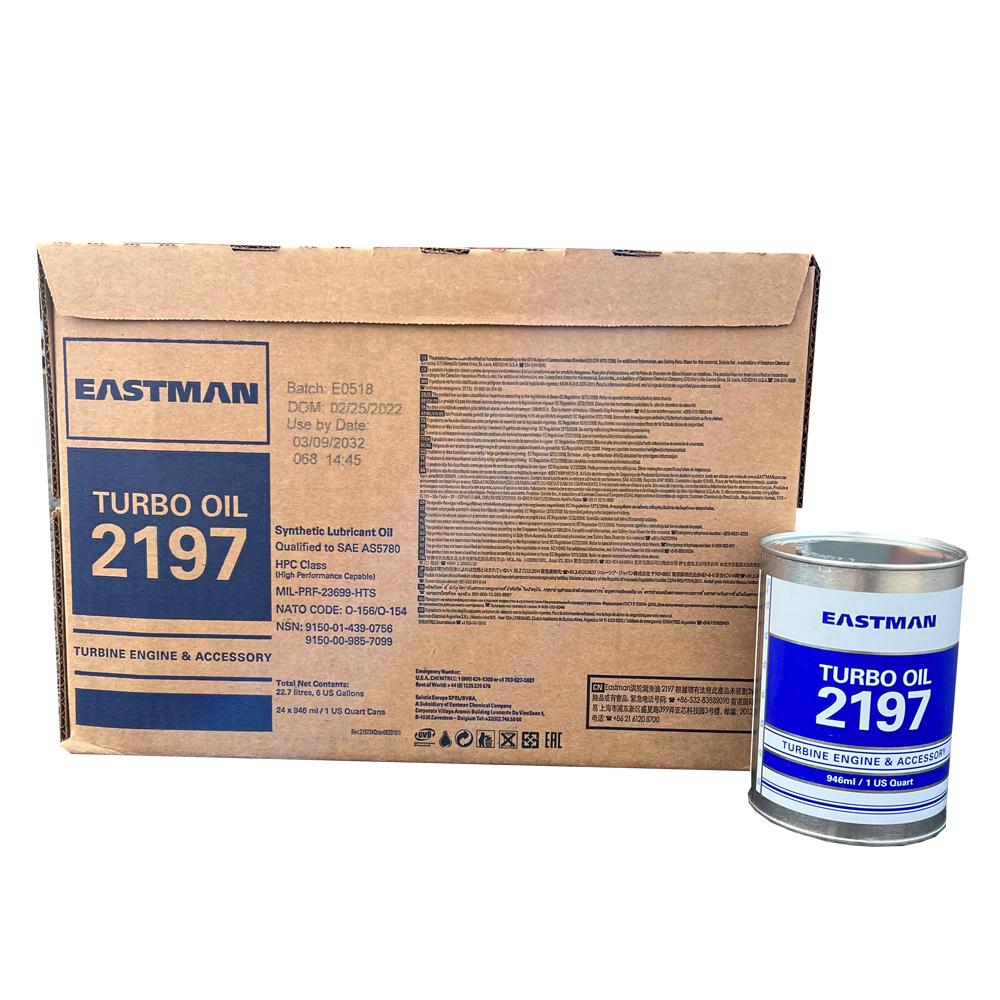
Understanding Eastman Turbo Oil 2197
Eastman Turbo Oil 2197 should be used only in equipment and applications for which its current technical specifications confirm suitability. The word “marine” does not automatically mean that a particular turbine oil is appropriate for a marine diesel engine.
Before selecting Eastman Turbo Oil 2197, review the manufacturer's latest technical data sheet and confirm the recommended applications, viscosity characteristics, and relevant equipment requirements.
This distinction is important because turbine oils and marine engine oils can serve different purposes. A conventional marine diesel engine may require an oil formulated to address combustion-related contamination, soot, and other engine-specific conditions. A turbine lubrication system may have different requirements.
If you are sourcing Eastman Turbo Oil 2197, consult a knowledgeable lubricant supplier in UAE to verify the correct application, product documentation, and availability before placing an order.
How to Choose a Reliable Lubricant Supplier in UAE
Finding the right supplier is about more than comparing prices. The supplier should help you obtain a product that matches your equipment's technical requirements.
Consider these five factors when choosing a lubricant supplier:
-
Product authenticity: Request suitable documentation and product traceability.
-
Technical support: Confirm that the supplier understands your equipment's lubrication requirements.
-
Product availability: Reliable stock and delivery arrangements help prevent maintenance delays.
-
Technical documentation: Request the latest technical data sheet and safety data sheet.
-
Consistent supply: Discuss repeat orders and stock planning if your business has ongoing requirements.
Working with a dependable supplier can simplify purchasing, improve product selection, and support a more organized maintenance program.
Best Practices for Reducing Marine Engine Maintenance Costs
Choosing the correct lubricant is only the beginning. To get the best results, combine proper lubrication with consistent maintenance.
Follow the equipment manufacturer's recommended oil-change intervals. Check oil levels, inspect for leaks, maintain filters, and investigate unusual temperature or pressure readings. Where recommended, use oil analysis to monitor lubricant condition and identify early signs of contamination or abnormal wear.
Avoid mixing different lubricants unless compatibility has been confirmed. Keep records of oil changes, operating hours, oil-analysis results, and maintenance activities. These records help identify recurring issues and support better maintenance planning.
Most importantly, never extend oil-change intervals simply to reduce costs unless the equipment manufacturer's guidance and appropriate oil-condition monitoring support that decision.
Conclusion
The right marine lubricant helps reduce engine maintenance by minimizing friction, controlling wear, supporting heat management, and helping maintenance teams identify potential problems early. When combined with regular inspections and proper oil monitoring, it can support equipment reliability and reduce avoidable downtime.
For marine operators and industrial businesses in the UAE, choosing a lubricant that matches the equipment's specifications is essential. If you are considering Eastman Turbo Oil 2197, verify its intended application and technical requirements before purchasing.
Frequently Asked Questions
1. How does the right marine lubricant reduce engine maintenance?
The right marine lubricant reduces friction, protects moving components, and helps manage heat and contamination. With proper oil monitoring and regular maintenance, it can help minimize wear-related repairs and prevent avoidable downtime.
2. What is Eastman Turbo Oil 2197 used for?
The intended applications of Eastman Turbo Oil 2197 should be verified using the latest manufacturer technical data sheet. Always confirm equipment compatibility and the required specifications before use.
3. How often should marine engine oil be changed?
Oil-change intervals depend on the engine type, operating hours, working conditions, lubricant specifications, and manufacturer recommendations. Regular oil analysis, where appropriate, can help assess oil condition and support maintenance decisions.
4. How can I find a reliable lubricant supplier in UAE?
Choose a supplier that offers genuine products, technical documentation, application guidance, dependable availability, and suitable delivery arrangements. Verify that the recommended lubricant meets your equipment manufacturer's specifications.

 English
 Arabic
 French
 Spanish
 Portuguese
 Deutsch
 Turkish
 Dutch
 Italiano
 Russian
 Romaian
 Portuguese (Brazil)