


Why Do Commercial Flat Roof Drainage Problems Develop, and How Can They Be Fixed?
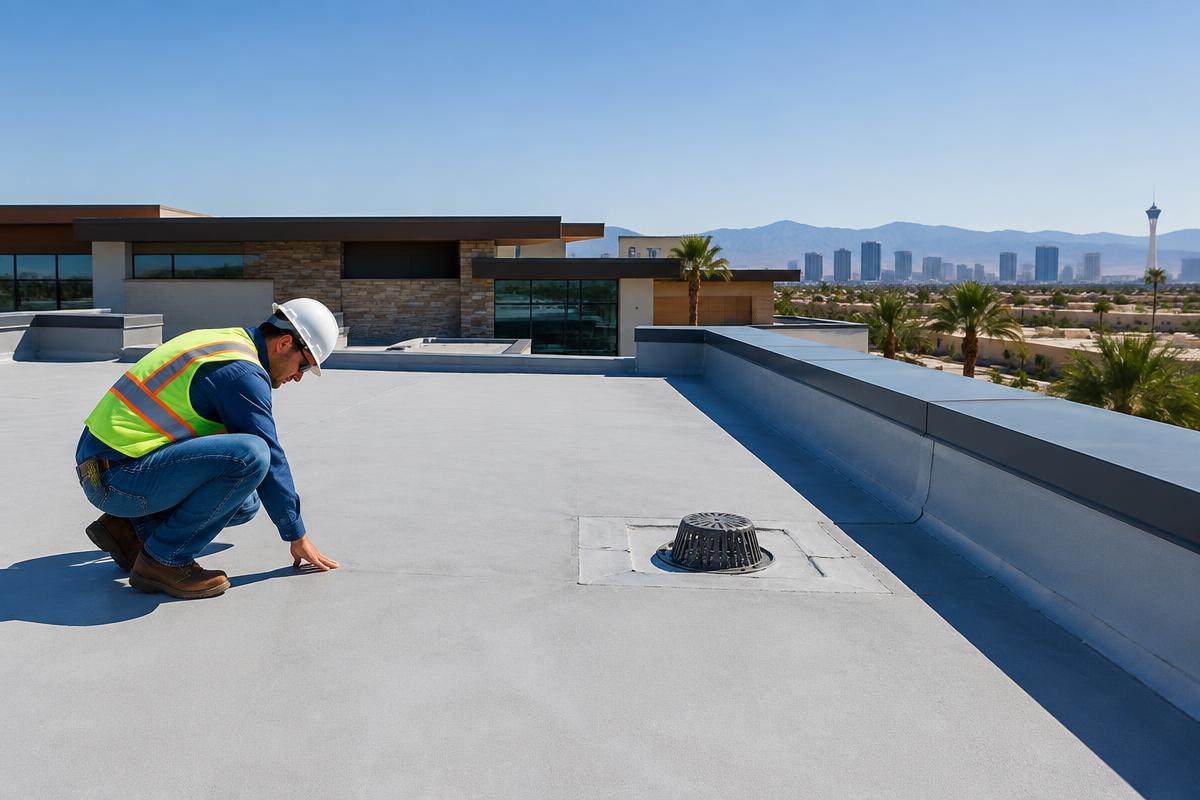
Commercial buildings depend on a roof that can manage rainwater without allowing moisture to reach insulation, ceilings, electrical systems, or valuable equipment. Although flat roofs are designed with some degree of slope, their drainage systems can struggle when outlets become blocked, surfaces deteriorate, or water collects in low areas. Recognizing these issues early helps property owners make informed maintenance decisions and reduce the risk of recurring leaks.
For facility managers, landlords, and commercial property owners in Las Vegas, understanding drainage performance is especially important when maintaining a building through prolonged heat, occasional heavy rainfall, and changing roof conditions. A small drainage issue may appear harmless during dry weather, yet become much more serious when water accumulates on the roof.
How Does Drainage Work on a Commercial Flat Roof?
A commercial flat roof is not necessarily completely level. Most systems rely on carefully designed slopes that direct rainwater toward drains, scuppers, gutters, or other designated discharge points. The roof membrane, flashing, drainage outlets, and underlying structure work together to protect the building.
When the system operates correctly, water moves away from vulnerable seams and penetrations rather than remaining on the roof surface. Drainage performance depends on more than the visible roof covering. The condition of the membrane, the placement of outlets, the surrounding flashing, and the design of the roof all influence how effectively water is removed.
Even a durable roofing system can experience problems when debris blocks an outlet or a drain connection becomes damaged. Similarly, repairs that address the visible surface without correcting the underlying drainage issue may leave the original cause unresolved.
What Causes Water to Collect on a Commercial Roof?
Several conditions can interfere with proper drainage. Identifying the underlying cause is important because different problems require different corrective measures.
Blocked drains and scuppers
Leaves, dust, packaging debris, and other materials can accumulate around drainage openings. When an outlet becomes restricted, water may collect faster than it can escape. Scuppers can also become obstructed or develop deterioration around their edges.
Routine inspections help identify these restrictions before substantial water accumulation occurs. Drainage openings should be checked as part of a planned maintenance program, particularly after windy conditions or storms.
Low areas and inadequate slope
A roof may develop depressions as materials age, insulation changes shape, or structural movement affects the surface. Water naturally gathers in these lower areas instead of flowing toward the intended outlets.
Some shallow water collection may be temporary, but persistent ponding deserves attention. Repeated accumulation can expose seams, flashing, and membrane surfaces to prolonged moisture. A qualified roofing professional can determine whether localized corrections are appropriate or whether the drainage design requires a more extensive solution.
Deteriorated roofing materials
Membranes, sealants, flashing, and roof coatings can deteriorate over time. Open seams or damaged transitions may allow water to enter the roof assembly, especially when water remains near vulnerable details.
High temperatures and repeated expansion and contraction can contribute to wear. Rooftop equipment installations and service visits may also introduce damage if the membrane is punctured or protective details are disturbed.
Poorly maintained drainage components
Drainage systems require attention beyond simply clearing visible debris. Loose components, damaged connections, deteriorated seals, and poorly protected penetrations may affect the roof's overall performance.
A recurring leak near a drain should therefore prompt an inspection of the surrounding assembly rather than an assumption that the outlet alone is responsible.
Why Is Ponding Water a Concern for Commercial Properties?
Persistent standing water can create several maintenance concerns. Its effect depends on the depth, duration, roof design, materials, and condition of the building.
First, prolonged moisture exposure can reveal weaknesses in seams and flashing. Water may enter through a small opening and travel beneath the membrane before appearing on an interior ceiling. As a result, the visible stain may be some distance from the actual entry point.
Second, accumulated water adds weight to the roof structure. Commercial roofs are designed for specified loads, but unexpected water accumulation can become a concern when drainage is impaired or structural components are already compromised. Significant ponding, sagging, or other signs of structural distress warrant prompt professional assessment.
Third, recurring moisture can damage insulation and interior finishes. Wet insulation may lose performance, while continuing leaks can affect ceiling tiles, stored inventory, and business operations.
Property managers should avoid treating every puddle as proof of structural failure. Instead, they should document recurring areas, note how long water remains after rainfall, and arrange an appropriate inspection when the pattern persists.
How Can Property Managers Diagnose Drainage Issues?
A useful inspection begins with observations rather than assumptions. Building staff can record where water collects, whether drains appear obstructed, and whether interior leaks occur after particular weather conditions.
Photographs taken from safe, accessible locations can help establish whether a problem is recurring. Maintenance records should also note previous repairs, roof coating applications, and any work involving rooftop HVAC units or other equipment.
However, roof access presents fall and electrical hazards, and wet membrane surfaces may be slippery. Untrained staff should not walk on potentially unsafe roof areas or attempt repairs at height.
A professional inspection should evaluate the roof surface, drainage outlets, seams, flashing, penetrations, and surrounding materials. Depending on the circumstances, the contractor may also need to investigate concealed moisture or assess whether the roof's slope is adequate.
This broader evaluation matters because water entering at one location may travel through the roof assembly before becoming visible inside the building.
Which Repairs Can Improve Commercial Roof Drainage?
The appropriate repair depends on the cause, the roof system, and the extent of any damage. A surface-level treatment is not a substitute for correcting a drainage defect.
Clearing and repairing drainage outlets
Removing obstructions can restore normal water movement when debris is the main issue. If drains or scuppers are damaged, repairs may be necessary to restore their function and protect the surrounding membrane and flashing.
Property managers should also consider whether the existing maintenance schedule is sufficient for the building's surroundings and debris exposure.
Correcting localized low areas
When ponding results from depressions or uneven surfaces, a roofing professional may recommend localized corrections or a more extensive redesign of drainage pathways. The correct approach depends on the roof assembly and the underlying cause.
Simply filling a low area without evaluating its construction can create additional problems or redirect water toward another vulnerable location.
Repairing seams, flashing, and membrane damage
Where moisture intrusion results from deteriorated seams, damaged membrane, or defective flashing, targeted repairs may restore the affected area. The repair materials must be compatible with the existing roofing system.
For buildings with extensive deterioration, widespread moisture damage, or recurring failures, a broader rehabilitation or replacement assessment may be appropriate.
Property managers investigating Commercial Flat Roof Drainage Problems should look for a solution that addresses both water movement and the condition of the roof assembly. The objective is to understand why the water accumulates and select repairs suited to the actual cause, rather than repeatedly treating symptoms.
How Does Preventive Maintenance Reduce Future Problems?
Preventive maintenance helps property owners discover developing issues before they become more disruptive. A practical program should include scheduled roof inspections, drainage outlet checks, observations after significant rainfall, and documentation of completed repairs.
Inspection frequency should reflect the building's roof design, age, surrounding environment, manufacturer guidance, and previous maintenance history. There is no single schedule that suits every commercial property.
Maintenance records should identify recurring ponding areas, deteriorating sealants, damaged flashing, and evidence of interior moisture. Tracking these observations over time can help managers distinguish an isolated problem from a persistent drainage defect.
For properties in Las Vegas, maintenance planning should account for the combination of prolonged sun exposure and occasional intense rainfall. Dry conditions can make an existing defect less noticeable, so the absence of an active leak does not necessarily confirm that the roof is performing properly.
When Should a Commercial Roof Receive Professional Attention?
Professional evaluation is advisable when ponding repeatedly returns, interior stains continue to spread, water enters around rooftop equipment, or drainage outlets show visible damage. A sudden leak affecting business operations also requires timely attention.
Other warning signs include deteriorated seams, loose flashing, damaged roof coatings, and standing water that remains longer than expected under the roof's design conditions. Property owners should not wait for extensive interior damage before investigating a recurring issue.
When comparing repair proposals, ask the contractor to explain the suspected cause, the proposed corrective work, the materials involved, and any limitations of the recommended repair. Photographs and written findings can help property managers understand the scope of work and plan future maintenance.
Conclusion
Commercial flat roof drainage problems are often easier to manage when their causes are identified early. Blocked outlets, inadequate slopes, deteriorated materials, and damaged flashing can all interfere with water movement and increase the risk of leaks.
A reliable maintenance strategy combines routine observations, safe professional inspections, appropriate repairs, and clear documentation. By focusing on the underlying cause instead of repeatedly addressing visible symptoms, commercial property owners can make more informed decisions about roof maintenance and protect their buildings against avoidable moisture-related damage.
More details are available at: Local Business Directory

 English
 Arabic
 French
 Spanish
 Deutsch
 Turkish
 Dutch
 Italiano
 Russian
 Romaian
 Portuguese (Brazil)
 Greek