


How to Choose the Best Laundry Franchise in India: A Complete Guide
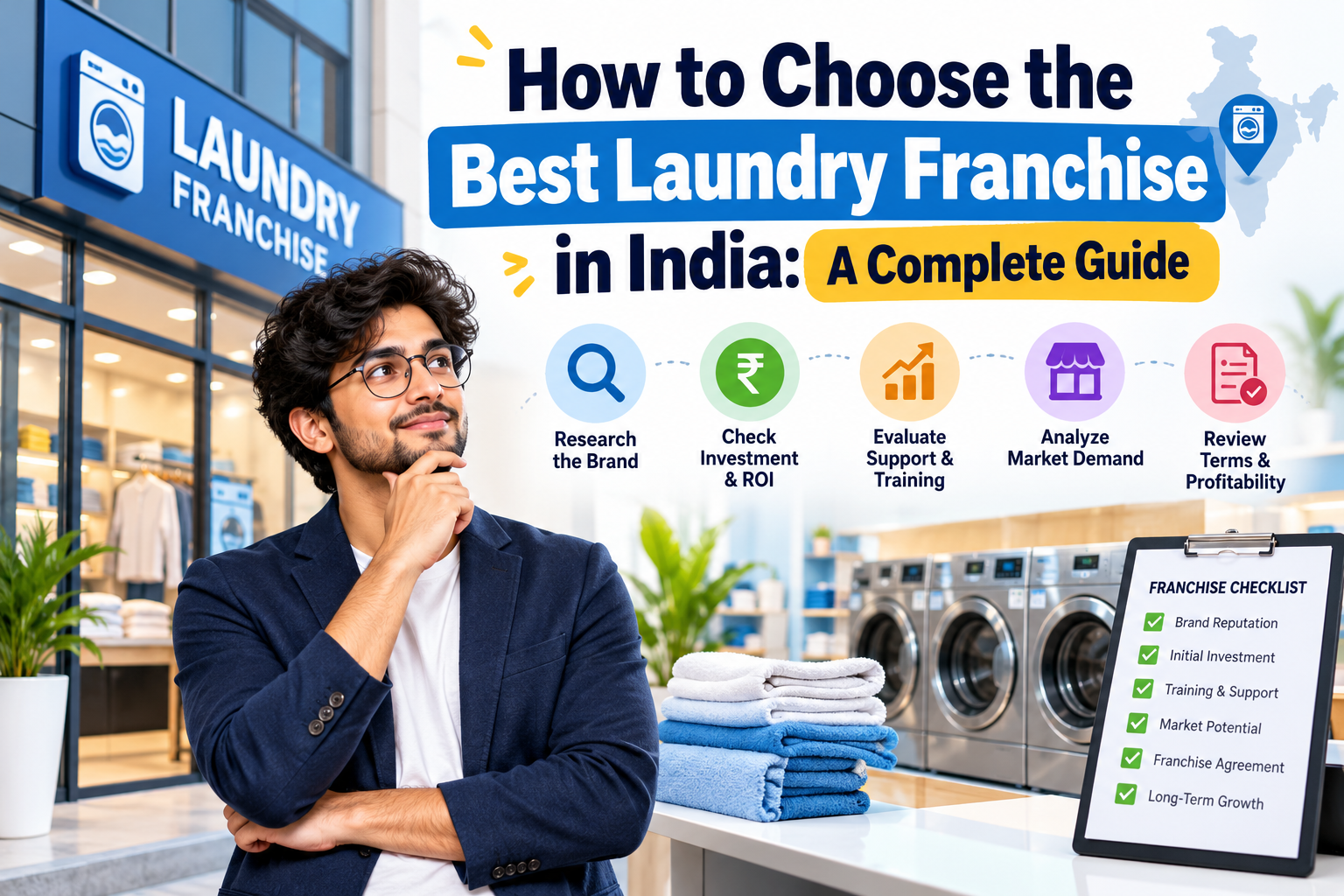
Starting a laundry business can be an attractive opportunity for entrepreneurs looking to enter the service industry. With busy lifestyles, growing urban populations, and increasing demand for professional garment care, many customers prefer organised laundry services over washing clothes at home. This creates opportunities for businesses that offer washing, ironing, dry cleaning, and specialised fabric care.
However, choosing the right brand requires more than comparing franchise fees. Entrepreneurs need to evaluate the investment, business model, location, operational support, and potential demand before making a decision.
This guide explains the key factors to consider when selecting a franchise and how to identify an opportunity that fits your budget and business goals.
1. Understand the Laundry Franchise Business Model
Before investing, understand how the business will operate. Different brands offer different models depending on the services, infrastructure, and level of investment required.
The main models include:
-
Collection and delivery model: Customers place orders, and the outlet collects garments before sending them to a central processing facility. This model may require less equipment at the outlet.
-
Store-based laundry model: The outlet handles customer orders, garment processing, ironing, and delivery. It may require more space, machinery, and trained staff.
-
Laundry and dry cleaning franchise: This model offers regular washing alongside specialised cleaning for suits, sarees, jackets, curtains, and delicate fabrics.
-
Commercial laundry model: Businesses serve hotels, hospitals, restaurants, hostels, and other organisations with recurring laundry requirements.
Compare these options according to your budget, available space, and preferred level of involvement. A smaller collection centre may suit a first-time entrepreneur, while an established commercial setup may require greater investment and operational experience.
2. Calculate the Total Investment and Operating Costs
The initial franchise fee is only one part of the investment. You must understand the complete cost of opening and running the business.
Common expenses include:
-
Franchise or brand licensing fees
-
Shop rent and security deposit
-
Interior design, furniture, and signage
-
Washing machines, dryers, and dry-cleaning equipment
-
Water supply, drainage, electricity, and installation
-
Staff salaries and training
-
Packaging materials and cleaning supplies
-
Delivery arrangements and local marketing
-
Working capital for the initial months
Ask the franchisor for a detailed cost breakdown and clarify which expenses are included in the quoted investment.
You should also calculate monthly operating costs and estimate how many orders are needed to cover them. For example, if your fixed monthly expenses are ₹1 lakh and your contribution margin is 50%, you would need approximately ₹2 lakh in monthly sales to cover those expenses, before accounting for taxes, financing costs, and other excluded items.
Avoid choosing a brand based only on low entry costs. A slightly higher initial investment may be justified if the business model offers better training, efficient operations, and reliable customer support.
3. Research the Brand's Reputation and Experience
A recognised brand can help attract customers, but brand visibility alone does not guarantee business success. Research the company's experience, service quality, and franchise network before signing an agreement.
Check the following:
-
How long has the company operated in the laundry industry?
-
How many outlets are currently active?
-
Are existing franchise partners satisfied with the support?
-
Does the brand have consistent service standards?
-
How does it handle customer complaints and damaged garments?
-
Are its services competitively priced in your target market?
Speak directly with existing franchise owners, preferably in cities or neighbourhoods similar to your proposed location. Ask about actual customer demand, monthly expenses, staff requirements, operational difficulties, and the time taken to build a regular customer base.
When evaluating the best laundry franchise in India, rely on verifiable business information rather than promotional claims or projected earnings alone.
4. Evaluate the Location and Local Market Demand
Location plays an important role in the success of a laundry outlet. A suitable area should have enough potential customers, convenient access, and manageable operating costs.
Consider locations near:
-
Residential apartments and gated communities
-
Working professionals and student accommodation
-
Hostels, paying guest facilities, and co-living spaces
-
Hotels, guesthouses, and serviced apartments
-
Commercial areas with offices and regular foot traffic
Study the local competition before making a commitment. Identify nearby laundries, their pricing, delivery times, service quality, and customer reviews.
Also consider whether residents in the area are willing to pay for professional laundry services. In some markets, customers may prioritise affordable washing, while others may demand premium dry cleaning, shoe cleaning, or curtain care.
A location with strong demand and reasonable rent is generally more attractive than an expensive shop in a high-visibility area with limited repeat customers.
5. Compare Services, Equipment, and Quality Standards
The services offered by a brand influence its customer base and revenue opportunities. Basic washing and ironing can generate regular orders, while specialised services may help increase the average order value.
Look for a business model that can offer services such as:
-
Wash and fold
-
Wash and iron
-
Professional dry cleaning
-
Steam ironing
-
Blanket and curtain cleaning
-
Shoe and sneaker cleaning
-
Delicate garment and stain treatment
Evaluate the equipment and processes used to deliver these services. Ask about machine capacity, maintenance requirements, water consumption, cleaning chemicals, garment tracking, and quality checks.
A laundry and dry cleaning franchise should also have clear procedures for handling expensive garments, identifying fabric types, managing stains, and resolving damage-related complaints.
Reliable service quality helps build repeat business and positive customer reviews. Without consistent processes, even a well-located outlet can struggle to retain customers.
6. Check the Training and Operational Support
First-time entrepreneurs may need guidance with daily operations, customer service, staff management, and local promotion. Therefore, assess the support provided before choosing a brand.
Important areas include:
-
Initial training for the owner and employees
-
Standard operating procedures for garment handling
-
Equipment installation and maintenance guidance
-
Billing software and order management systems
-
Branding, signage, and marketing materials
-
Customer complaint management
-
Local marketing and digital visibility
-
Ongoing operational guidance
Clarify whether these services are included in the franchise fee or charged separately.
Ask how quickly the company responds to operational problems and whether it provides practical assistance after the outlet opens. A strong support system can help reduce avoidable mistakes during the early stages of business.
7. Read the Franchise Agreement Carefully
Never sign an agreement without understanding the legal and financial obligations. The contract should clearly explain the responsibilities of both parties.
Pay particular attention to:
-
Agreement duration and renewal conditions
-
Franchise fees and recurring royalty payments
-
Territory rights and restrictions
-
Branding and quality requirements
-
Mandatory suppliers and purchasing rules
-
Marketing contributions
-
Termination conditions and penalties
-
Equipment ownership and exit procedures
Check whether the company can open another outlet in your agreed territory. Also understand what happens if the business does not perform as expected or you decide to exit.
Consider consulting a qualified lawyer or accountant before making a significant financial commitment.
8. Estimate Profitability Realistically
A franchise should be evaluated using realistic financial assumptions rather than guaranteed income claims.
Prepare a simple monthly projection covering expected orders, average order value, repeat purchases, labour, rent, utilities, consumables, delivery expenses, royalties, and marketing.
Calculate your break-even point and test different scenarios. What happens if customer acquisition takes longer than expected? Can the business manage lower sales during the initial months? Will additional staff or equipment be required as order volumes increase?
The right laundry franchise for your business goals should have a financially workable model under reasonable assumptions, not just an attractive projected return.
9. Make a Final Comparison Before Investing
Once you have shortlisted a few brands, compare them using the same criteria.
|
Evaluation factor |
What to check |
|
Investment |
Total setup cost and working capital |
|
Brand reputation |
Existing outlets and customer feedback |
|
Location |
Local demand, competition, and rent |
|
Services |
Washing, ironing, dry cleaning, and specialised care |
|
Support |
Training, technology, and marketing |
|
Agreement |
Territory, royalties, and exit terms |
|
Financial viability |
Break-even sales and realistic margins |
Give greater importance to factors that directly affect your ability to operate profitably. A transparent franchisor with practical support and a suitable business model may be a better choice than a brand that makes ambitious financial promises.
Conclusion
Choosing a laundry franchise requires careful research, financial planning, and an understanding of your local market. Entrepreneurs should compare investment requirements, service quality, brand reputation, operational support, and contractual obligations before making a decision.
The goal is not simply to select a popular brand but to find a business model that matches your budget, location, and long-term objectives. By speaking with existing franchise owners, reviewing the agreement, and preparing realistic financial projections, you can make a more informed investment decision and build a sustainable laundry business.
Before investing, verify every financial claim, understand the complete cost structure, and ensure that local customer demand supports your business plan.

 Arabic
 French
 Spanish
 Portuguese
 Deutsch
 Turkish
 Dutch
 Italiano
 Russian
 Romaian
 Portuguese (Brazil)
 Greek