


Can ERG High-Capacity Vanadium Flow Battery Stacks Support Renewable Energy
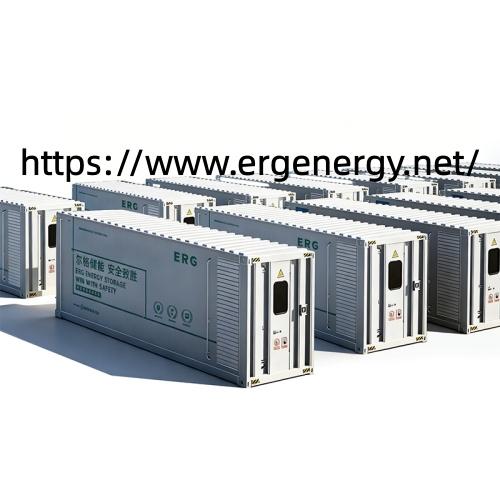
High-Capacity Vanadium Flow Battery Stacks provide an important technical foundation for renewable energy projects that need to store electricity and release it according to changing demand. As solar and wind installations continue to expand, energy developers face a practical challenge: electricity production does not always match the hours when businesses, communities, and power networks need it. A suitable storage arrangement can help bridge this gap, improve renewable energy utilization, and support more flexible electricity management.
Solar farms, wind installations, and distributed energy projects all experience changes in electricity generation. Solar facilities usually produce more electricity during daylight hours, while consumption may remain high in the evening. Wind generation can also change according to local weather conditions. Without appropriate storage infrastructure, some available renewable electricity may not be used when it is generated.
Large-scale energy storage provides a way to manage this difference. Electricity generated during periods of surplus production can be stored and released when demand increases or renewable generation decreases. This approach helps operators coordinate electricity supply with actual consumption requirements. It can also support local power networks by reducing pressure during certain peak periods.
One important consideration is the relationship between power output and storage duration. These are two different technical requirements, and project developers should evaluate them separately. Power output determines how much electricity equipment can deliver at a particular moment, while stored energy determines how long that output can be maintained. A well-planned installation needs to address both factors according to the intended application.
Vanadium redox technology offers an interesting approach because its energy storage medium is kept in external electrolyte tanks and circulated through an electrochemical unit during charging and discharging. This arrangement separates the energy storage section from the power conversion section. Consequently, developers can adjust electrolyte volume and equipment configuration according to different project objectives. Such flexibility can be useful for installations that expect future expansion or require extended discharge periods.
Another consideration is operating frequency. Renewable energy facilities may need to charge and discharge their storage equipment regularly as electricity production changes throughout the day. Industrial users may also need to coordinate stored electricity with production schedules, equipment operation, and changing electricity tariffs. Therefore, electrochemical stability, component consistency, maintenance arrangements, and control systems should all be considered during the selection process.
For large commercial and industrial projects, storage solutions can serve several purposes. A manufacturing facility may use stored electricity during periods of increased production demand. A solar installation can retain surplus daytime generation for evening consumption. An industrial park may coordinate multiple electricity sources through a centralized energy management platform. At the grid level, larger installations can participate in peak shaving, load balancing, and renewable energy integration.
System configuration also deserves careful attention. The installation area, electrolyte storage requirements, electrical connections, cooling arrangements, pump performance, and monitoring equipment can all influence project planning. Local climate conditions and maintenance access should be reviewed before equipment selection. Developers should also consider grid connection requirements, applicable safety standards, and the technical specifications of related electrical equipment.
Modular design provides another practical benefit. Instead of planning every project around an identical configuration, engineering teams can evaluate the required output and storage duration before determining the number of units and supporting components. This makes it easier to align equipment arrangements with different site conditions. For projects that may expand in stages, an appropriately planned modular structure can also simplify future integration.
ERG develops energy storage products and related components for industrial, commercial, and renewable energy applications. Its product range includes 5kW units, 32kW and 42kW configurations, and integrated energy storage systems designed for different operating requirements. The company also offers an 82kW/300kWh large-scale system and a 500kW/2000kWh containerized solution. These product categories provide project developers with different configuration options when evaluating electricity storage requirements.
Beyond equipment selection, engineering cooperation plays an important role in project development. Every installation has its own electricity consumption pattern, available space, environmental conditions, and connection requirements. A technical assessment can help determine suitable equipment specifications, system integration methods, and operating arrangements. Manufacturers with experience in component production and complete system integration can support discussions from initial planning through equipment configuration.
Renewable energy storage should therefore be considered as part of a broader electricity management strategy rather than an isolated equipment purchase. Developers need to examine generation forecasts, daily consumption patterns, expected discharge periods, maintenance resources, and future expansion plans together. Careful planning can help projects make practical use of renewable electricity while maintaining an operating arrangement suited to their actual needs.
As renewable energy infrastructure continues to develop, selecting an appropriate storage configuration will remain an important decision for industrial operators, utilities, and project investors. With product options covering individual power units and integrated installations, ERG provides technical choices for different project scales and operating scenarios. Businesses planning a new installation or evaluating an existing system can review product specifications, application details, and customization possibilities at https://www.ergenergy.net/product/ to identify an arrangement that matches their renewable energy development objectives.

 English
 Arabic
 French
 Portuguese
 Deutsch
 Turkish
 Dutch
 Italiano
 Russian
 Romaian
 Portuguese (Brazil)
 Greek