


How Oversized Cargo Moves Through Australia's Renewable Energy Supply Chain
Understanding Break Bulk Shipping for Large Cargo
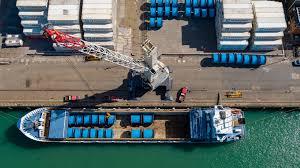
Moving oversized equipment across Australia can be more complicated than booking space on a standard container vessel. Some loads are too wide, too heavy, or too irregularly shaped to fit inside a container. In these cases, break bulk shipping services offer an alternative. Cargo travels as individual pieces, with handling arrangements suited to its size and weight.
This approach can suit industrial machinery, large steel components, and selected renewable energy equipment. The right shipping method depends on the cargo dimensions, available lifting equipment, port facilities, and the conditions at the final delivery site.
The Logistics Behind Solar Equipment Transport
A utility-scale solar project needs more than panels. Inverters, transformers, mounting systems, cables, and other components must also reach the site in the right quantities and at the right time. Delays involving one essential shipment can affect installation work across the project.
Solar equipment transport and shipping Australia requires careful attention to packaging, handling, and inland transport. Solar panels need protection from impact and pressure, while heavier electrical equipment may require specialised lifting arrangements. Logistics teams must also consider port access, road restrictions, and the installation sequence.
Planning Safe and Efficient Cargo Movement
A successful shipment starts with accurate cargo information. Dimensions, gross weight, lifting points, and unloading requirements help determine which vessel and transport equipment are suitable. Oversized loads may also require route assessments, permits, or escorts, depending on the cargo and the applicable state or territory rules.
Break bulk shipping services can be useful when cargo cannot travel efficiently in standard containers. However, the decision should account for loading facilities, securing methods, port handling, and the cost and risks of each transport option.
For solar projects, international freight is only one part of the journey. Inland delivery must fit the site's access conditions and construction schedule. Coordinating these stages early can help prevent avoidable delays and handling problems.
Keeping Renewable Energy Projects on Schedule
Solar equipment often travels through several stages before reaching an installation site. Suppliers, freight operators, port teams, and local transport providers need accurate shipment details and clear delivery dates. When one stage falls behind, equipment may arrive before the site is ready or miss its planned installation window.
KGE Global Logistics operates in the project logistics and international freight sector, where coordination across transport stages matters. For Australia's renewable energy supply chain, the key is to match the shipping method to the cargo and plan inland delivery alongside the wider construction schedule.

 English
 Arabic
 French
 Portuguese
 Deutsch
 Turkish
 Dutch
 Italiano
 Russian
 Romaian
 Portuguese (Brazil)
 Greek