


Precision Assembly and Filling Equipment for Syringes
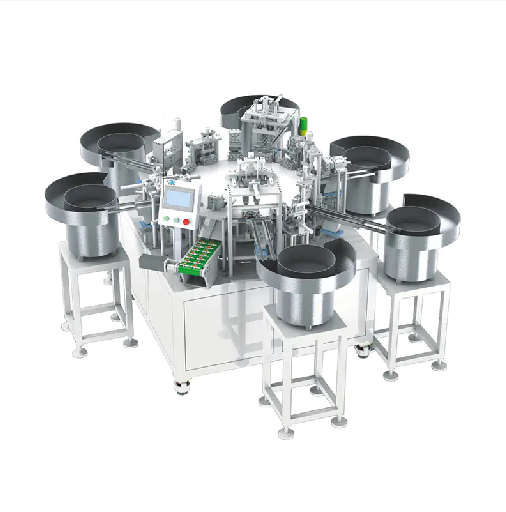
Syringe manufacturing requires close coordination between component assembly and filling operations to support product consistency and organized production management. When these processes are handled by separate machines without effective integration, manufacturers may face additional transfers, production interruptions, and more complicated workflow coordination. An Automated Syringe Assembly and Filling Production Line brings related operations together in a connected manufacturing system, helping coordinate component handling, assembly, filling, and subsequent inspection according to the product design and process requirements.
The structure of a syringe determines how its components should be assembled and processed. Common parts include the barrel, plunger, gasket, and protective components, although the configuration varies according to the product type. Each component needs to be supplied and positioned correctly before assembly. Automated feeding systems can organize components and deliver them to designated stations, while fixtures and positioning mechanisms support accurate handling during the assembly sequence. The equipment layout should be developed around the product structure to ensure that each operation can be completed in the correct order.
Assembly operations form the foundation of the production workflow. Depending on the syringe design, the process may include component loading, gasket installation, plunger insertion, protective part fitting, and other specialized operations. Automated mechanisms perform these tasks through coordinated movements and controlled sequences. Suitable fixtures help maintain component alignment, while sensors can monitor selected operating conditions. Integrating assembly stations into one system can reduce unnecessary manual transfers and make the production process easier to supervise.
Filling introduces additional process requirements. The filling system must be compatible with the material being handled, the container structure, and the intended production procedure. Different applications may require different feeding, dispensing, and handling arrangements. The filling station should be coordinated with upstream assembly processes so that containers arrive in the correct condition and orientation. Downstream operations should also be arranged to prevent unnecessary handling after filling. The specific filling method and equipment configuration need to be determined according to the product and applicable manufacturing requirements.
An Automated Syringe Assembly and Filling Production Line can incorporate process monitoring and inspection functions at suitable stages. During assembly, inspection may focus on component presence, positioning, or visible defects. During filling, the system may include checks related to the filling process and container condition, depending on the application. Additional inspection may be required after filling to assess product appearance or other defined quality characteristics. These functions should be selected based on the manufacturer's quality procedures rather than treated as identical requirements for every syringe product.
Coordination between assembly and filling stations is essential for production continuity. If the output rhythm of the assembly section does not match the capacity of the filling section, products may accumulate between processes or equipment may remain idle. Conveying systems, transfer mechanisms, and buffer arrangements can help manage differences in operating cycles. A balanced production layout considers the sequence of operations, station accessibility, material supply, and finished-product handling. This approach supports more predictable production planning and helps reduce avoidable bottlenecks.
Material compatibility and product protection also influence equipment design. Syringe components may be made from different plastics or elastomeric materials, each with specific handling characteristics. Contact surfaces, fixtures, and transfer mechanisms should be selected with consideration for the product materials and manufacturing environment. Equipment design should also support suitable cleaning, maintenance, and operational procedures. For products requiring controlled manufacturing conditions, the equipment layout must be evaluated together with the factory's environmental and quality management arrangements.
Automation can also improve the visibility of manufacturing operations. A coordinated control system can monitor machine status, manage station sequences, and provide information about process interruptions. Operators can use this information to identify where attention is needed, while maintenance personnel can investigate recurring equipment issues. Data collection and system communication can be adapted to the customer's production management requirements. Clear interfaces and understandable alarm messages are useful for supporting daily operation and reducing troubleshooting difficulties.
Product variation is another factor to consider when planning syringe assembly and filling equipment. Manufacturers may need to produce different syringe designs or adjust their processes as product requirements change. Replaceable tooling, adjustable fixtures, and configurable control programs can provide flexibility where necessary. The equipment developer should identify which production elements are likely to vary and design suitable changeover arrangements. This can help manufacturers manage product diversity while maintaining a practical equipment structure.
Before regular production begins, the integrated system should undergo appropriate testing and process verification. Product samples can be used to evaluate component feeding, assembly operations, filling coordination, transfer stability, and inspection functions. Testing helps identify process conflicts and provides opportunities to refine equipment settings. Close cooperation between the manufacturer and equipment supplier is important throughout this stage because actual production conditions may reveal requirements that are not fully apparent during initial design discussions.
AMBE TRADE develops medical manufacturing automation solutions with attention to product structure, process coordination, and customer production objectives. An Automated Syringe Assembly and Filling Production Line can integrate multiple manufacturing stages into a connected system designed around specific syringe requirements. Manufacturers interested in related equipment and customized automation capabilities can visit https://www.ambemedi.com/product/.

 English
 Arabic
 French
 Spanish
 Portuguese
 Deutsch
 Turkish
 Dutch
 Italiano
 Romaian
 Portuguese (Brazil)
 Greek